

Applications for Ohio Farm Bureau Health Plans now available
Members have three ways to apply: contacting a certified agent, calling 833-468-4280 or visiting ohiofarmbureauhealthplans.org.
Read MoreOhio Farm Bureau applauds the Ohio Senate for its overwhelming support of SB 36. CAUV reform has been a top priority for OFBF, and the strong action taken by the Ohio Senate to pass Senate Bill 36 has moved that priority for reform much closer to becoming reality. With the unanimous passage of SB 36, the Ohio Senate has taken a much needed step to help farmers who have been subjected to extraordinary property tax increases. By reforming the Current Agricultural Use Value (CAUV) formula, the bill will bring relief to family farmers who have seen farmland property taxes increase by more than 300 percent in recent years. These increases have come at the same time that farm income has undergone the second largest drop since the Great Depression.
The Senate amended SB 36 to mirror the House’s language in HB 49, the state budget bill which passed May 2, indicating their mutual support for the CAUV reforms for which OFBF has advocated. The bill will change the equity rate in the CAUV formula to be connected to the USDA farm equity rate and increase holding period assumptions to match the farm economy. These changes will ensure all the components of the capitalization rate are connected directly to the farm economy. The bill also places year-round conservation lands at the minimum value ensuring farmers are not penalized for adopting conservation practices that protect water quality. The only difference between the two proposals is the timeline on which the reforms are implemented; SB 36 would take effect in a standard three-year re-evaluation cycle, and HB 49’s CAUV language would be implemented over two re-evaluation cycles.
Ohio Farm Bureau appreciates the Senate’s attention to the the single most burdensome issue for farmers and landowners. We will continue to work with the Senate and House as they complete their efforts to reform the CAUV formula and be supportive of all pathways forward.
Please contact your state senator and thank him or her for their efforts in SB 36 and ask that they also support CAUV reform when it comes through the state budget.


Members have three ways to apply: contacting a certified agent, calling 833-468-4280 or visiting ohiofarmbureauhealthplans.org.
Read More

Founded by farmers in 1926, Nationwide has grown into a trusted partner for the agricultural community while staying true to its roots.
Read More
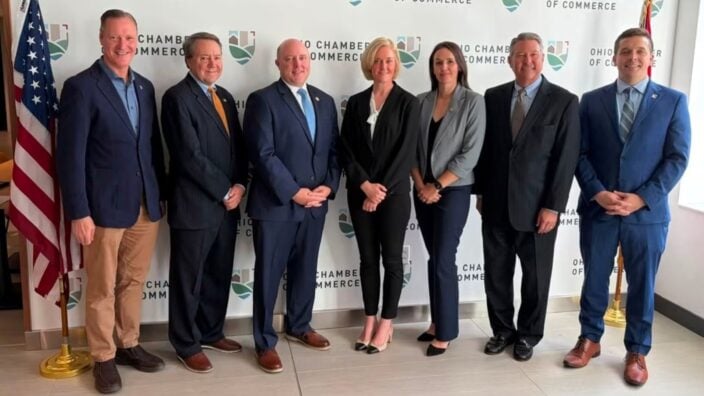
Five of Ohio’s leading business organizations, including Ohio Farm Bureau, announced support this week for Justice Dan Hawkins and Colleen O’Donnell in the 2026 elections for the Ohio Supreme Court.
Read More
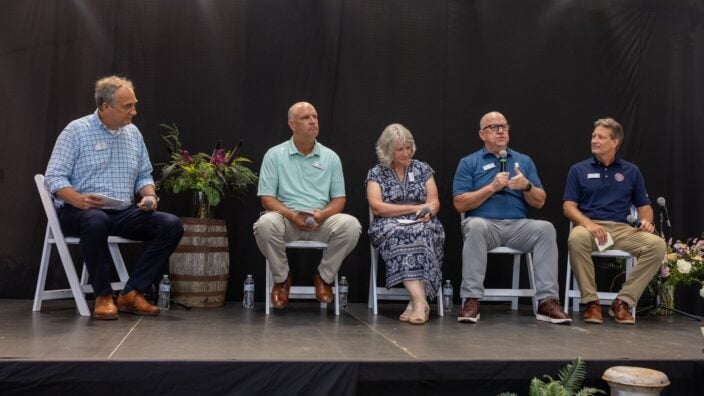
The 16th annual Cultivating a Cure welcomed more than 320 attendees and raised $151,053 to support cancer treatment and prevention research.
Read More

Ohio Farm Bureau is accepting applications for the Discussion Meet, Excellence in Agriculture, and Outstanding Young Farmer 2027 contests.
Read More

At the 2026 Sale of Champions, Ohio Farm Bureau, along with partners Bob Evans Farms and Nationwide, purchased the Grand Champion Market Barrow exhibited by Parker Elchinger of Henry County.
Read More

Ohio Farm Bureau and the Ohio Produce Growers and Marketers Association are encouraging Ohioans to support local fruit and vegetable growers while following recommended food safety practices.
Read More
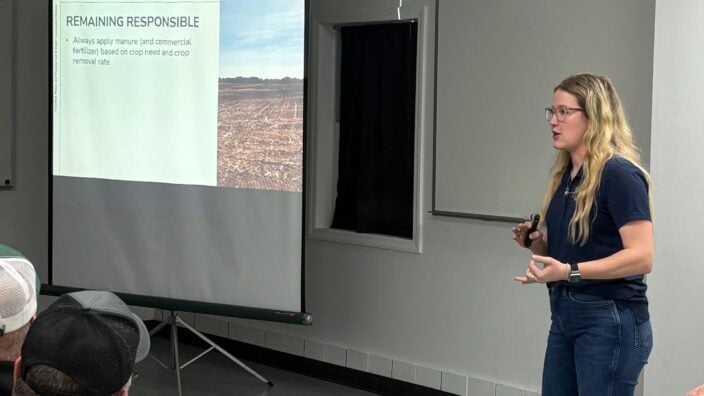
Meet Hannah Ziegler, nutrient management technician and social media content creator for Crawford and Wyandot Soil and Water Conservation Districts.
Read More
Ohio Farm Bureau supports responsible economic development and will continue to advocate for policies that protect Ohio’s water resources, farmland and rural communities.
Read More

Dr. Ian Sheldon joins the podcast to explain the history of USMCA, what recent decisions mean for the agreement and why its future matters for Ohio agriculture.
Read More