

Applications for Ohio Farm Bureau Health Plans now available
Members have three ways to apply: contacting a certified agent, calling 833-468-4280 or visiting ohiofarmbureauhealthplans.org.
Read MoreSheep and goats don’t immediately come to mind as college material, but these storybook animals are among the tangible signs of changes at The Ohio State University in Wooster.
They are a tiny component of the hundreds of students, faculty and staff, research labs, dairy facilities, corn fields and more that comprise the approximately 11,000 acre domain of the College of Food, Agricultural and Environmental Sciences in Wooster, Columbus and statewide.
To better use its varied resources and prepare for the future, a new strategic and master planning process began in 2019. While some details remain to be completed, a major change is emerging — the unification of the CFAES Wooster Campus. It’s an integration of resources and functions of the Agricultural Technical Institute with parts of the Ohio Agricultural Research and Development Center and OSU Extension in Wooster.
Economics prompted the change.
“Tuition can’t go up. Research dollars aren’t going up,” said Anne Dorrance, associate dean and director for the Wooster campus and associate director for OARDC. “We can realize institutional savings by becoming more efficient.”
This should give CFAES an edge when competing for future research dollars.
“The great education and opportunity that already exist at ATI will continue,” Dorrance said. “On the OARDC side, all the world-class research by the faculty is to continue.”
The master and strategic plans aim to capitalize on the unique resources of personnel, land and infrastructure on the Wooster campus to enhance the missions of CFAES: teaching, research and Extension.
There are several efficiencies already working, with others planned for the future. While unseen, the facilities, maintenance and running of the research and teaching facilities operate as one. No group or staff alone could meet all the needs of faculty, staff and students.
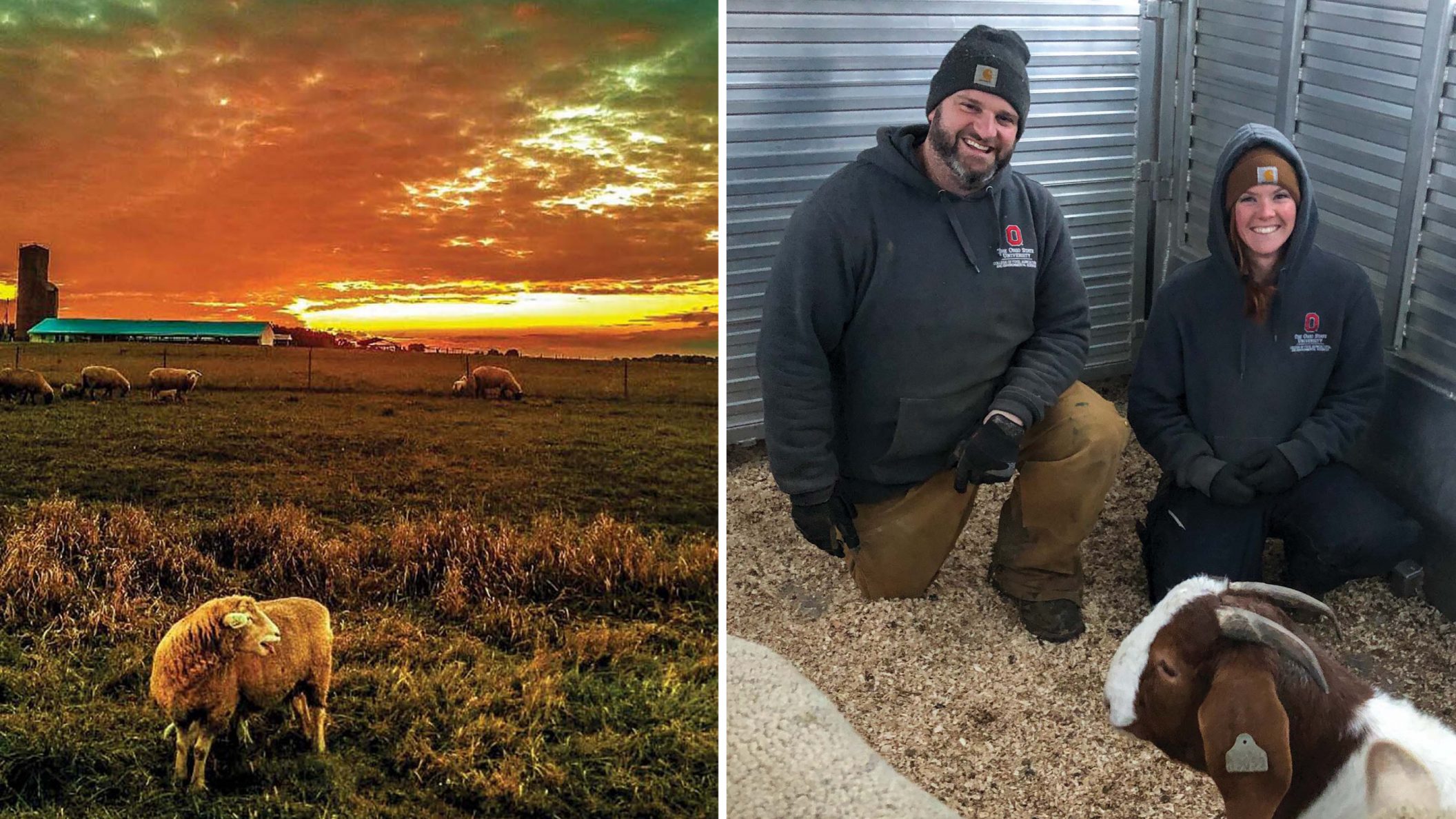
Here’s where the sheep and goats enter the picture. A herd of sheep was moved from Columbus to Wooster. Besides efficiencies and cost savings on facility improvement and operations there, the larger herd in Wooster — 370 sheep and 55 goats — gives researchers more animals to work with, said Graham Cochran, associate dean for operations.
Spring lambing and kidding started in January, giving ATI animal sciences students a unique experience as part of their education. Sheep and goats also are used to accustom students without a background in farming to animals. They’re small and easy to handle, Cochran said.
Merging the land base in Wooster is a significant change. In the past only part of the land base was used for ATI student lab experiences.
“Now we look at the whole 4,200 acres where we can plug into,” Cochran said. “It’s exciting for us.”
Another goal, the administrators said, is to take advantage of Wooster’s strong track record in trans-disciplinary research, and the background of faculty and staff to address CFAES challenges that include sustainability, rural-urban interface and preparing the next generation of scientists and leaders.
The integration will increase interactions between undergraduate and graduate students and allow graduate students to cultivate close professional research relationships with faculty, teaching workshops and mentoring opportunities.
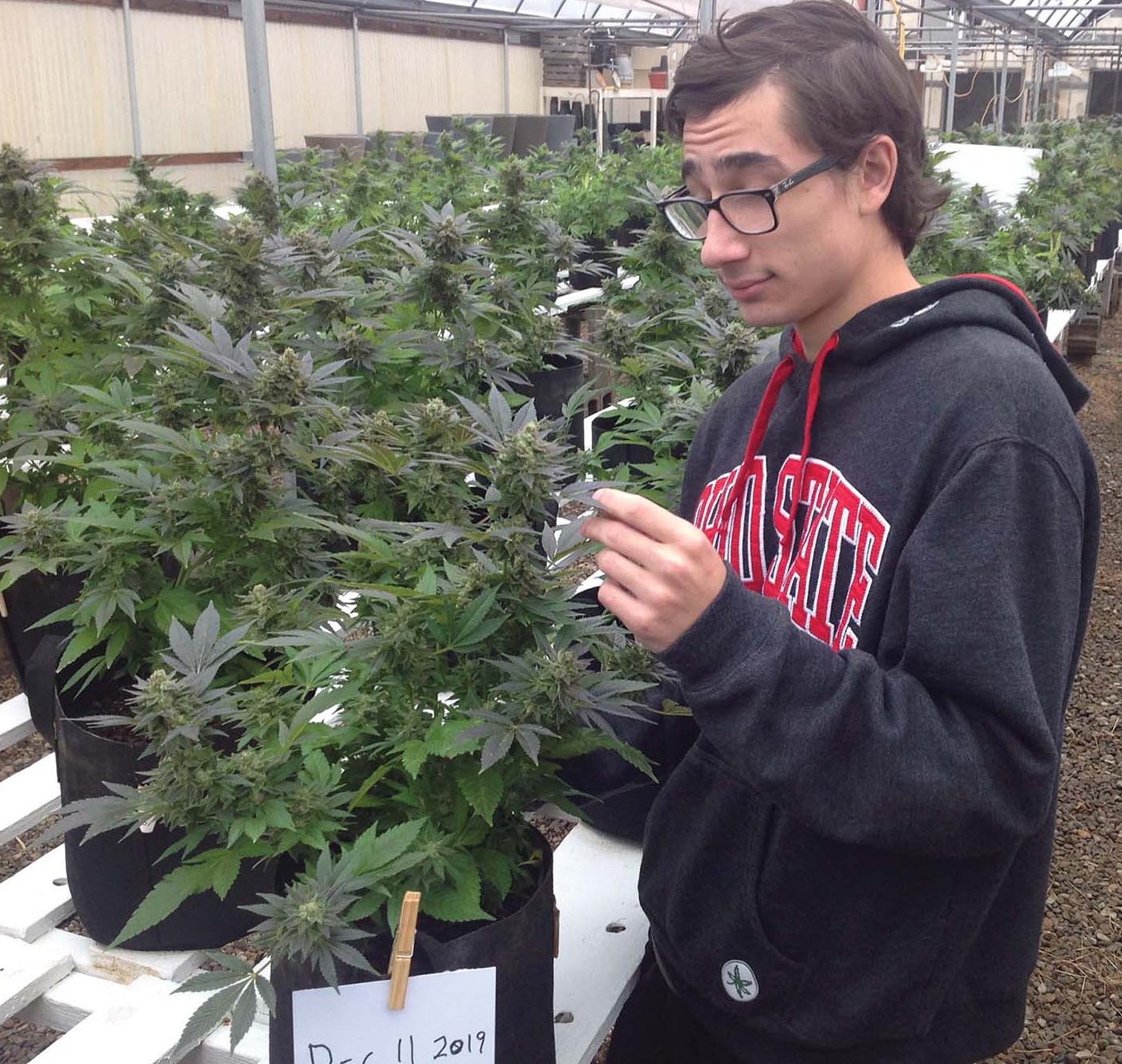
Luke Corbissero, who graduates this spring from ATI’s greenhouse and nursery management program, took advantage of such opportunities offered to ATI students. He ended up working with graduate engineering students, while helping assemble a greenhouse hydroponics system. He assisted in research for growing head lettuces and other leafy greens for use on Earth and a NASA project for the International Space Station.
Corbissero next moved to a research project at OARDC involving hemp being grown for medical uses. The complexities of growing the hemp plant intrigues Corbissero, who plans to work for a company in the emerging hemp industry. The hands-on experience he and other ATI students have access to appeals to employers.
Growing up in suburban Cleveland, Corbissero lacked any farming background, but enjoyed hunting and fishing. He thought agriculture sounded appealing.
“It’s what you want to make it, if you want to advance and progress,” he said of ATI. “There’s a lot of resources.”
A symbol of the emphasis on integration of staff, faculty and students is the new science building, a goal from the last master plan in 2014. It’s the first CFAES building in Wooster where research and teaching faculty and staff, and undergraduate and graduate students have a place to work and interact. This is important, administrators said, because the more relationships a student has with faculty and staff working on their campus, the more likely the college is to retain the student. The more interactions graduate students have with undergraduates, the better their teaching skills and ability to distill cutting edge research all can comprehend.
“If we’re all together and where we’re bumping into each other, we’ll be able to embrace other opportunities,” Dorrance said of the Wooster campus. She’s already wondering what types of new courses might be offered as a result of such interactions.
Along with the new science building on the Wooster campus, the 2014 projects (completed and under construction) are the Beef Teaching and Outreach Facility and Farm Operations Center. Designs for pathways to make the campus more walkable and bike friendly are underway. A new 10-year master plan for additional facilities statewide is also part of the integration process.
Featured Image: Michael Shearer and Erin Weisgarber are both educators in the Wooster sheep and goat unit.



Members have three ways to apply: contacting a certified agent, calling 833-468-4280 or visiting ohiofarmbureauhealthplans.org.
Read More
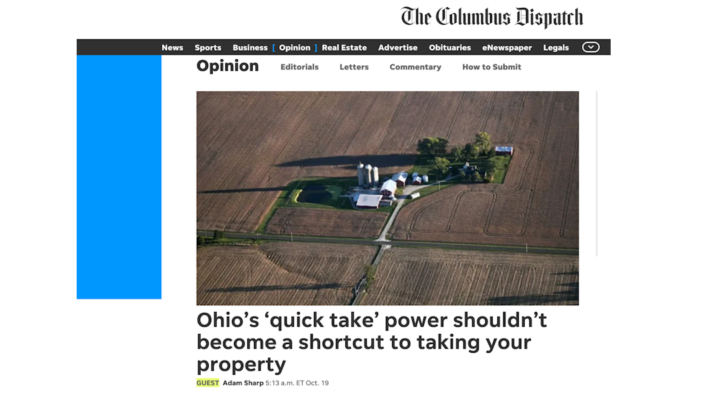
Ohio Farm Bureau recently published an op-ed in The Columbus Dispatch highlighting the importance of protecting private property rights as discussions continue around expanding eminent domain powers in Ohio.
Read More
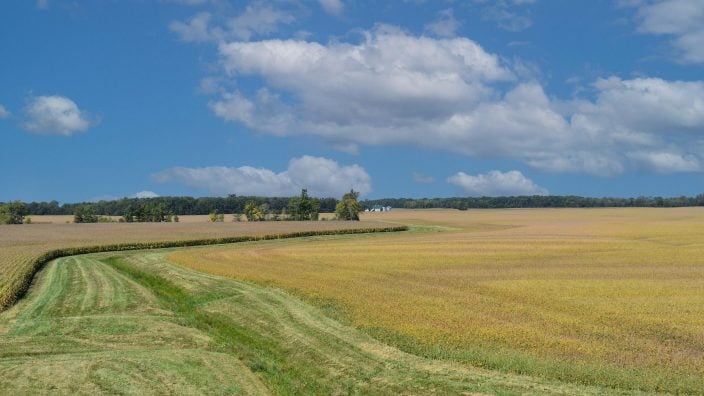
These discussions should not begin and end with a developer’s offer. Identifying family goals now gives the family something to plan around.
Read More
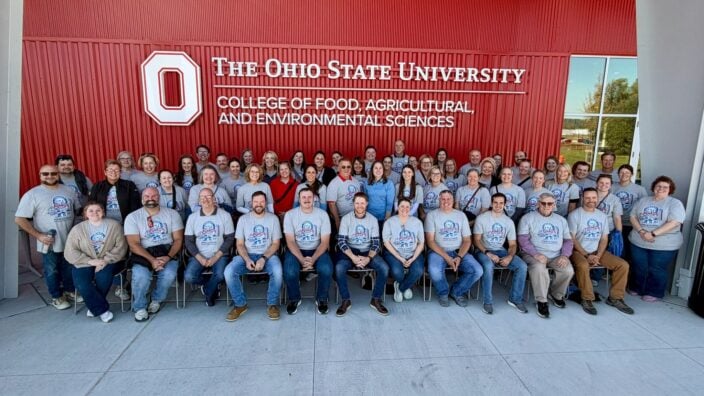
Ohio Farm Bureau joined leaders from across Ohio’s food and agriculture industry this week to pack 10,000 meals for central…
Read More
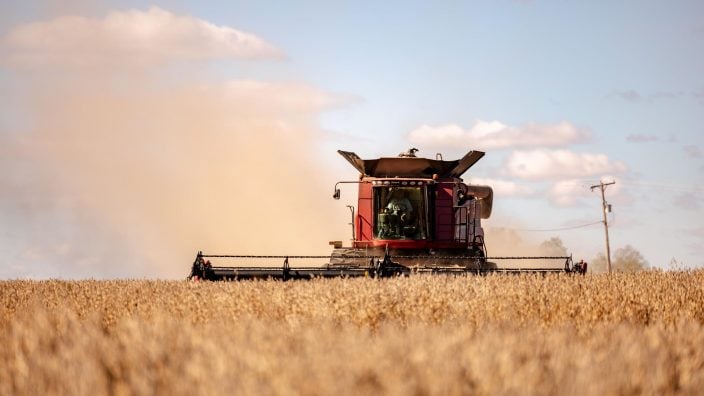
The administration recently issued an executive order easing restrictions on the use of tax-exempt dyed diesel fuel for on-road agricultural transportation.
Read More
Ohio Farm Bureau Associate General Counsel Leah Curtis explains how the eminent domain process works in Ohio, what ‘quick take’ means and when it can be used.
Read More
As fuel prices skyrocket across the state, lawmakers are preparing to return to the Statehouse to vote on the temporary suspension of Ohio’s gas tax.
Read More
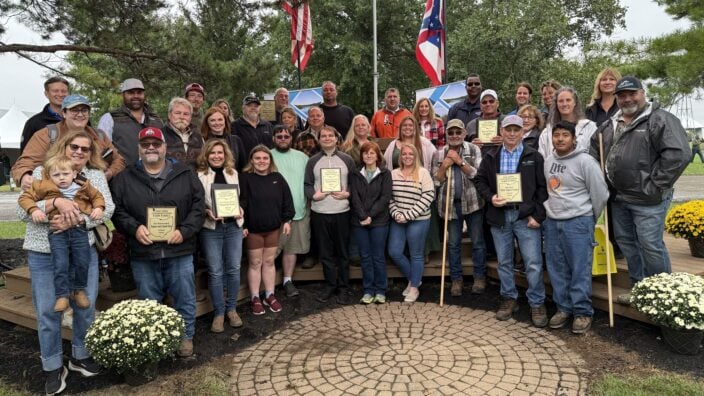
Since 1984, the Conservation Farm Family Awards program has recognized Ohio farm families for their exemplary efforts conserving soil, water, woodland, wildlife, and other natural resources.
Read More
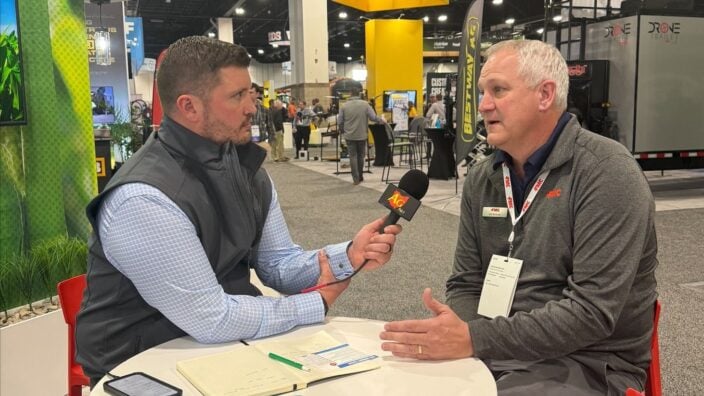
Meet Joe Everett, a Shelby County Farm Bureau Young Ag Professional who has dedicated his life to service, both in uniform and within his local community.
Read More
A year-end review provides an opportunity to evaluate your operation’s financial position, discuss future goals and develop strategies for the upcoming season.
Read More