

Applications for Ohio Farm Bureau Health Plans now available
Members have three ways to apply: contacting a certified agent, calling 833-468-4280 or visiting ohiofarmbureauhealthplans.org.
Read MoreIn a pristine building behind her home in Clermont County, Farm Bureau member Renée Koerner takes a knife to an American paddlefish while waxing nostalgic about her career at The Maisonette, a Mobile 5 Star French restaurant in downtown Cincinnati that was known as the most highly rated in North America before it closed in 2005.
“I worked my way up to the assistant maître d’ and cellar master (wine buyer), before I left in 2000,” she recalled while wiping the blood off her smock before pulling her soiled gloves from her hands. “There was a time when the best wines in the world came from Europe, from France and Germany. In the 1960s, a handful of growers began to look at California differently,” Koerner said. “There was already ‘table wine’ being produced there, but they realized the climate was good enough to produce world-class wines. With the same zeal that America attacked the space program, growers embarked on the quest to be the best.”
Those wines started winning tasting after tasting, to the shock of international judges, and today “no one would dispute that California is one of the best wine growing regions in the world,” she said.
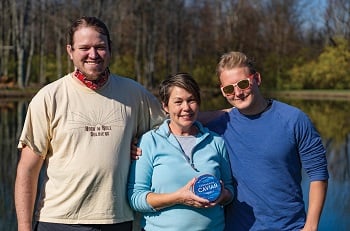
Koerner knows more than luck and ambition led to the success of those wineries. The seeds are sown in trust built over time through lasting industry relationships.
Having established those partnerships, along with harnessing the same spirit as the early West Coast winemakers, Renée and her husband, Keith, decided to take a chance about 15 years ago. They moved into a whole new world that also banks on relationships, ambition and luck, along with patience and hard work – the birth of free-range caviar from aquafarm lakes on both the north and south side of the Ohio River and their company Big Fish Farms.
The first line of their company website reads: “At Big Fish Farms we are dedicated to sustainably rearing and ranching the amazing American Paddlefish. Every part of the process, from spawning fry to making caviar, is under our supervision.”
And that is no joke.
“I’m in control of every aspect,” she said. “My label is on it.”
Rick Hulefeld holds a master’s degree in aquatic sciences from Kentucky State University. He met Koerner at a workshop hosted by the school. He didn’t forget her when he graduated and started looking for a job where he could possibly spend his days on a body of water and learn a little something about running his own business in the process.
“Niche markets is where it’s going,” he said. “If you can harvest your own stock, there are a diversity of things you can do.”
Hulefeld loves to fish, and it’s evident as he eyes a multitude of large catfish in the lake he and Koerner tend to in central Ohio in early November. The fish in this lake feed off zooplankton, which is all these river fish need. They aren’t bothered by shiny lures or bait dangling from hooks, which keeps them safe from any fishermen who may drop a line.
The sustainable supply started out as hatchlings in a big tank until they could survive on their own in the lakes Big Fish Farms contracts with in both Kentucky and Ohio. “We call them our ranching partners,” she said. Then you need to wait 10 years for those fish to mature.
“When we decided to do this, we learned all we could and we were all-in” she said. “I mean, 10 years is 10 years. It’s a big investment.”
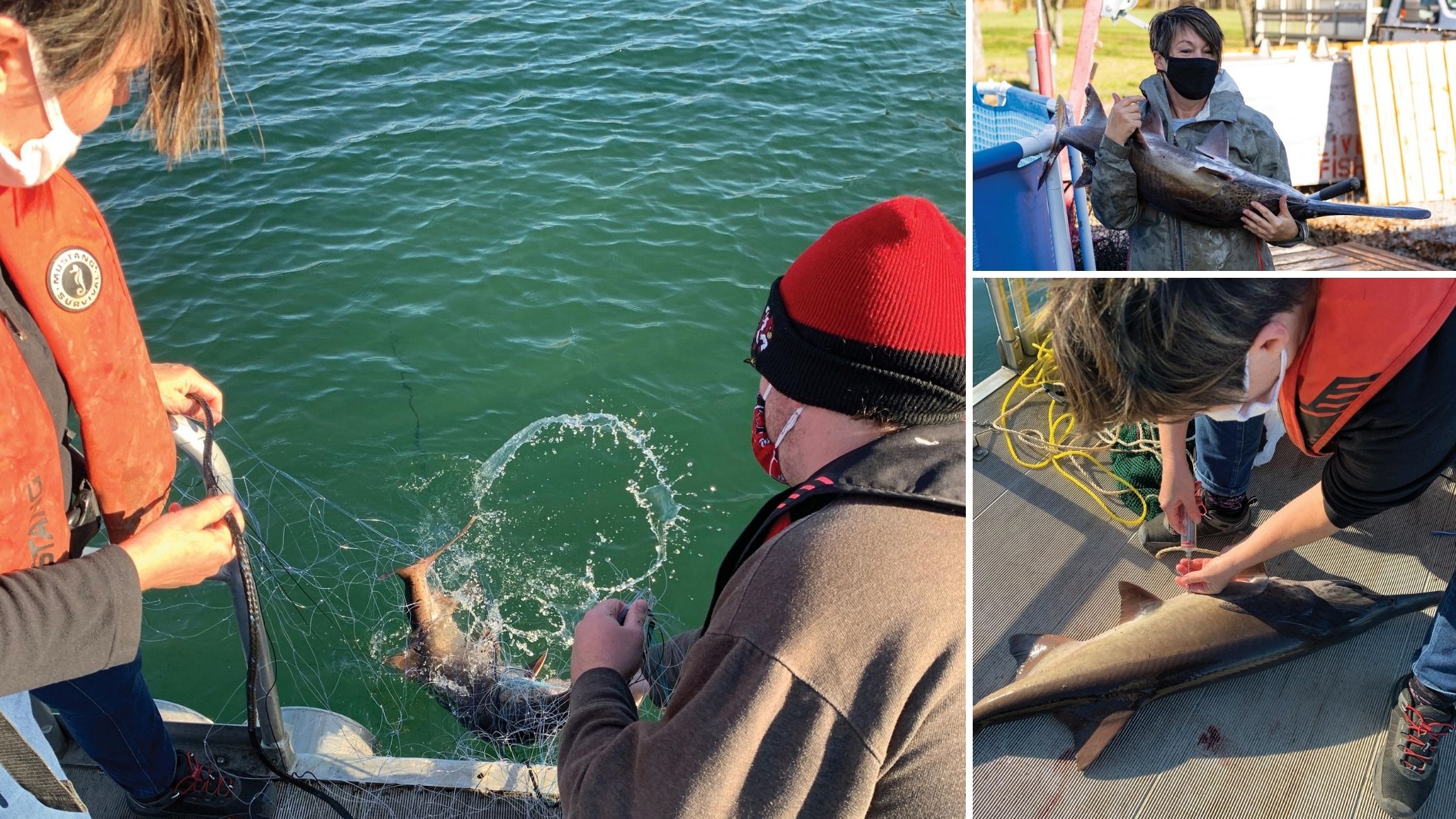
The season starts in November and runs through the winter. On a crisp, albeit beautiful November day, Koerner and Hulefeld take a small, flat fishing boat out to check on the nets they dropped hours earlier. At this particular lake, this is the first year the fish are old enough to produce enough eggs to make the trip worthwhile.
One female, a small one roughly 30 pounds, has found its way into the net that the two pull together into the boat. It’s a long drive and hard work for one fish, but at least not a wasted day. Koerner said there is always a learning curve to each new lake she ranches.
“It takes a little time to learn how to fish each individual property.”
Most days multiple fish are caught and are usually about 40 to 60 pounds each.
Koerner and Hulefeld have a system down that makes taking care of the reusable nets a little less labor intensive. As gently as possible they pull the fish from the net. Koerner sanitizes an area on the belly then makes a slight cut, just enough to get a needle in to check for eggs. Once it is determined the fish is female, the eggs are harvested the next day in their processing building in Clermont County. Koerner goes about her job methodically, from start to finish.
“I don’t like to let time pass,” Koerner said. Once she harvests the eggs, Koerner takes them carefully into the next room, where they are gently separated from the surrounding fat by hand through a caviar screen, then washed and salted with a special blend in multiple phases.
From this one fish, Big Fish Farms harvested about two pounds of caviar, which will retail for roughly $600.
“You don’t get into the restaurant business unless you like people,” she said, noting it is the same in the caviar business. Yet making the right connections for both producing and selling the product is critical.
“I’ll tell you when I fell in love with Farm Bureau,” she said as the boat made its way across the pond to another net. “When we started this, we needed to know how to talk to legislators and build those relationships.”
No one else was in the free-range caviar fishing business and the Koerners needed to know what the regulations were and how to follow all the rules. Farm Bureau guided them on how to do just that.
“We’re in the egg business,” she said, a nod to both the caviar and the free-range chickens roaming around her property, “but we’re not farmers. We didn’t know how to farm. The resources have been invaluable.”
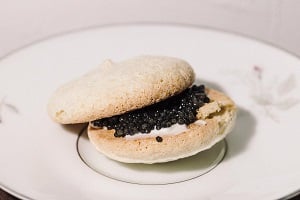
The kind of farming Big Fish Farms is doing — bringing high-quality caviar to market from the Midwest, by hand — is literally unheard of. But they are doing it and they are successful. Even as COVID-19 hit this year, the direct-to-market sales of the product started to boom as restaurants closed during the pandemic.
As a midsized caviar producer, moving more product into retail was not a hard pivot to make, she said. The fish meat from both males and females is sold as well.
Hulefeld has been a helpful addition to the company, and the Koerner’s grandson Alex Bock is also showing an interest in the business of fish eggs and helps his grandparents whenever he can.
“I can’t retire off of it yet, and about once a year I have a moment of bourbon and tears,” she said with a laugh. “We wouldn’t do it if we didn’t believe in it, and I have seen how a single product can transform a region.”
Much like those Napa Valley dreamers, Big Fish Farms is making big strides and charting its own course in the waters of the caviar industry.
Photos by Dave Gore and Kelli Milligan Stammen


Members have three ways to apply: contacting a certified agent, calling 833-468-4280 or visiting ohiofarmbureauhealthplans.org.
Read More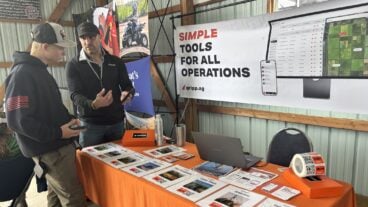
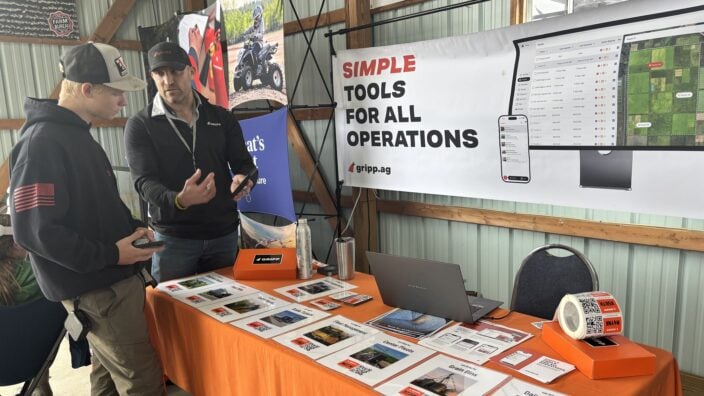
Gripp is launching a 60-day cohort in mid-January for Ohio Farm Bureau members, offering discounted access to its asset-tracking app.
Read More
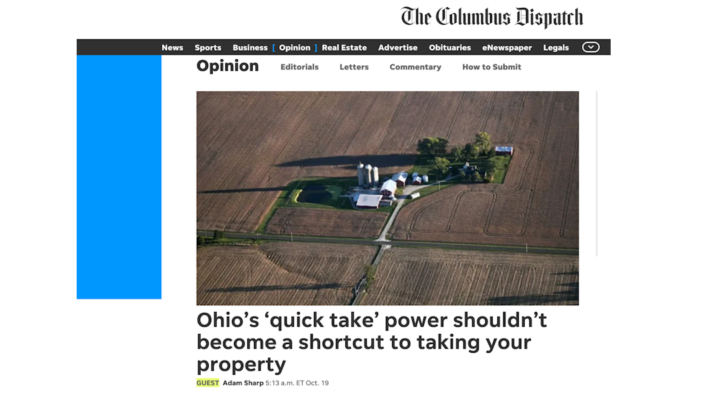
Ohio Farm Bureau recently published an op-ed in The Columbus Dispatch highlighting the importance of protecting private property rights as discussions continue around expanding eminent domain powers in Ohio.
Read More
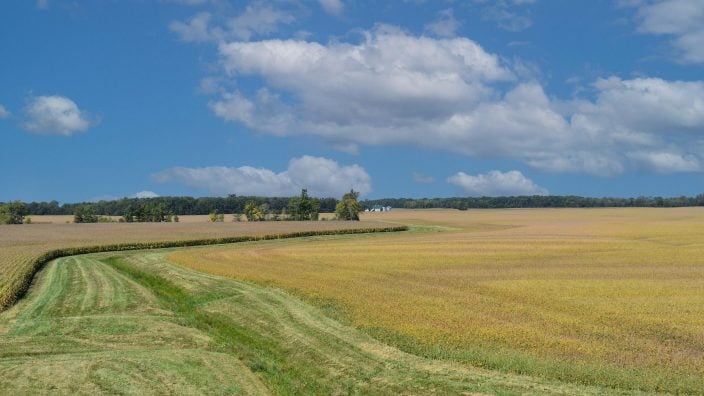
These discussions should not begin and end with a developer’s offer. Identifying family goals now gives the family something to plan around.
Read More
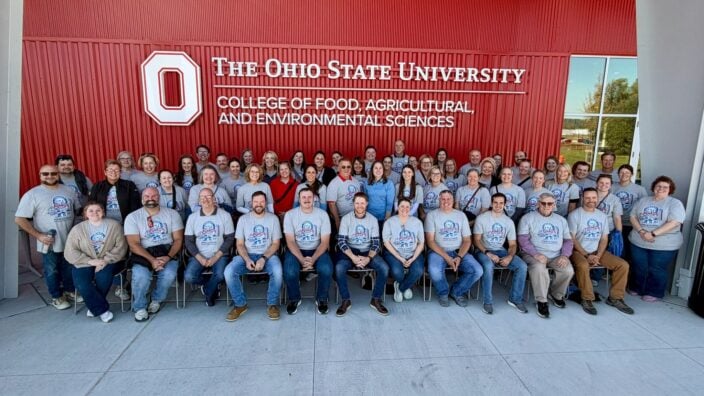
Ohio Farm Bureau joined leaders from across Ohio’s food and agriculture industry this week to pack 10,000 meals for central…
Read More
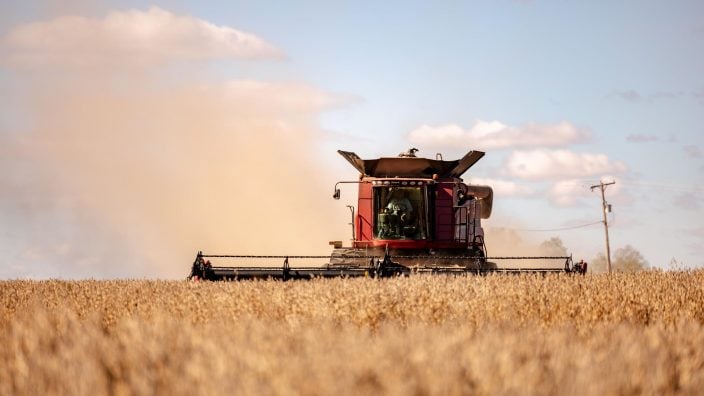
The administration recently issued an executive order easing restrictions on the use of tax-exempt dyed diesel fuel for on-road agricultural transportation.
Read More
Ohio Farm Bureau Associate General Counsel Leah Curtis explains how the eminent domain process works in Ohio, what ‘quick take’ means and when it can be used.
Read More
As fuel prices skyrocket across the state, lawmakers are preparing to return to the Statehouse to vote on the temporary suspension of Ohio’s gas tax.
Read More
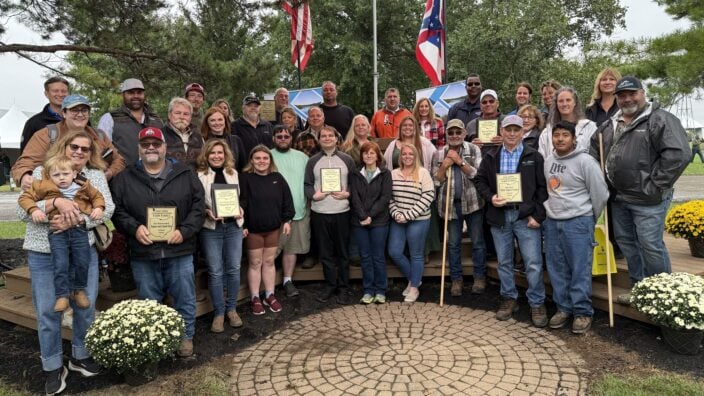
Since 1984, the Conservation Farm Family Awards program has recognized Ohio farm families for their exemplary efforts conserving soil, water, woodland, wildlife, and other natural resources.
Read More
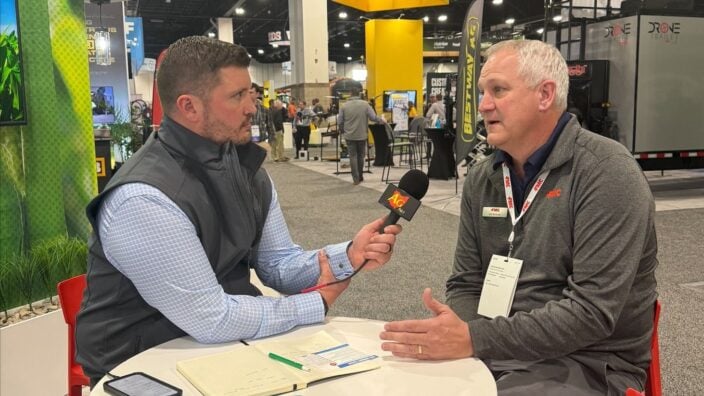
Meet Joe Everett, a Shelby County Farm Bureau Young Ag Professional who has dedicated his life to service, both in uniform and within his local community.
Read More