





Reflecting on a decade with OSU Extension
Through all of life’s changes, Trumbull County has become not just a place we work, but the place we call home.
Read MoreI was recently asked if I thought dairy farmers should be allowed to sell raw, unpasteurized milk directly to consumers without regulations. The short answer, “No.”
I spent the majority of the first 44 years of my life living on a dairy farm, my parents’ and then our own. Raw, unpasteurized milk was what I drank.
Sure, there were times that I drank “store milk” at school, a friend’s house and at college, but I preferred to drink milk straight from the milk tank.
Our kids drank it as well. The subject came up when our second daughter had her one-year checkup. The doctor suggested whole milk over 2%, but was at a loss for words when I reminded him that we lived on a dairy farm and I didn’t buy pasteurized milk. I also pointed out that Laura, our oldest child, had never had any problems. I don’t know why we never talked about it when she turned 1 year old, and I certainly didn’t bring it up when our youngest daughter reached her first birthday.
When you are producing any food product, you take on a lot of responsibility. Unpasteurized milk contains living enzymes and beneficial bacteria. Once the cow is milked, the milk can be used within two hours without refrigeration. Refrigeration is key, though, to keep the naturally occurring enzymes and bacteria in check. The ideal storage temperature is 34 to 38 degrees F to ensure a healthy product.
In the mid-1800s, more of the population moved into the cities and relied on others for their milk and other food. Without modern refrigeration, regulations and advanced testing, milk was not as safe as it is today.
In the 1860s, Louis Pasteur is credited for developing the pasteurization process of using heat to keep harmful bacteria at bay. Milk was safer and the pasteurization process extended the shelf life without compromising the nutritional value.
It’s important to know that pasteurized milk is not sterilized. The nutrients and minerals stay the same. Pasteurized milk has been heated to a minimum of 161 degrees F for at least 15 seconds or 145 degrees F for 30 minutes, providing a shelf life of 10 to 21 days.
Some milk products are ultra-pasteurized, heated to a minimum of 280 degrees F for two seconds, allowing a refrigerated shelf-life of 30-90 days. If this ultra-pasteurized milk is canned, it is considered sterile and refrigeration is not required. It has a shelf life of six or more months.
The dairy industry’s commitment to safe products led to the creation of the Standard Milk Ordinance in 1924. This ordinance created a consistent foundation for the quality and safety standards on farms, in dairy plants and during transportation that continues today under a new name: Pasteurized Milk Ordinance.
It is currently illegal to sell unpasteurized milk in Ohio. There is a renewed interest in raw milk sales, so that could change. With safety standards, licensing and maybe a few more regulations, I think it could be done. Milk is safe and one of the most tested food products there is.
It was an adjustment when we no longer milked cows and had access to raw milk. My daughter, Julie, pointed at the gallon of “store milk” and said, “I’m not drinking that stuff!” I told her, “Put some chocolate in it and you’ll be fine.”
Submitted by Mary Smallsreed, a member of the Trumbull County Farm Bureau and grew up on a family dairy farm in northeast Ohio.
OFBF Mission: Working together for Ohio farmers to advance agriculture and strengthen our communities.



Through all of life’s changes, Trumbull County has become not just a place we work, but the place we call home.
Read More
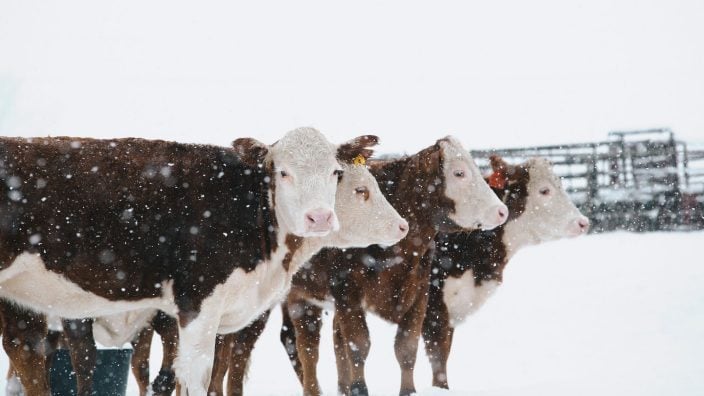
Most livestock animals are well adapted to cold weather, but farmers take extra measures when extreme temperatures come.
Read More

We often talk about the moments that shape us — big decisions, career paths and life milestones. But more often than not, it’s not the moments that define us. It’s the people.
Read More

The purpose of this $1,500 grant is to help offset farm operation costs. This can include but is not limited to: fuel costs, fertilizer costs, equipment costs, land rent, etc.
Read More

I’m going to give you a list of things that you can do that will get you outside and actually enjoy the snow.
Read More

As kids, we are often told to try new things, whether it be a new food, a new activity or…
Read More

Learn more about ag districts from noon to 4:45 p.m. Jan. 28 at the OSU Extension Office, 520 W. Main Street in Cortland.
Read More

We aren’t just reacting to change — we’re shaping the future of agriculture, one conversation and one decision at a time, together.
Read More

Today, there are close to 15,000 farms growing Christmas trees in the U.S., and over 100,000 people are employed full- or part-time in the industry.
Read More
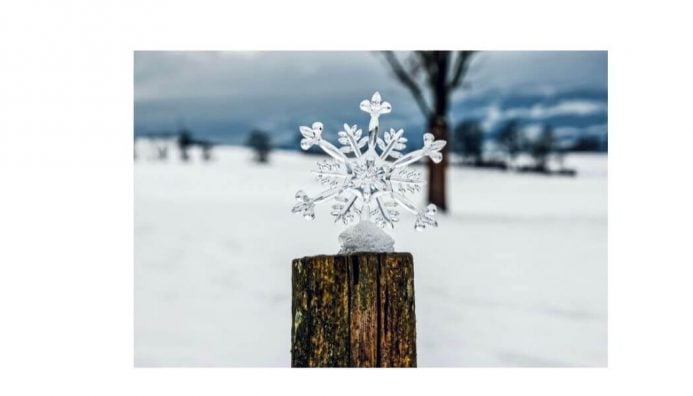
In a world that can sometimes be so loud and busy, snow literally slows us down and quiets the sound.
Read More