






Don’t raise a stink over insect’s emergence
Stink bugs also known as the Brown Marmorated Stink Bug (BMSB in the entomology world) are one of the earliest signs of spring to me here in Ohio.
Read MoreLet's debunk a few dairy myths.
A new year often comes with new health trends.
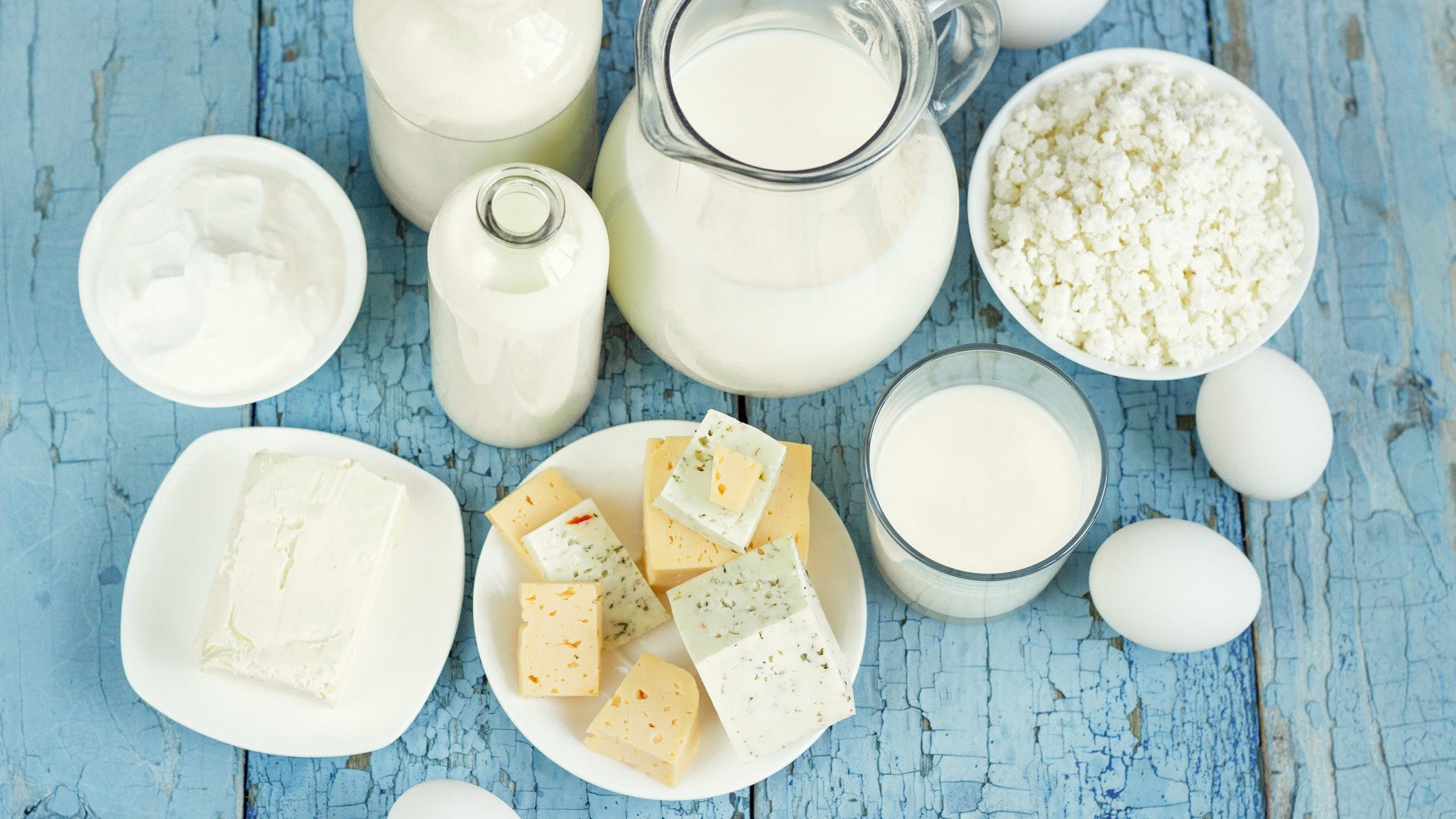
2023 is still pretty fresh, so why not educate ourselves on all that dairy has to offer, and debunk a few dairy myths? As a full-time dairy farmer, I do all that I can to support the industry. My fridge is packed with many dairy-related products. Not only do I consume these products to support an industry that I am part of, but REAL dairy offers many benefits as well.
Follow along as I share some dairy related goodness, and hopefully answer some questions that seem to commonly be asked concerning dairy.
To begin, a fact about dairy that often seems to be overlooked, is that whole milk is naturally 97% fat free and contains 13 nutrients that are essential. Although that is already pretty low fat, if you are looking for an even lighter alternative, 2% and skim options are available to still enjoy real milk while being more health conscious.
Subsequently, protein from dairy is a complete source of protein, and milk has no added sugars. Another positive benefit of drinking real milk is that it is a great source of calcium. No matter if you drink a glass of milk, a cup of yogurt, or even enjoy some ice cream, since all of these are milk-based, they are loaded with calcium, which is critical for bone health.
As a dairy farmer, I would say that the top two questions that I receive from consumers are: Does milk contain antibiotics? And what if my body can’t tolerate/digest dairy? I am easily able to answer these two questions each time that I am asked, and would like to share those responses with all of you reading this as well:
Foremost, dairy products available to consumers DO NOT contain antibiotics. Let me start by saying that as responsible farmers, we do treat our animals with antibiotics if absolutely necessary. These antibiotics are prescribed under the direction of a veterinarian, and all dosage and administration is followed as labeled. With that, withholds are adhered to as well, and no milk, or meat can be shipped for a certain period of time following antibiotic use, according to the label.
In addition, when products are sent for processing, they are further tested for antibiotic residues, guaranteeing that none of these medications reach the food supply. Farmers use these medications very responsibly due to the simple fact that they do not want to risk losing their market for their product.
I must also mention that antibiotics are not used unless absolutely needed for the health of the animal. But there are times, just like with humans, that in order to clear up a respiratory infection, or whatever the case may be, an antibiotic is the best treatment method.
Now, to answer the second question. If your system truly can’t digest dairy products due to the lactose in them, my first suggestion would be to try lactose-free dairy products. These products still contain real milk, but are ultra-filtered to remove the lactose and often have less sugar and more protein as well.
A name that you might have seen on shelves before is Fairlife. Not only do they offer milk, but yogurt and ice cream as well. Some people are not even able to tolerate a real dairy product like the one mentioned above even after it goes through ultra-pasteurization. In cases like this, you may have to go to a dairy alternative.
As much as I am for supporting dairy, and trying all the real dairy products, there are some cases that due to medical reasons, alternatives may have to be used instead.
I hope that this column was able to provide you with some information that helps you to better understand all that dairy products have to offer and the health benefits that it has.
Ninety-five percent of dairy farms are family owned, so by purchasing real dairy on your weekly grocery trips, you are supporting a farm family such as myself. As the world is ever-changing, so are dairy farms and dairy farmers. Dairy producers are striving to reduce their carbon footprint and have already been successful in doing so in the past 50-plus years.
As time goes on, how we do things on the dairy farm are becoming more and more efficient and better for the farmer, consumer, and planet.
Submitted by Julie Holler, a member of the Trumbull County Farm Bureau Board of Trustees.
OFBF Mission: Working together for Ohio farmers to advance agriculture and strengthen our communities.




Stink bugs also known as the Brown Marmorated Stink Bug (BMSB in the entomology world) are one of the earliest signs of spring to me here in Ohio.
Read More

Through all of life’s changes, Trumbull County has become not just a place we work, but the place we call home.
Read More
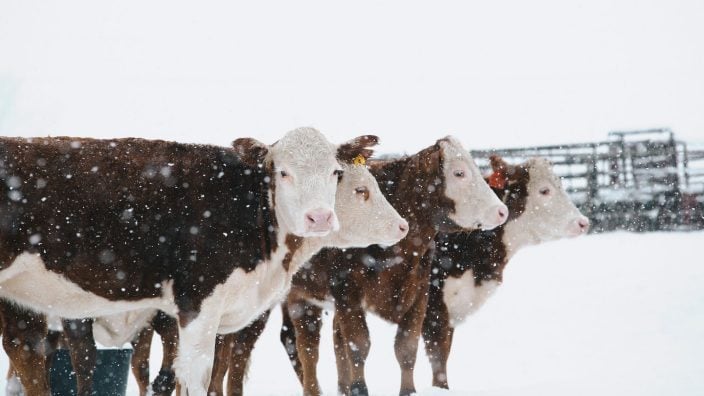
Most livestock animals are well adapted to cold weather, but farmers take extra measures when extreme temperatures come.
Read More

We often talk about the moments that shape us — big decisions, career paths and life milestones. But more often than not, it’s not the moments that define us. It’s the people.
Read More

The purpose of this $1,500 grant is to help offset farm operation costs. This can include but is not limited to: fuel costs, fertilizer costs, equipment costs, land rent, etc.
Read More

I’m going to give you a list of things that you can do that will get you outside and actually enjoy the snow.
Read More

As kids, we are often told to try new things, whether it be a new food, a new activity or…
Read More

Learn more about ag districts from noon to 4:45 p.m. Jan. 28 at the OSU Extension Office, 520 W. Main Street in Cortland.
Read More

We aren’t just reacting to change — we’re shaping the future of agriculture, one conversation and one decision at a time, together.
Read More

Today, there are close to 15,000 farms growing Christmas trees in the U.S., and over 100,000 people are employed full- or part-time in the industry.
Read More