







Agritourism guide helps safely bring people to the farm
Ohio Farm Bureau’s legal team created the guide to help members better understand the laws, regulations and risk considerations that come with opening their farms to the public.
Read MoreDue to changes in Endangered Species information, Enlist One and Enlist Duo cannot be used in 12 Ohio counties: Athens, Butler, Fairfield, Guernsey, Hamilton, Hocking, Morgan, Muskingum, Noble, Perry, Vinton and Washington.
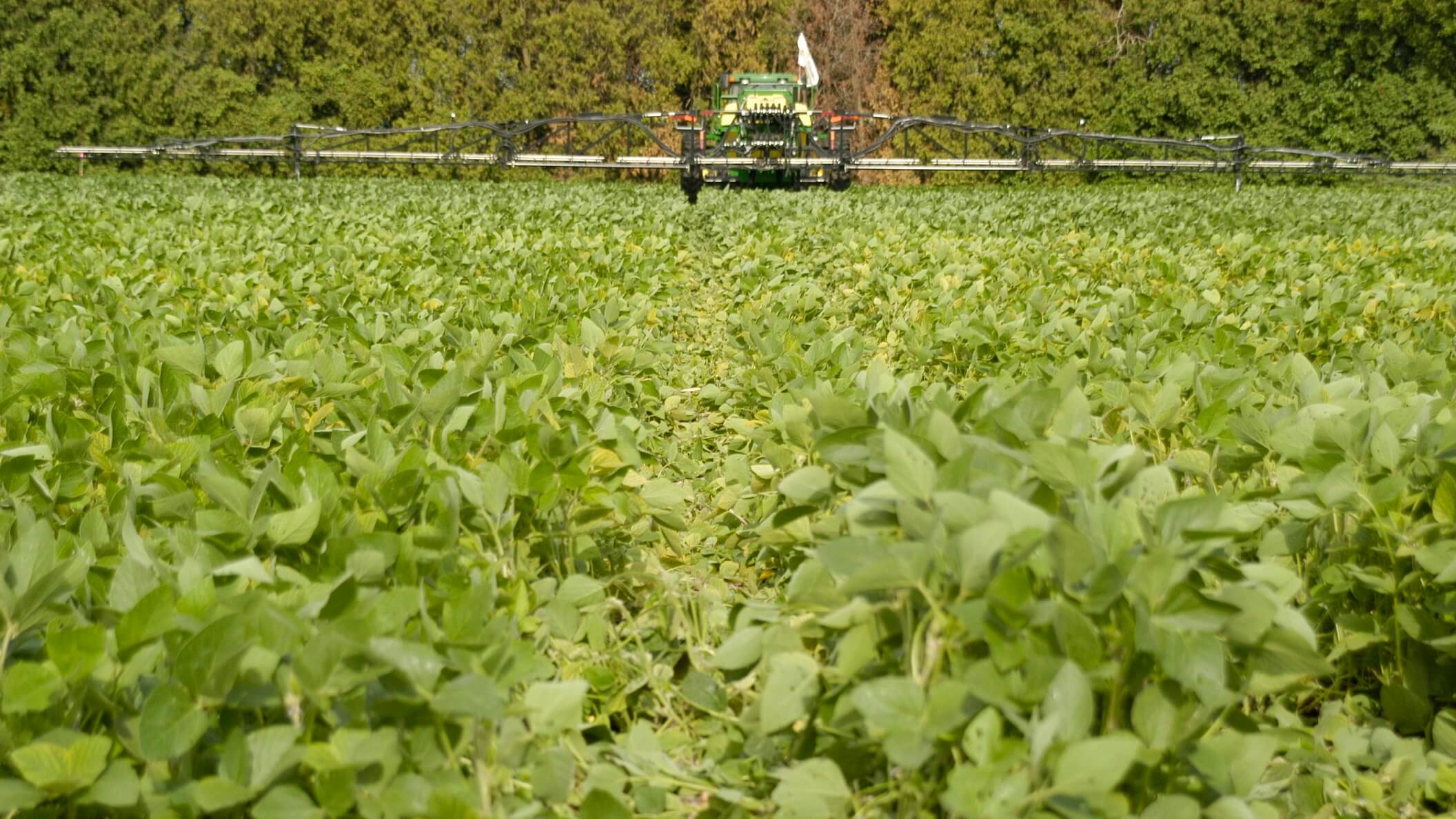
New policy by the U.S. Environmental Protection Agency will have an immediate negative impact on farmers in 12 Ohio counties. Calling it a reversal in “decades of practice,” EPA says it will further the agency’s compliance with the Endangered Species Act when evaluating and registering new pesticide active ingredients. This change took effect Jan. 11.
According to the Ohio State University Extension C.O.R.N. Newsletter, EPA issued a new seven-year registration for Enlist One and Enlist Duo, valid through January 2029, but made some detrimental changes to the products’ application guidelines.
“It’s great that EPA has renewed labels for the next seven years for a product line that is very important for soybean growers, but it comes with a whole host of new restrictions that we haven’t seen before with these products,” said Brandon Kern, senior director of state and national policy with Ohio Farm Bureau. “Growers looking for alternative options to dicamba have chosen Enlist soybeans for the 2022 growing season, and now that those purchases have already been made and the seed has been delivered, there are many concerns with these new limitations.”
Changes include a revised application cutoff for soybean growth stages, now “through R1” replaces “up to R2” on previous labels, and the addition of a slew of spray nozzles to the approved nozzle list. The most significant change for Ohio is that, due to changes in Endangered Species information, Enlist One and Enlist Duo cannot be used in 12 Ohio counties: Athens, Butler, Fairfield, Guernsey, Hamilton, Hocking, Morgan, Muskingum, Noble, Perry, Vinton and Washington.
“Ohio Farm Bureau and other state Farm Bureaus have been in close contact with each other and American Farm Bureau about this issue as we begin to understand more about the ramifications of some of these restrictions,” Kern said. “I think there is going to be a series of meetings and direct conversations with EPA and we look forward to sharing these concerns and hope that EPA understands how limiting this action will be for farmers across the country.”
EPA said that before these drastic changes in policy, in most cases it did not consistently assess the potential effects of conventional pesticides on listed species when registering new active ingredients. This resulted in insufficient protections from new active ingredients for listed species, as well as resource-intensive litigation against EPA for registering new active ingredients prior to assessing potential effects on listed species.
“This really couldn’t happen at a worse time for growers in these counties,” said Mark Loux, Ohio State University Extension herbicide specialist and one of the authors of the C.O.R.N. Newsletter. “We lack solid information on herbicide availability and price, and it’s a fluid situation, but it appears that glyphosate and glufosinate can be in short supply, and prices are high.”
In the C.O.R.N. Newsletter, Loux offers a few things to consider if your burndown plans for 2022 have been impacted by this EPA revision and some suggestions when looking for an alternative to Enlist One and Enlist Duo.
US EPA announced a new policy which requires a more robust review of agri-chemicals in relation to the Endangered Species Act, impacting farmers who had planned on using some Enlist products this year. Why was this policy created? Get answers from Ohio Farm Bureau Policy Counsel Leah Curtis.




Ohio Farm Bureau’s legal team created the guide to help members better understand the laws, regulations and risk considerations that come with opening their farms to the public.
Read More

Ohio Farm Bureau recently published an op-ed in The Columbus Dispatch highlighting the importance of protecting private property rights as discussions continue around expanding eminent domain powers in Ohio.
Read More
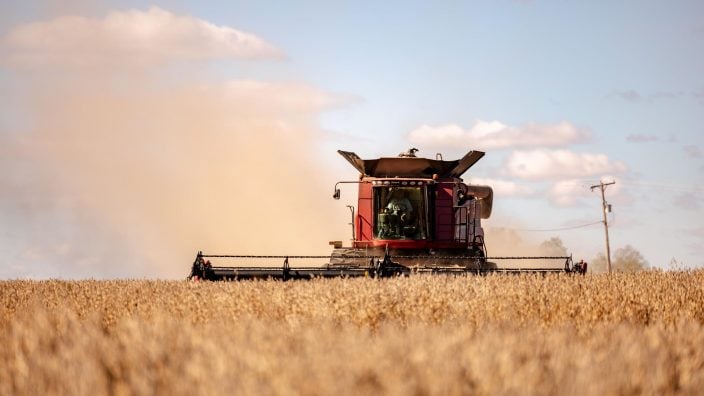
The administration recently issued an executive order easing restrictions on the use of tax-exempt dyed diesel fuel for on-road agricultural transportation.
Read More

Ohio Farm Bureau Associate General Counsel Leah Curtis explains how the eminent domain process works in Ohio, what ‘quick take’ means and when it can be used.
Read More

As fuel prices skyrocket across the state, lawmakers are preparing to return to the Statehouse to vote on the temporary suspension of Ohio’s gas tax.
Read More

Ohio Farm Bureau has created a new guide to help members better understand the laws, regulations and risk considerations that come with opening their farms to the public.
Read More
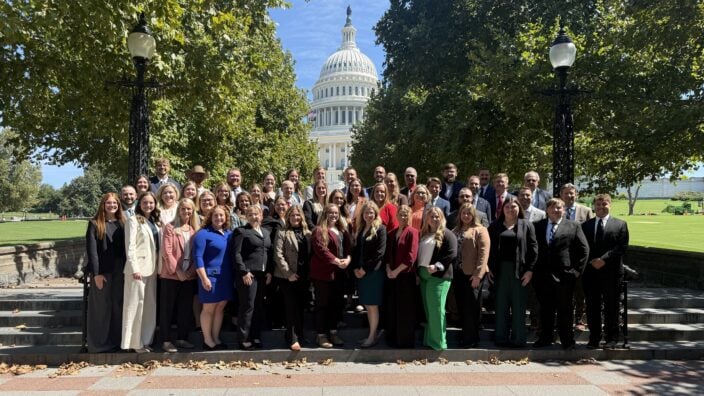
The groups received a firsthand look at agricultural policy, advocacy and leadership in the nation’s capital.
Read More

In response to an editorial published in Toledo Blade, Ohio Farm Bureau sent a letter sharing the decades-long commitment to conservation by Ohio farmers.
Read More
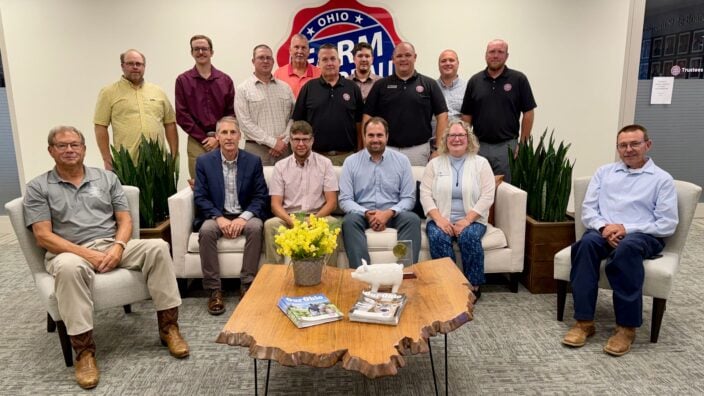
Twenty leaders have been named to the 2026 Ohio Farm Bureau Federation Policy Development Committee.
Read More
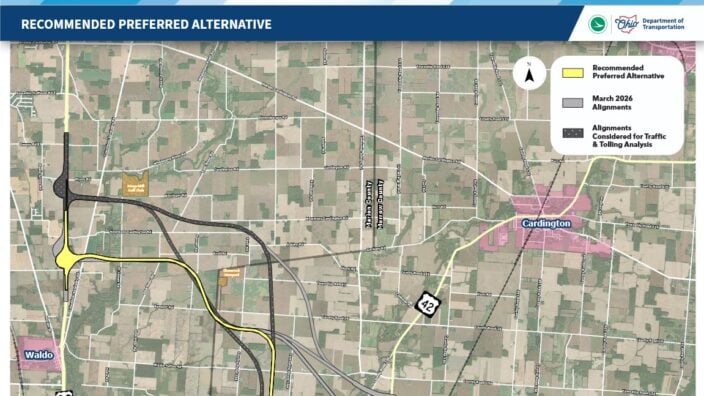
Ohio Farm Bureau will continue to ask the state to focus on the many road projects already needed to ensure the state’s transportation system is safe and efficient.
Read More