





Legal with Leah: The questions around data centers
Leah Curtis joins this Legal with Leah to talk about what data centers mean for local communities and how to stay engaged in the development process
Read MoreWhat are considered noxious weeds in Ohio and what is the landowner's responsibility in keeping them controlled?
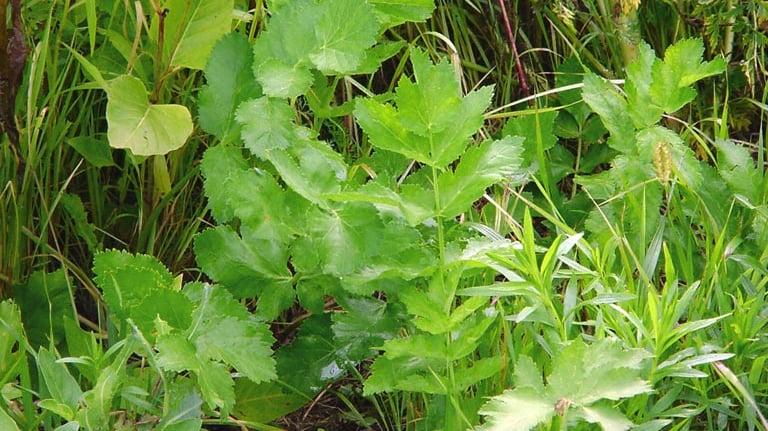
Weeds can certainly be annoying and problematic, but noxious weeds could be detrimental to crops and livestock. What are considered noxious weeds in Ohio, and what is the landowner’s responsibility in keeping them controlled? Ohio Farm Bureau Policy Counsel Leah Curtis covers that on this Legal with Leah.
Listen to Legal with Leah, a podcast featuring Ohio Farm Bureau’s Policy Counsel Leah Curtis discussing topics impacting farmers and landowners.
Ty Higgins [00:00:06] Noxious weeds, something we’re hearing more and more about, especially when it comes to parts of southeastern Ohio. I’m sure it’s all over the state, Leah, as you’ll tell us. But hearing from a lot of members about noxious weeds. What makes something a noxious weed?
Leah Curtis [00:00:19] So a noxious weed is a plant that can injure agricultural crops or livestock due to its invasiveness, its toxicity and any other harmful characteristics. So there’s lots of weeds that are annoying, but this would be things like Palmer amaranth, which a lot of people are familiar with. It legitimately creates thousands, maybe even millions of seeds on the plant. Then those are easily spread. It’s very hard to eradicate even with herbicide, you know, even with using those chemicals. So we’re talking about those types of weeds.
Ty Higgins [00:00:50] You say Palmer amaranth to a farmer, they break out into a cold sweat. Not a whole lot you can do about that even today. But how does something become a noxious weed?
Leah Curtis [00:00:58] So like I said, lots of weeds are annoying, but what makes it a noxious weed, which carries with it some actual legal distinction, it has to be designated as noxious by the Ohio Department of Agriculture. So ODA keeps that list of what is deemed to be an actual noxious weed. They would review any changes or additions or removals from that list to actually give it that title.
Ty Higgins [00:01:20] If you’re a landowner, what’s your responsibility when it comes to noxious weeds?
Leah Curtis [00:01:24] So, plain and simple, a landowner has a duty to remove noxious weeds that show up on their property. And this includes in your line fences and your fields and your pastures. And that also includes public and commercial landowners. So state, county and township road authorities right of ways are supposed to be clear of noxious weeds. Railroads are supposed to be free of noxious weeds. And then ODNR as well is charged with maintaining their properties and removing noxious weeds.
Ty Higgins [00:01:51] So what if that’s not happening? What if a private landowner is not clearing those out?
Leah Curtis [00:01:55] So first and foremost, always try to have a conversation with that person, particularly if that person’s a neighbor, you know, someone else in your community. Remember that noxious weeds usually happen to somebody. It’s not usually someone’s fault. You know, a bird carries the seed, whatever. And so they might be trying to address it. But these are noxious because they’re hard to get rid of. It’s not as simple as just going and pulling one out and being done with it. So start with that conversation. See what’s happening. See if maybe you can help. If there is a concern that it’s continuing, it’s not being addressed, then there is a process through the township trustees. You can make a complaint. The trustees will review that complaint. They’ll notify the landowner if they believe there’s a noxious weed present. And then the landowner has five days to respond; they can respond by either removing the weeds or showing to the township trustees why it doesn’t need to be removed. Maybe it’s not actually a noxious weed, maybe it was misidentified, something of that nature. Maybe they’re already attending to it. If nothing happens, though, within that five day period, the township trustees can take action themselves to destroy the weeds, and then they would be able to charge for the cost of that removal to the landowner where the weeds were.
Ty Higgins [00:03:07] Here’s a tricky question What if the noxious weed is in a road right of way?
Leah Curtis [00:03:11] Well, again, I would start with a discussion. You know, contact the entity that is in charge of the road. So if it’s township road, then township trustees, county road then county engineer, state road, then your local ODOT district. Make sure they’re aware of it. Make sure they know that it’s there, what the concerns are. For township and county roads in particular, they are required by law to clear weeds at certain times of the year. That’s the beginning of June between the 1st and 20th of June, the 1st and 20th of August, and then, if necessary, the 1st and 20th of September, and then also as needed to address safety hazards. So again, keeping in mind these are hard to get rid of. So it’s not a simple task, so try to have some patience as you can, knowing that these are problematic, though. Talk with those local entities, make sure they’re aware and ask them what they’re doing to address it because they do need to remove those weeds.
See Ohio Department of Agriculture’s list of prohibited noxious weeds.


Leah Curtis joins this Legal with Leah to talk about what data centers mean for local communities and how to stay engaged in the development process
Read More
Ohio Farm Bureau advocated for a change in the law to allow family members and employees to handle pesticides while under the supervision of a licensed applicator. The rules around HB 10 are being finalized.
Read More

Four property tax reform bills were signed into Ohio law at the end of 2025. Ohio Farm Bureau Associate General Counsel Leah Curtis breaks down the bills and what the changes mean for Ohioans.
Read More

Learn what the requirements are to legally fly a drone in Ohio as well as steps the Ohio Legislature has taken in terms of security concerns.
Read More
In 2025, about 21 counties are going through a reappraisal or update, and because Ohioans pay taxes one year behind, they will see new property tax bills in January 2026.
Read More
Any unlicensed handlers who use restricted use pesticides will need to have additional training. Farm Bureau will be working on legislation to give employers a choice on how to provide training.
Read More
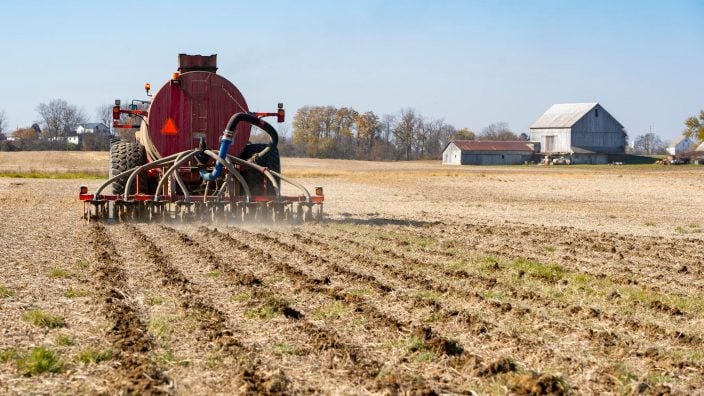
Current Agricultural Use Value is often discussed as a farmland preservation tool, but there are some other tools in the law that landowners can consider.
Read More
Update: As of Feb. 27, 2025, the Financial Crimes Enforcement Network announced no fines, penalties or enforcement action will be taken against companies based on failure to file or update BOI by March 21.
Read More

Update: As of Feb. 27, 2025, the Financial Crimes Enforcement Network announced they would not issue any fines or penalties or take enforcement action against companies based on failure to file or update beneficial ownership information reports by the March 21, 2025, deadline.
Read More

Update: As of Feb. 27, 2025, the Financial Crimes Enforcement Network announced they would not issue any fines or penalties or take enforcement action against companies based on failure to file or update beneficial ownership information reports by the March 21, 2025, deadline.
Read More