



Don’t raise a stink over insect’s emergence
Stink bugs also known as the Brown Marmorated Stink Bug (BMSB in the entomology world) are one of the earliest signs of spring to me here in Ohio.
Read MoreI grew up attending Farm Bureau meetings with my grandparents, playing on the floor with toy tractors while business was discussed. Evenings and weekends were spent running around the farm helping with chores and projects with the promise of dinner and ice cream in exchange.
It was not until senior year of high school, choosing what to pursue next, that I considered a career in agriculture could provide me with more gratifying returns than a sweet treat at the end of the day. Farming was not only an important livelihood in my local community, but the foundation of so many communities across the globe.
In 2019, I received my bachelor’s degree in agriculture from The Ohio State University, excited to leap into the field (figuratively and literally) and contribute. I found my home in a smaller system than I was raised with, managing production of four acres of fruits and vegetables for distribution to urban community resources in Columbus. I felt excited, empowered and inspired to serve members of the community in need and connect them to fresh, healthy food. While the opportunity was cut short after just two seasons due to the pandemic, it lit a fire within me to pursue work with a global impact on agriculture.
The end of 2020 brought me the most meaningful opportunity of my life: I accepted a Graduate Research Assistantship at Colorado State University in Fort Collins, Colorado to begin a master’s degree in plant breeding and genetics.
After moving to Colorado in January 2021, I set to work on my project to characterize the genetic variation underlying a water-use trait in the crop sorghum. Sorghum is a crop domesticated in sub-Saharan Africa, with close relation to corn and sugarcane. It is an inherently drought-resistant crop, which is highly favorable in regions of the Great Plains regularly experiencing water-limited conditions. It was a shock to me, coming from a region where we tile fields to remove water, that farmers were in such desperate need of more water-efficient varieties.
The trait I have spent the last two years studying is known as the “limited transpiration” trait. Varieties with this trait would be able to reduce the rate at which they transpire (lose water vapor to the atmosphere as part of photosynthesis) in mid-season vegetative growth stages coinciding with periods of very dry air that cause high water demand. This allows the plants to conserve water in the soil profile during those unfavorable conditions to be available later for grain fill stages, increasing yields by 5%. My research focuses on figuring out which regions of the sorghum genome (genetic material) are controlling the trait. Once it is known where those regions are, plant breeders may be able to cross-pollinate to transfer them into well-performing varieties grown in farmer fields. Hopefully in a few years, more water-efficient sorghum varieties with the ‘limited transpiration’ trait will be grown across the U.S. Sorghum Belt and globally drought-prone regions in part thanks to the results of my research.
As I gear up to graduate with my master’s in December 2022, I have accepted an offer to continue as a PhD student to earn my doctorate in ecological and quantitative genetics. I will still be working with sorghum, focusing on identifying the genetic control of iron deficiency chlorosis (IDC) resistance. Iron deficiency is a huge issue in sorghum production areas. This project will allow me to explore sorghum varieties from all over Africa to locate sources of tolerance to these nutrient issues, leading to breeding of IDC resistant varieties and a reduced need for field application of iron amendments.
I have never felt more passionate about my path. By working in the public sector of research, I am contributing to publicly available knowledge that will further the sustainability of agriculture. Crop varieties bred to be adaptive to environmental stressors, like drought and nutrient deficiencies, are an integral tool for farmers in their mission and job to feed and fuel the world.
If you have questions or further interest in my research, reach out with an email to [email protected]. I’d love to hear from you!
Submitted by Gina Cerimele, a Trumbull County native and is now a graduate research assistant and student at Morris Lab in the Colorado State University Department of Soil and Crop Sciences.
OFBF Mission: Working together for Ohio farmers to advance agriculture and strengthen our communities.


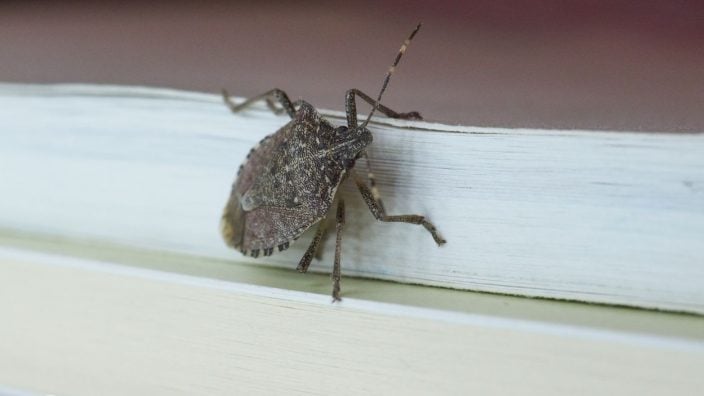
Stink bugs also known as the Brown Marmorated Stink Bug (BMSB in the entomology world) are one of the earliest signs of spring to me here in Ohio.
Read More
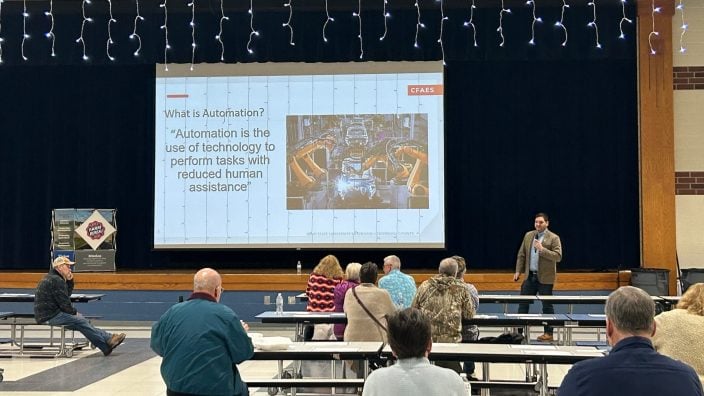
Through all of life’s changes, Trumbull County has become not just a place we work, but the place we call home.
Read More
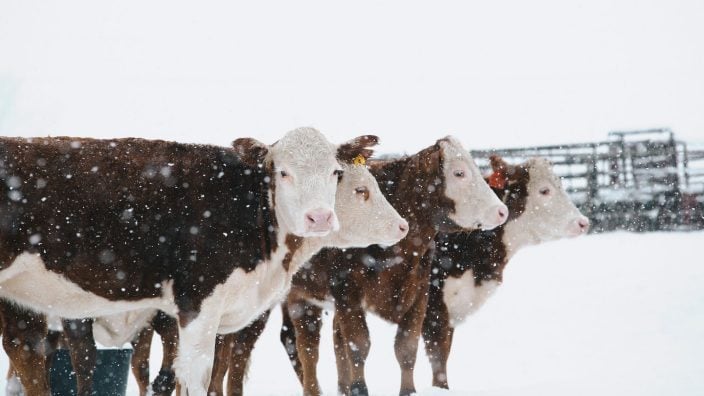
Most livestock animals are well adapted to cold weather, but farmers take extra measures when extreme temperatures come.
Read More

We often talk about the moments that shape us — big decisions, career paths and life milestones. But more often than not, it’s not the moments that define us. It’s the people.
Read More
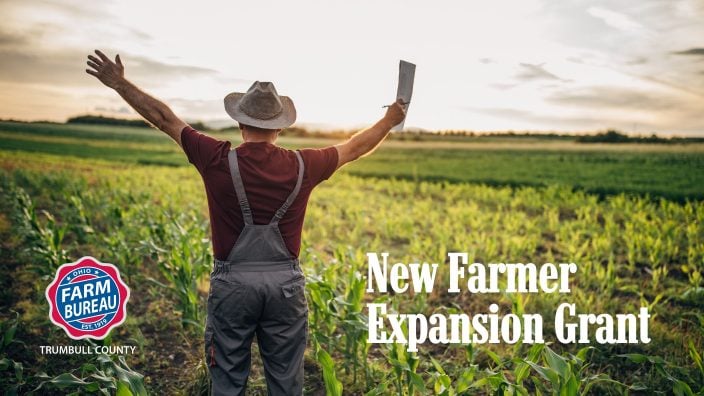
The purpose of this $1,500 grant is to help offset farm operation costs. This can include but is not limited to: fuel costs, fertilizer costs, equipment costs, land rent, etc.
Read More
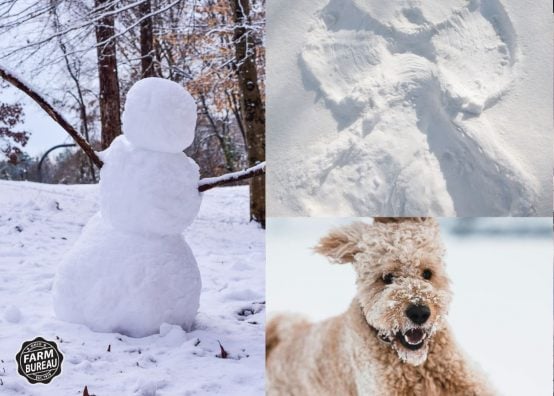
I’m going to give you a list of things that you can do that will get you outside and actually enjoy the snow.
Read More

As kids, we are often told to try new things, whether it be a new food, a new activity or…
Read More
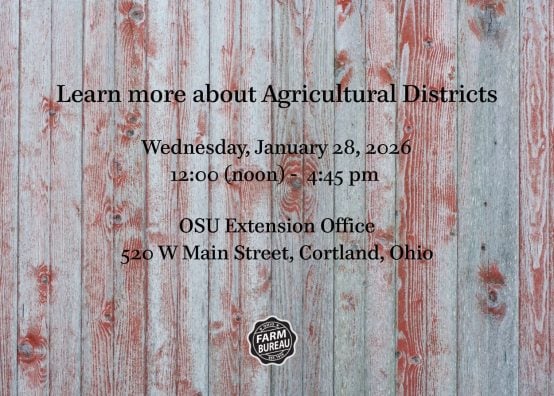
Learn more about ag districts from noon to 4:45 p.m. Jan. 28 at the OSU Extension Office, 520 W. Main Street in Cortland.
Read More
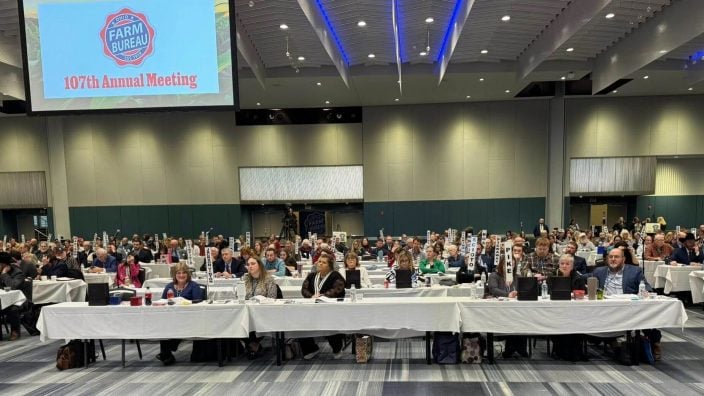
We aren’t just reacting to change — we’re shaping the future of agriculture, one conversation and one decision at a time, together.
Read More

Today, there are close to 15,000 farms growing Christmas trees in the U.S., and over 100,000 people are employed full- or part-time in the industry.
Read More