






Understanding your cattle brings benefits
Knowing how a certain cow acts or responds can often indicate something about her health and well-being as well.
Read MoreI’m probably going to jinx us with this talk about the signs of spring, but I’m going to be brave and forge ahead.
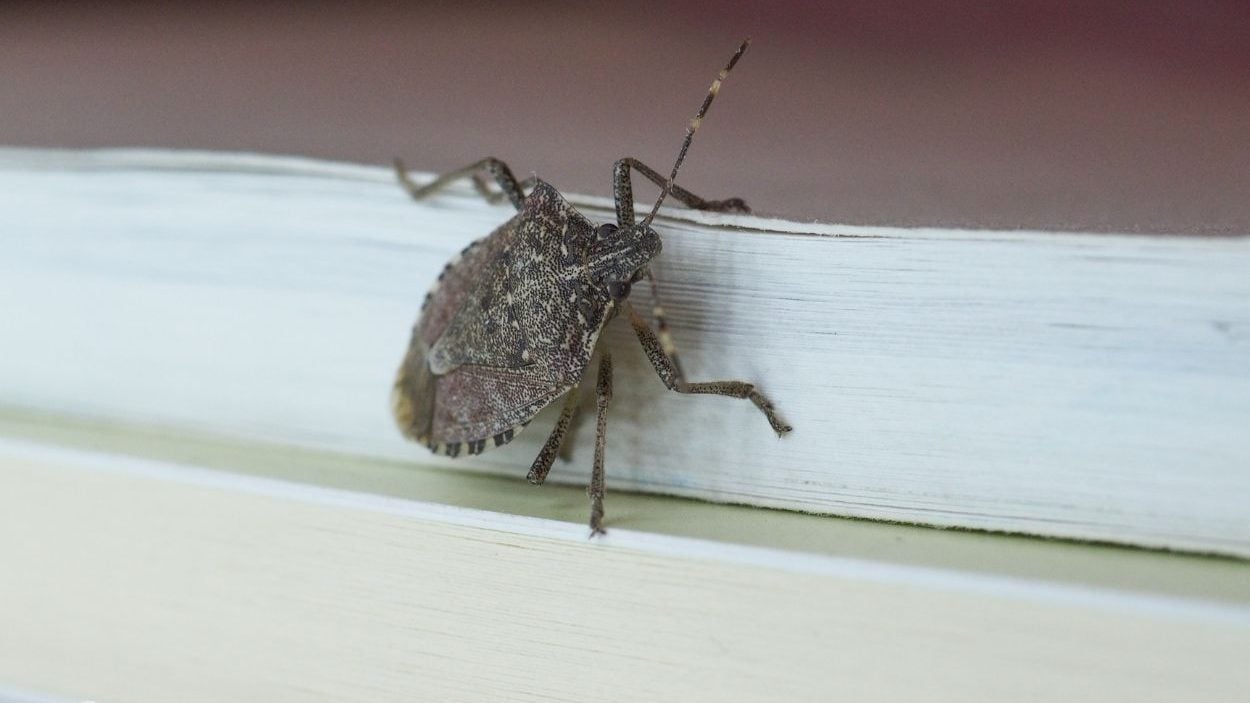
I’m beginning to see signs of spring everywhere, and one of my weird favorites is the stink bug. Stink bugs also known as the Brown Marmorated Stink Bug (BMSB in the entomology world) are one of the earliest signs of spring to me here in Ohio.
It was brought to my attention early one morning at work when walking down the white hallway, I noticed a distinctive brown spot on the wall. Carefully, because you never know what brown spots on a white wall might be in a school, I peered closer and lo and behold, a stink bug was slowly crawling his way up the wall taking refuge from the soon-to-be-released chaos of a high school hallway. Later that afternoon, two more appeared in various other hallways and by the end of day, Moe, my new resident stink bug, had taken refuge in my room.
I won’t lie, it took a good couple of minutes to reassure my students that Moe wouldn’t hurt them. He had found himself the perfect place, nestled in the corner by my windows and he wasn’t budging. However, every student developed a sudden fascination and wanted to crush Moe.
I understand why stink bugs are called stink bugs — they smell when handled, threatened or crushed. I, however, am one of those weird people that don’t actually smell stink bugs. For some reason, my normally amazing nose doesn’t register the chemical compounds (trans-2-octenal and trans-2-decenal) stink bugs release. For some, these chemical compounds can smell like a strong cilantro, coriander or even chemicals like burnt rubber. I just smell air, sometimes musty air, but air. However, I’m smart enough to realize that scaring or crushing Moe could result in classroom upheaval, so Moe stayed. Sadly, walking into my classroom this morning, Moe has moved onto greener pastures and no longer inhabits my window corner. I wish him the best.
So why do I equate the earliest signs of spring with stink bugs? Well, it’s simply based on observation. In the fall, stink bugs come into the school through cracks and small openings. Stink bugs can be found crawling on the wall, hanging onto the ceiling, and crushed on the floor; not in copious amounts, but enough to notice them. Then winter comes and the stink bugs disappear.
It’s subtle at first; the ones crushed on the ground disappear, then the ones crawling on the walls, and finally the ceiling dwellers begin to hide. Unlike mammals, bugs don’t hibernate; they enter a state called diapause where they hide in walls, attics, behind siding and other places, slowing their metabolism enough to remain completely inactive for months. Then, once they sense a subtle shift in the weather, they emerge. This subtle shift and emergence signals the beginning of spring and why, in my mind, stink bugs herald the arrival of spring.
So I’ll be the first to admit, I thought that there was only one type of stink bug, that brown bug that kind of reminds me of a tank in bug form.
However, Ohio is actually home to five different species of stink bugs. These include the Brown Marmorated Stink Bug, the Green Stink Bug, Brown Stink Bug, Spined Soldier Bug, Rough Stink Bug, and the Two-Spotted Stink Bug. They all have the shield shaped body and are between 1/2 inch and 5/8 of an inch long and their favorite foods include fruits, vegetables and soybeans.
Stink bugs are an invasive species from China, Japan, Korea and Taiwan. They first arrived in the United States in Allentown, Pa., in 1998 (Potter & Bessin, 2020). Currently, the Brown Marmorated Stink Bugs are found in 40 to 47 states and four Canadian provinces; however, they are not found in states like Wyoming, South Dakota, North Dakota and Montana (National Institute of Food and Agriculture). Populations in places like Oregon and Washington have fluctuated (National Institute of Food and Agriculture). In Ohio specifically, 62 out of 88 counties have shown stink bug populations (National Institute of Food and Agriculture).
Trumbull County, from my observation, seems to have a pretty firmly established stink bug population and no natural enemies. Since this pest is still fairly new, researchers are still studying the agricultural impact it is having on the country.
So while I still look outside and see snow coating the ground and the winter breezes still nipping my nose, spring is coming. No matter how slow it may seem to arrive, soon the beauty of spring will arrive. Blooming flowers, longer days and warmer air also quietly ushers in something far less charming. Right alongside the daffodils comes the annual reemergence of the stink bug. In fact, I would go so far as to say, maybe we should replace Punxsutawney Phil with Sam the Stink Bug. After all, it’s not the groundhogs that signal the arrival of spring — it’s the stink bugs.
Submitted by Christen Clemson, a member of the Trumbull County Farm Bureau and who completed her Ph.D. at Pennsylvania State University. She and her family farm in Mecca Township.
OFBF Mission: Working together for Ohio farmers to advance agriculture and strengthen our communities.




Knowing how a certain cow acts or responds can often indicate something about her health and well-being as well.
Read More

This fall, as you’re picking up a pumpkin spice latte or an apple cider doughnut, don’t forget to bring home a squash.
Read More

Preparation may not be as exciting as purchasing new equipment, but when an emergency occurs, it can be one of the best investments you ever make.
Read More

The Grange was a place to meet with and get to know your neighbors in a safe, family-friendly atmosphere.
Read More

Bill Patterson of Chesterland is serving on the 2026 Ohio Farm Bureau Federation Policy Development Committee.
Read More

Marsha Stanhope of Kinsman is serving on the 2026 Ohio Farm Bureau Federation Policy Development Committee.
Read More
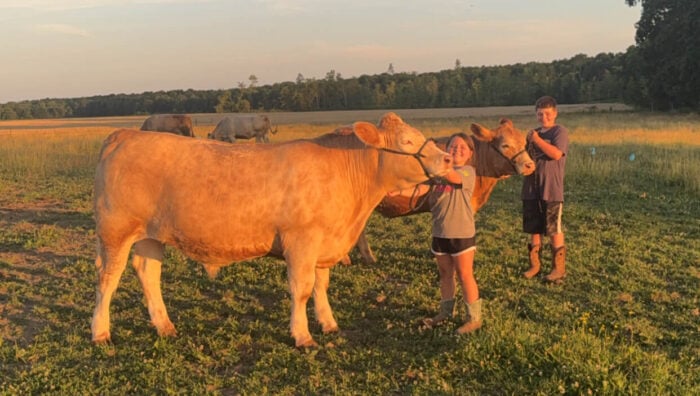
While we may walk into those barns thinking we’re raising livestock for the county fair, somewhere along the way we’re raising kids, too.
Read More

Who knew that what started as having to come up with a prefix for my first homebred Jersey would grow into such a brand and new business ventures for me.
Read More

Not every child will grow up on a farm, but every child deserves some version of the freedom my grandparents’ farm gave me — the freedom to be curious, learn by doing and grow at their own pace.
Read More

Canning and freezing are the most common ways to preserve garden vegetables, but it’s important to follow the correct steps to preserve quality and taste, and to promote food safety.
Read More