




Don’t raise a stink over insect’s emergence
Stink bugs also known as the Brown Marmorated Stink Bug (BMSB in the entomology world) are one of the earliest signs of spring to me here in Ohio.
Read MoreWith a long dry stretch like the one we’re in now, there are several ways that farmers can still help give their crops a good chance.
Hello Everyone. I hope you are all making the most of the extended dry and warm weather.
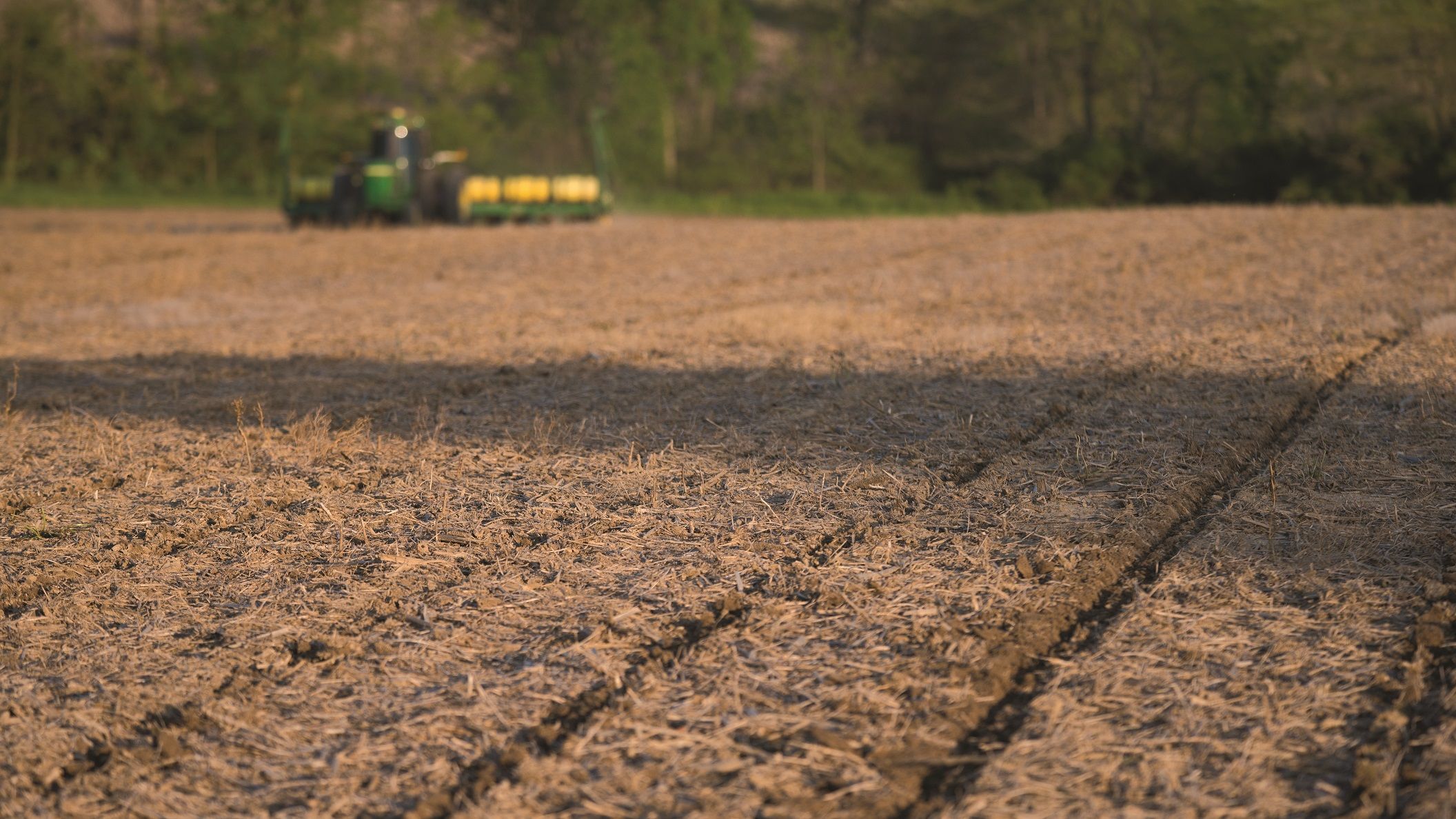
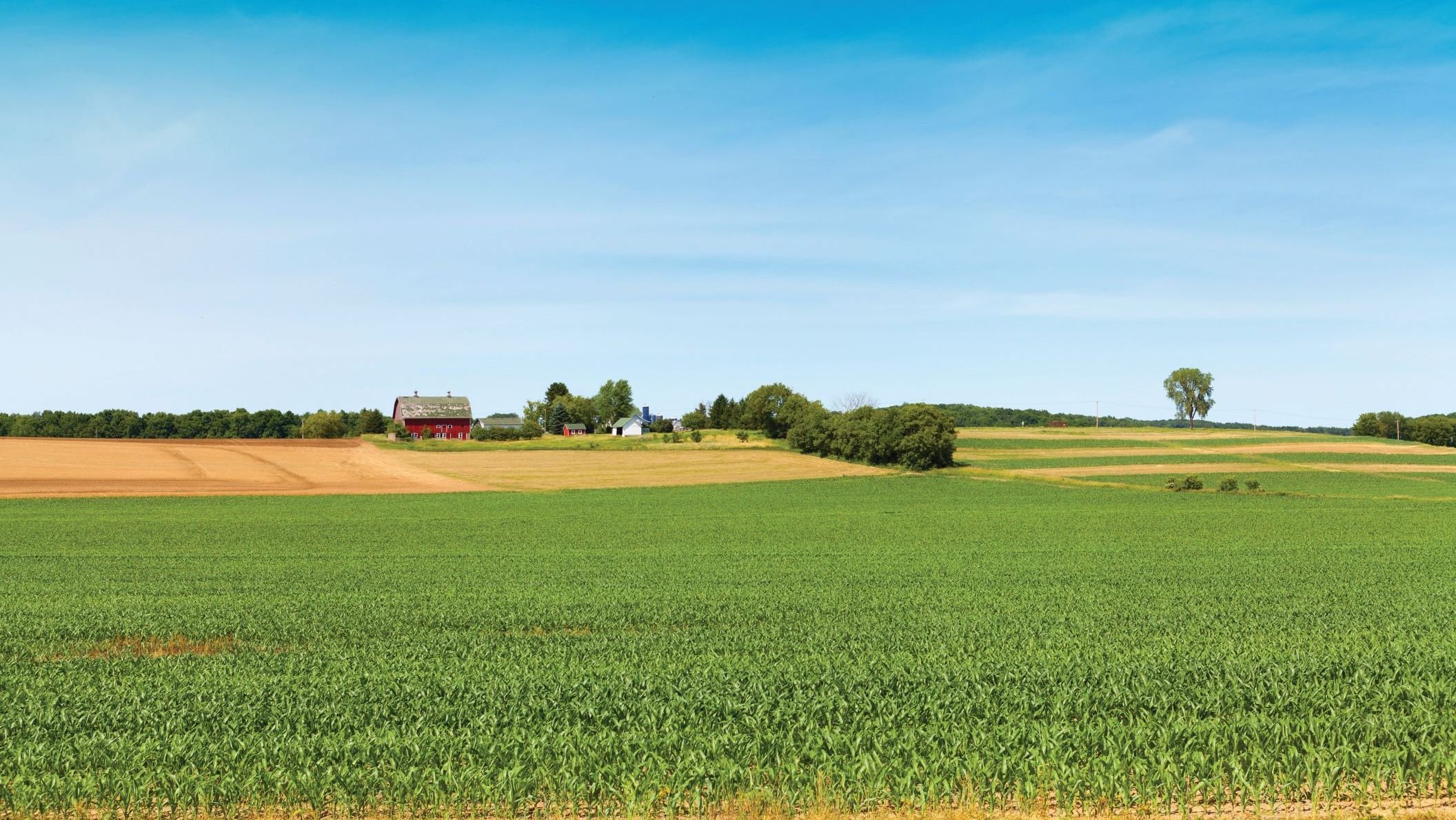
Every farmer in northeast Ohio has been busy getting crops planted, and some are even making hay. After a wet April, which delayed quite a lot of field work and made farmers nervous, this stretch of weather initially felt like a well-earned gift. However, at this point most of our crops have been planted in Trumbull County and now we need rain to help get the crops out of the ground. Much of the county has received less than 2 inches of rain for the month, and most of that fell about 20 days ago. The extended forecast doesn’t offer much relief either.
With a long dry stretch like the one we’re in now, there are several ways that farmers can still help give their crops a good chance. The first option is to alter the seeding depth. The farther down you go, the more moisture you will find, so it may be beneficial to plant a half-inch deeper to get the seed closer to the water it needs to germinate.
The second option is to limit the number of tillage passes across the field. Exposing soil to the sunlight and wind is a very quick way to dry it out, so tilling less will help maintain some of the soil’s existing moisture.
The third option is to install irrigation. Irrigation is not very common in our part of the country because we are usually fighting too much water, not too little. A good shot of moisture at the correct time can make a big difference in periods of little rain. In-home gardens, this is often not a difficult task to accomplish with a garden hose or sprinkler.
Over several hundred or thousands of acres, however, you need a much more advanced system. To replace one inch of rainwater, you would need to pump approximately 23,000 gallons of water for each acre. Imagine that water bill!
I’ve said it a thousand times — farming is about trade-offs. Planting deeper may delay germination, thus causing disease issues or poor stands. Moving to no-till practices will retain moisture, but the soil will warm up slower, which will delay planting. Irrigation is expensive, and in many years it may not be needed. We would all like to have our cake and eat it too, but sometimes we must make a decision that is best for the current conditions.
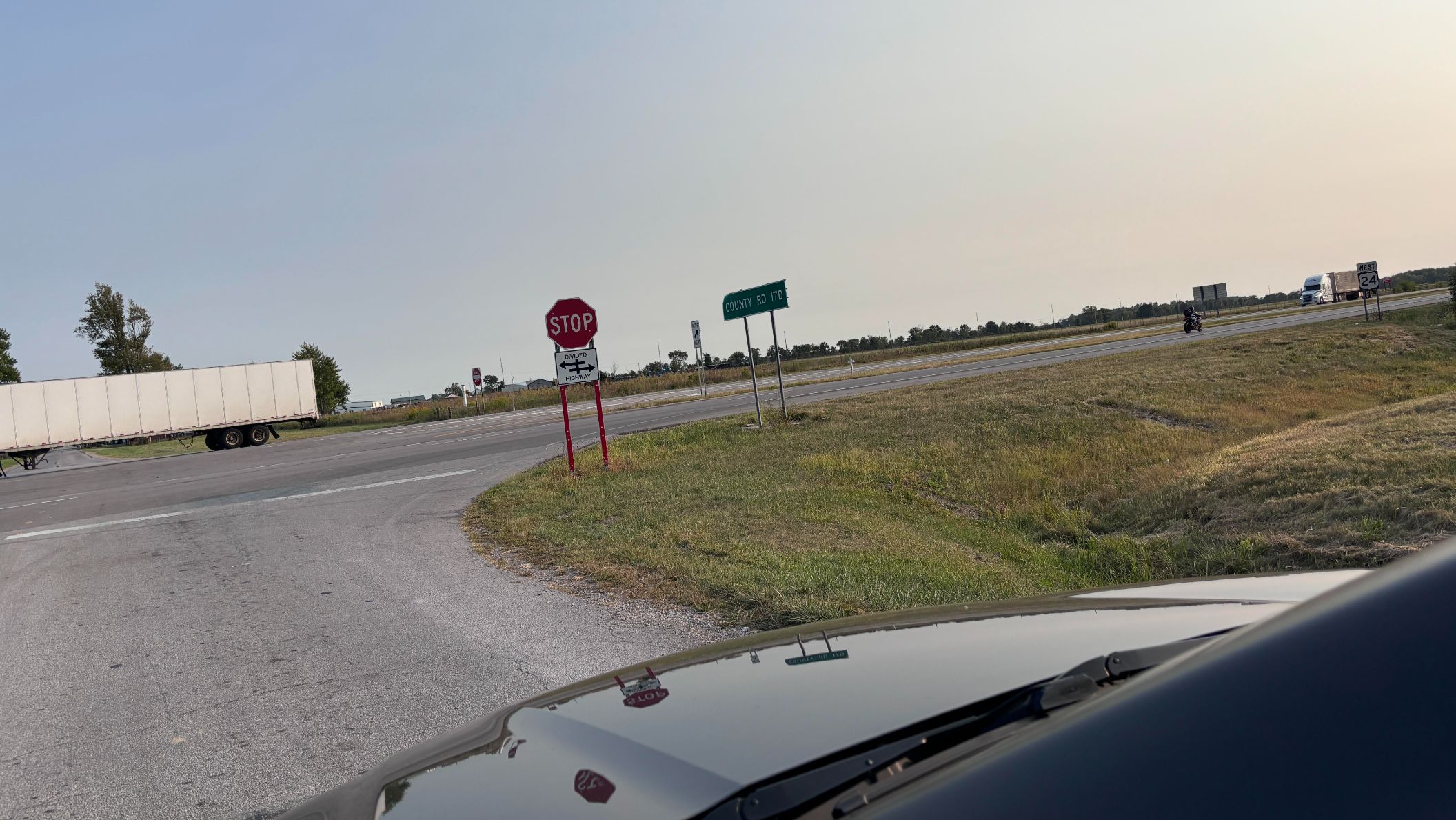
Like I mentioned, we are heading into more dry weather. Most farmers will be out working in the fields whether it is mowing hay, spreading manure or planting soybeans. To do their work they will need to use the roads to move equipment, so be sure to give them some space! If you see the orange slow-moving vehicle (SMV) sign, slow down and pay attention. Equipment continues to get bigger, and mailboxes are still just as close to the road as always. Let’s not add to our neighborhood farmers’ stress by being impatient or driving too close to them in an attempt to get on our way. Remember — no farms, no food!
Stay safe!
Submitted by Lee Beers, an Agriculture & Natural Resources Educator for OSU Extension – Trumbull County. He can be reached by email.
OFBF Mission: Working together for Ohio farmers to advance agriculture and strengthen our communities.


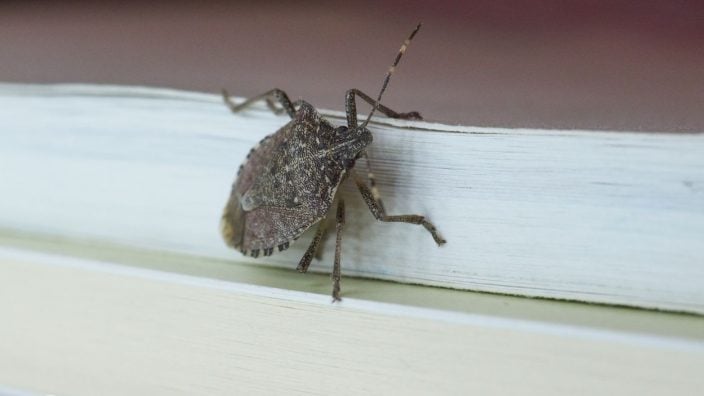
Stink bugs also known as the Brown Marmorated Stink Bug (BMSB in the entomology world) are one of the earliest signs of spring to me here in Ohio.
Read More
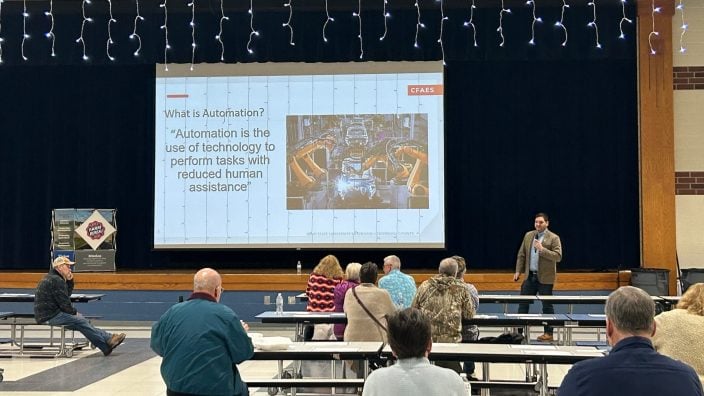
Through all of life’s changes, Trumbull County has become not just a place we work, but the place we call home.
Read More
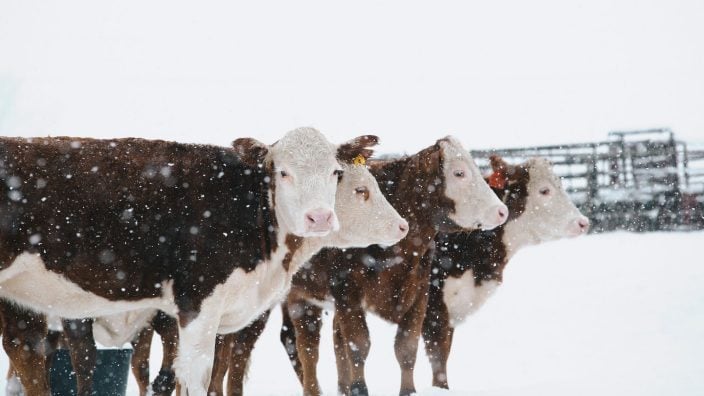
Most livestock animals are well adapted to cold weather, but farmers take extra measures when extreme temperatures come.
Read More

We often talk about the moments that shape us — big decisions, career paths and life milestones. But more often than not, it’s not the moments that define us. It’s the people.
Read More

The purpose of this $1,500 grant is to help offset farm operation costs. This can include but is not limited to: fuel costs, fertilizer costs, equipment costs, land rent, etc.
Read More

I’m going to give you a list of things that you can do that will get you outside and actually enjoy the snow.
Read More

As kids, we are often told to try new things, whether it be a new food, a new activity or…
Read More
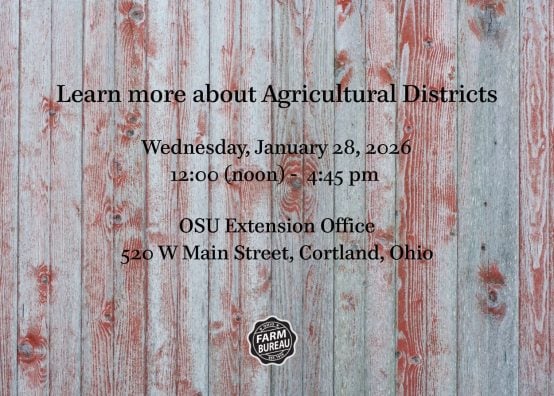
Learn more about ag districts from noon to 4:45 p.m. Jan. 28 at the OSU Extension Office, 520 W. Main Street in Cortland.
Read More
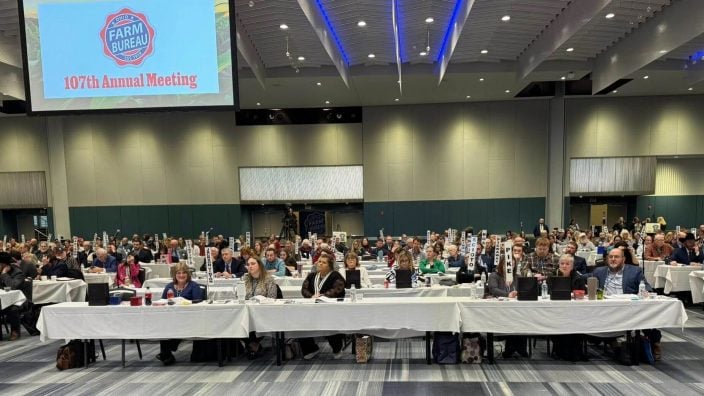
We aren’t just reacting to change — we’re shaping the future of agriculture, one conversation and one decision at a time, together.
Read More

Today, there are close to 15,000 farms growing Christmas trees in the U.S., and over 100,000 people are employed full- or part-time in the industry.
Read More