




Legal with Leah: The questions around data centers
Leah Curtis joins this Legal with Leah to talk about what data centers mean for local communities and how to stay engaged in the development process
Read MoreFrom a case in Canada, a farmer must follow through on a $82,000 contract for flax which was confirmed via a text message stream answered by a thumbs-up emoji.
In this Legal with Leah Podcast, Ohio Farm Bureau Policy Counsel Leah Curtis sheds light on a case from Saskatchewan, Canada, where a farmer must follow through on a $82,000 contract for flax which was confirmed via a text message stream answered by a thumbs-up emoji.
Listen to Legal with Leah, a podcast featuring Ohio Farm Bureau’s Policy Counsel Leah Curtis discussing topics impacting farmers and landowners.
Ty Higgins [00:00:00] After this conversation on Legal with Leah, you’re never going to use emojis the same again. I can guarantee it. I’m Ty Higgins, joined by Leah Curtis, policy counsel with Ohio Farm Bureau. Leah, how are you doing?
Leah Curtis [00:00:10] I’m good. How are you?
Ty Higgins [00:00:11] Good. So this news has been circulating in a lot of ag publications lately about a grain contract that was signed, sealed and delivered by an emoji. As scary as that may sound. Let’s start with what happened in this particular case.
Leah Curtis [00:00:25] So I want to start by being clear that this was a case in Canada. And so always remember that different jurisdictions have different laws, different precedent. But what happened was a grain buyer had sent out a text to a bunch of farmers and said, we’re looking for a delivery of flax at a certain time of year. And they had a few phone calls with this specific farmer, and then they texted a picture of a signed contract signed by the buyer to the farmer, and the farmer responded with a thumbs up emoji.
Ty Higgins [00:00:55] It’s unbelievable to me that that would justify a contract. But from then the trouble starts. Eventually they end up in court over this.
Leah Curtis [00:01:05] So whenever you have a contract that people don’t agree on, you’re pretty much going to court. So the price of flax goes up considerably, considerably higher, than what was originally in that contract. The farmer doesn’t deliver the grain as stated in the contract. And so the farmer says, well, I never agreed to that contract. The grain buyer says, Oh yeah, you did. That thumbs up was an agreement. And so they end up in court to figure it out. And eventually the court does rule that they had a contract, that that thumbs up emoji showed agreement to the contract and the farmer was liable for breaching the contract. So they did owe a significant amount of money to that grain buyer for not delivering that grain under those terms.
Ty Higgins [00:01:44] Now, there was some back story here, too, that could have contributed to this decision.
Leah Curtis [00:01:49] Yeah, it’s important to remember that decisions like this always take into account all the facts at hand. So this is why when people ask us that age old question of like, Will I be liable if X, we always say, look, you know, we’re going to look at everything that happened and the court would look at everything that happened. So the court found that the farmer had previously agreed to contracts shown by the fact that they delivered grain and complied with those contracts in the past, in somewhat similar situations. The contract was sent by a text message. The farmer would respond with a yep, or good or that sounds good. Maybe some other one word answer. And so the court said the meaning of the thumbs up is essentially the same as all those things and the way those previous contracts were carried out suggests that the same thing occurred here, that you agreed to the contract and so you are liable.
Ty Higgins [00:02:34] You mentioned this happened in Canada. Is this something that could happen here, too?
Leah Curtis [00:02:38] It’s certainly possible. Again, there are certain standards that apply to grain contracts as to what serves as confirmation. And again, a court is going to look at all the facts at hand and any individual situation. But certainly it would be possible. We’ve had cases that, I don’t know that we’ve had any emoji cases, but we’ve had cases where very limited stuff has been written on a napkin and two people signed it and that became a contract. So certainly it would be possible.
Ty Higgins [00:03:03] So as Ohio farmers, what can we learn from this?
Leah Curtis [00:03:06] You know what I’m going to say, Ty? That you should always have a contract reviewed by a lawyer. I know a lot of people are shaking their head at me right now. I know the grain contract that’s not necessarily likely to go through that process, but it does show you always be careful and clear with your intentions in these situations. The farmer tried to argue here that the thumbs up was more just an indication that he’d received that contract. And so if that is true, this all could have been avoided with instead of the thumbs up emoji, saying received, we’ll review, get back to you tomorrow… Those few extra seconds to actually text out those words instead of an emoji could have saved a lot of money and a lot of time.
Ty Higgins [00:03:47] And as you said earlier, the prior conduct mattered in this case, too.
Leah Curtis [00:03:51] Yeah. If you have an established course of conduct, kind of what we call it in the legal world when it comes to these types of agreements, then that’s going to be relevant to the court and they’re going to look for, you know, did the other side have a reason to think, oh, you’ve always done this before that way, so that makes sense. So if you don’t want things to go the same way, you need to be clear about that.
Ty Higgins [00:04:14] So maybe avoid using emojis when making grain deals.
Leah Curtis [00:04:19] Yes, I love emojis as much as the next person, but you know somebody’s smiley face is somebody else’s cry laugh face. So just, you know, when an agreement comes to your business, to your farm, it could cost you a lot of money. It’s probably best to take those few minutes, actually type out the words a clear response instead of using those emojis.




Leah Curtis joins this Legal with Leah to talk about what data centers mean for local communities and how to stay engaged in the development process
Read More
Ohio Farm Bureau advocated for a change in the law to allow family members and employees to handle pesticides while under the supervision of a licensed applicator. The rules around HB 10 are being finalized.
Read More
Four property tax reform bills were signed into Ohio law at the end of 2025. Ohio Farm Bureau Associate General Counsel Leah Curtis breaks down the bills and what the changes mean for Ohioans.
Read More

Learn what the requirements are to legally fly a drone in Ohio as well as steps the Ohio Legislature has taken in terms of security concerns.
Read More
In 2025, about 21 counties are going through a reappraisal or update, and because Ohioans pay taxes one year behind, they will see new property tax bills in January 2026.
Read More
Any unlicensed handlers who use restricted use pesticides will need to have additional training. Farm Bureau will be working on legislation to give employers a choice on how to provide training.
Read More
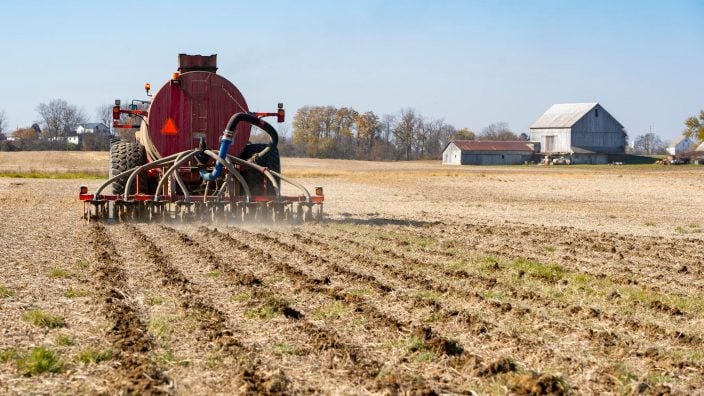
Current Agricultural Use Value is often discussed as a farmland preservation tool, but there are some other tools in the law that landowners can consider.
Read More
Update: As of Feb. 27, 2025, the Financial Crimes Enforcement Network announced no fines, penalties or enforcement action will be taken against companies based on failure to file or update BOI by March 21.
Read More

Update: As of Feb. 27, 2025, the Financial Crimes Enforcement Network announced they would not issue any fines or penalties or take enforcement action against companies based on failure to file or update beneficial ownership information reports by the March 21, 2025, deadline.
Read More

Update: As of Feb. 27, 2025, the Financial Crimes Enforcement Network announced they would not issue any fines or penalties or take enforcement action against companies based on failure to file or update beneficial ownership information reports by the March 21, 2025, deadline.
Read More