


Don’t raise a stink over insect’s emergence
Stink bugs also known as the Brown Marmorated Stink Bug (BMSB in the entomology world) are one of the earliest signs of spring to me here in Ohio.
Read MoreI thought it would be interesting to ask consumers with no daily agriculture experience four questions, and see what they really have questions and concerns with.
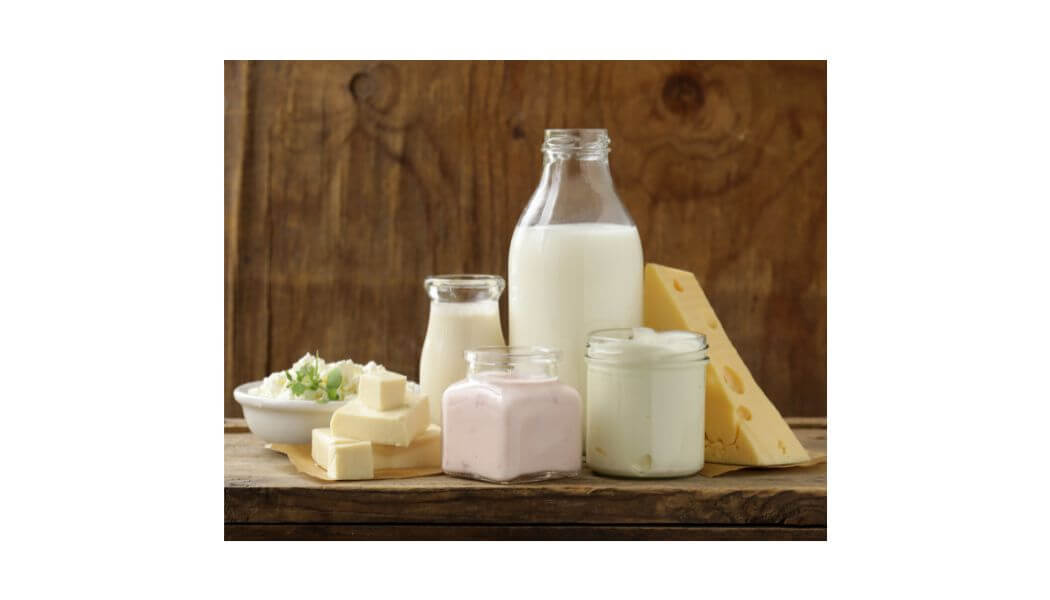
As a dairy producer, I often know how I think of the industry as an insider, but I often wonder how the public really perceives dairy farming. I am sure there are a lot of questions they may have that they genuinely don’t know who to ask. With that, I thought it would be interesting to ask consumers with no daily agriculture experience four questions, and see what they really have questions and concerns with.
Q: How would you describe your knowledge about the dairy industry?
Emily’s answer: My knowledge of the dairy industry is minimal.
Carole’s answer: I understand raising dairy cows and the milking process a little better than most non-farmers, but my knowledge on what happens after the milk leaves the farm is quite limited. I also don’t stay current with issues in the industry.
Q: What are your thoughts on conventional versus organic milk?
Emily’s answer: I personally purchase conventional milk because of (the) price. I question if the organic milk is really organic, or if it is a marketing gimmick to get consumers to pay more.
Carole’s answer: I feel that if organic is better than conventional then there would be a huge movement, especially from the medical field, to make organic milk the primary product. For the most part, it seems as though there “may” be a benefit, but it really hasn’t been found to be a substantial one yet. I also think the term “organic” is loosely applied to products and gives people the belief that they are consuming something “purer” when this may not be the case. To me, milk is milk. I grew up on conventional milk, so that is what I drink as an adult.
Kelly’s answer: It’s not worth the cost difference. My understanding is that there are super strict rules on all dairy, so the typical arguments for buying organic aren’t as relevant as say, with produce. Unfortunately, I don’t think most consumers realize that, and so there’s a negative connotation that conventional milk is somehow inferior, which it’s not. I think if you have personal ethical concerns about animal treatment, etc., your best bet is to buy direct from a farm rather than trust the organic label.
Q: Do you have any questions/concerns with dairy farming practices?
Emily’s answer: My concerns are primarily with the farmers, the longevity of their careers, and the general direction of the industry. There is already a shortage of farmers, and with fewer and fewer young people entering the industry, I’m concerned about the long-term consequences. What happens when there are no more farmers left? What happens when all the farming land is converted into housing developments?
I’m also concerned with the growing trend of non-dairy products such as almond milk and coconut yogurt, and the effect this will have on our health long-term. Humans have been drinking milk forever. There is one ingredient in milk, it’s just milk. There are multiple ingredients in almond milk: ascorbic acid, plenty of added sugars, carrageenan, and who knows what other chemicals. Is non-dairy (milk) all that much healthier for us than regular milk?
Carole’s answer: A lot of farmers use artificial insemination for breeding. How good is the testing for genetic conditions? I imagine there could be issues in the long-term future if there isn’t careful screening.
Kelly’s answer: Not a specific question, but I would love to see dairy farming (and especially smaller farms) be more visible to the general public. I think there is so much misinformation about farming practices that’s largely driven by what people see about the huge farms (documentaries by animal rights groups, etc.).
Q: Do you regularly consume dairy products, and if so, what do you typically purchase?
Emily’s answer: I consume plenty of dairy products, including milk, coffee creamer and half-n-half, yogurt, all sorts of cheeses, ice cream, sour cream, and lots of butter.
Carole’s answer: I usually get 2% milk for myself and my husband, whole milk for my toddler, butter, cheese, coffee creamer, and ice cream … lots of ice cream.
Kelly’s answer: We regularly buy milk, cheese, yogurt, sour cream … and the occasional ice cream.
Submitted by Julianne Holler, a member of the Trumbull County Farm Bureau board of trustees.
OFBF Mission: Working together for Ohio farmers to advance agriculture and strengthen our communities.


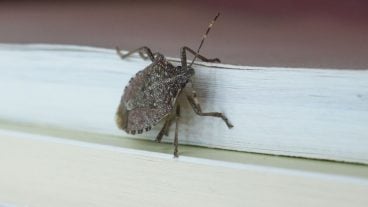
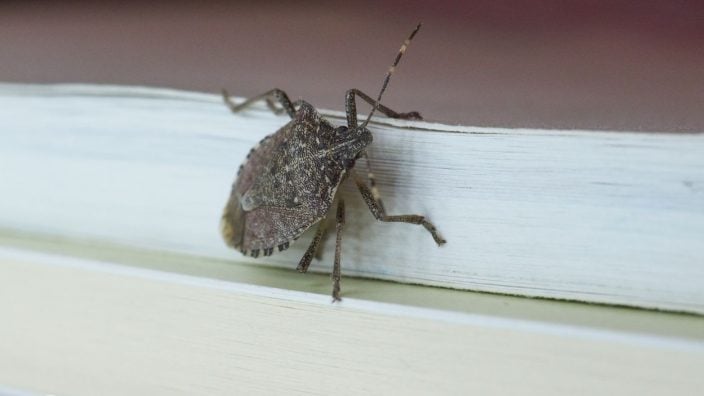
Stink bugs also known as the Brown Marmorated Stink Bug (BMSB in the entomology world) are one of the earliest signs of spring to me here in Ohio.
Read More
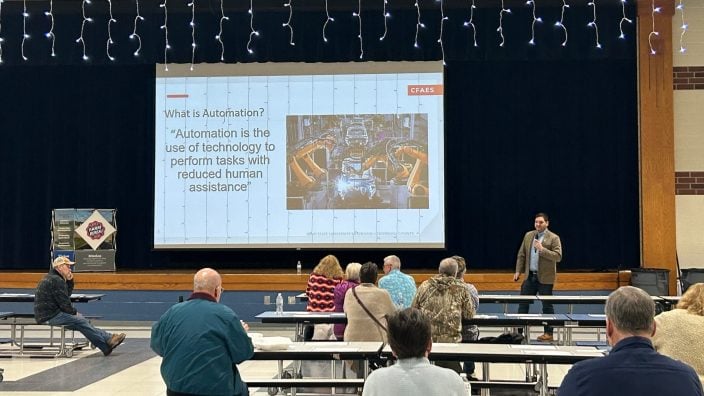
Through all of life’s changes, Trumbull County has become not just a place we work, but the place we call home.
Read More
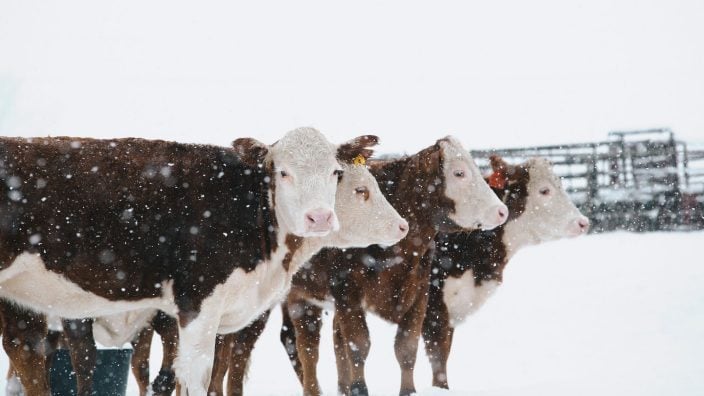
Most livestock animals are well adapted to cold weather, but farmers take extra measures when extreme temperatures come.
Read More

We often talk about the moments that shape us — big decisions, career paths and life milestones. But more often than not, it’s not the moments that define us. It’s the people.
Read More
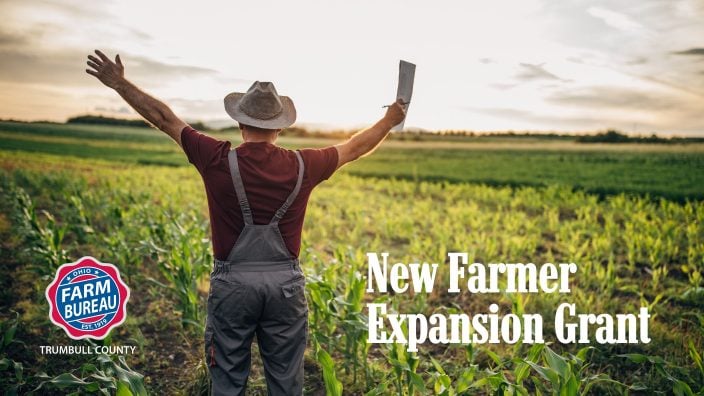
The purpose of this $1,500 grant is to help offset farm operation costs. This can include but is not limited to: fuel costs, fertilizer costs, equipment costs, land rent, etc.
Read More

I’m going to give you a list of things that you can do that will get you outside and actually enjoy the snow.
Read More

As kids, we are often told to try new things, whether it be a new food, a new activity or…
Read More
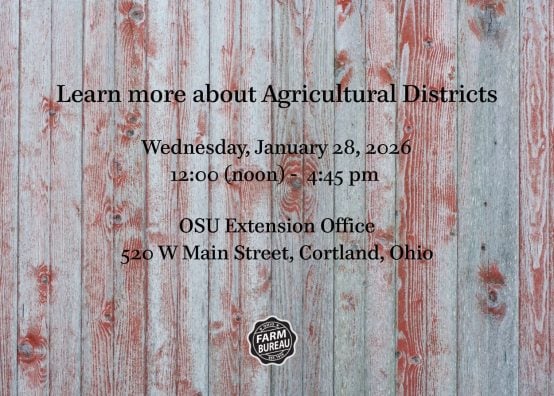
Learn more about ag districts from noon to 4:45 p.m. Jan. 28 at the OSU Extension Office, 520 W. Main Street in Cortland.
Read More
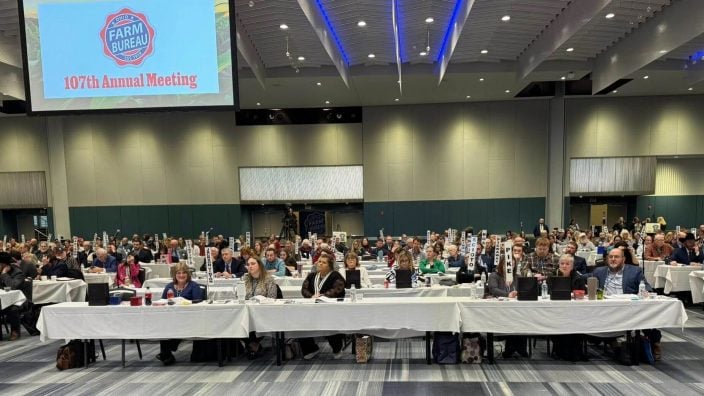
We aren’t just reacting to change — we’re shaping the future of agriculture, one conversation and one decision at a time, together.
Read More

Today, there are close to 15,000 farms growing Christmas trees in the U.S., and over 100,000 people are employed full- or part-time in the industry.
Read More