


Don’t raise a stink over insect’s emergence
Stink bugs also known as the Brown Marmorated Stink Bug (BMSB in the entomology world) are one of the earliest signs of spring to me here in Ohio.
Read MoreI had a conversation with my adult daughter recently about growing up on a farm. She told me she didn’t always enjoy it, but it is something she wouldn’t change. In fact, now as an adult, she really misses the farm and the animals. It got me thinking about the things society would consider the negative drawbacks of growing up on a farm.
Because we had dairy cows that had to be milked twice per day, our activities were restricted or at least modified. Vacations were rare and short. Seldom did both parents make it to the band concerts or any event held in the evening. The girls had to choose soccer or softball for the busy summertime, not both. Plans were spoiled because of a cow, like the time we missed the Memorial Day parade because we had to have the veterinarian out for one of our favorite cow’s difficult delivery of twins.
I remember an experience our oldest daughter had while in high school. It was spirit week leading up to the homecoming football game. Each day students were encouraged to dress up according to the daily theme. Around the lunch table the discussion turned to the next day’s theme — Farm Day. One young man said, “We get to dress up like hicks.” Well, Laura didn’t take too kindly to that and asked him if he was calling her a hick. Poor kid, just didn’t get it that he had been sucked into the stereotype many nonfarming people had. That is, until Laura schooled him in what it really took to be a successful farmer.
Looking back on that situation and others like it along with the sacrifices my farm kids made over the years, I am very proud of each of them. I truly believe because they grew up and worked on our farm, they learned invaluable lessons that have made them more successful as they have pursued careers.
Working on the farm gave them a work ethic like not many have today. They know what it is like to work hard until the job is done, whether it is with others or independently. When they were responsible for a task, they had better do it correctly and completely. The girls learned to problem solve on their own, but also to ask for help when it was needed, but never let something go undone.
My kids and other farm kids learn to be flexible because things don’t always go as planned. It was a lesson I hated because whether it was an unexpected calf being born or a cow escaping, or a frozen water fountain, you were going to be late for something — church, school or something. It still needed done even if it wasn’t on our preferred time frame or schedule.
Perseverance with a dose of humility is instilled in farm workers, young and old. On a farm you learn how to deal with disappointment and have an optimistic outlook regardless of the situation. There is very little instant gratification. You don’t reap the harvest right away. You have to plant the seed, care for it, pray it rains and hope to reap the benefits of a great harvest.
Work ethic, responsibility, critical thinking skills, flexibility, initiative, team player, real world skills, respect and humility. I’m not implying only those who grow up on a farm possess these qualities, and that nonfarm kids do not have these abilities. I believe growing up on a farm facilitates the opportunities for these skills to develop more naturally than it might for those without the same experiences or opportunities.
Even though our daughters have not pursued careers in agriculture, I believe their passion for the industry and those who farm will never die. Their experiences on the farm have made them great employees. Something I remember telling the girls about their farm work experience — if you can work for your dad and your uncle, you can work for anyone.
Submitted by Mary Smallsreed, a member of the Trumbull County Farm Bureau, who grew up on a family dairy farm in northeast Ohio.
OFBF Mission: Working together for Ohio farmers to advance agriculture and strengthen our communities.


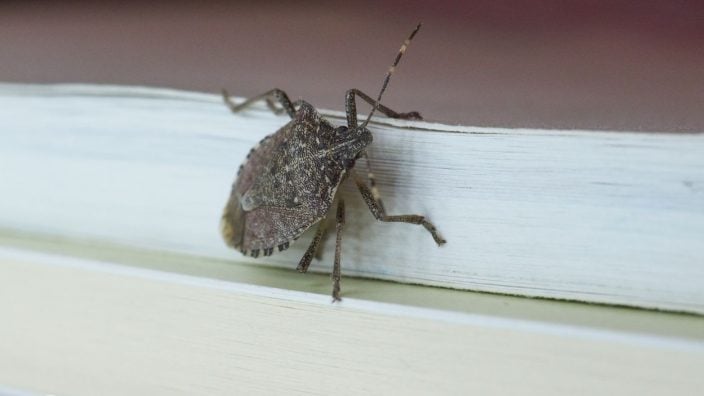
Stink bugs also known as the Brown Marmorated Stink Bug (BMSB in the entomology world) are one of the earliest signs of spring to me here in Ohio.
Read More
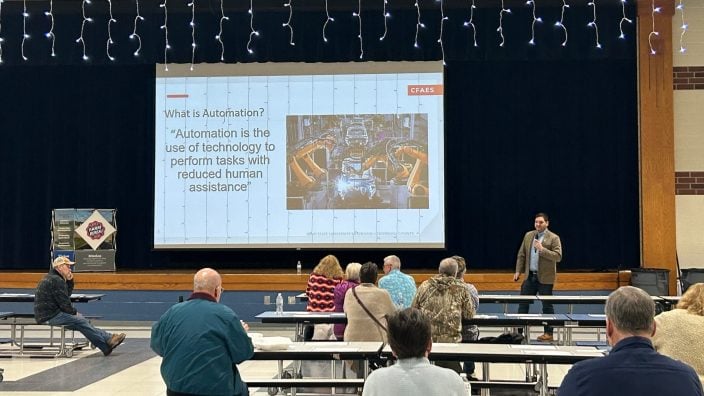
Through all of life’s changes, Trumbull County has become not just a place we work, but the place we call home.
Read More
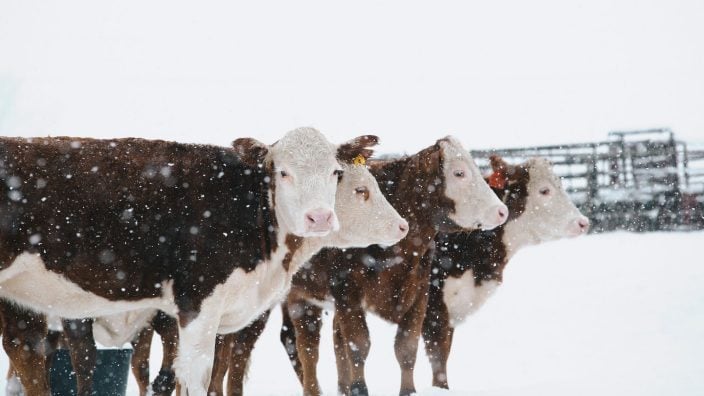
Most livestock animals are well adapted to cold weather, but farmers take extra measures when extreme temperatures come.
Read More

We often talk about the moments that shape us — big decisions, career paths and life milestones. But more often than not, it’s not the moments that define us. It’s the people.
Read More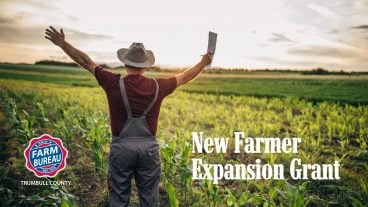
The purpose of this $1,500 grant is to help offset farm operation costs. This can include but is not limited to: fuel costs, fertilizer costs, equipment costs, land rent, etc.
Read More
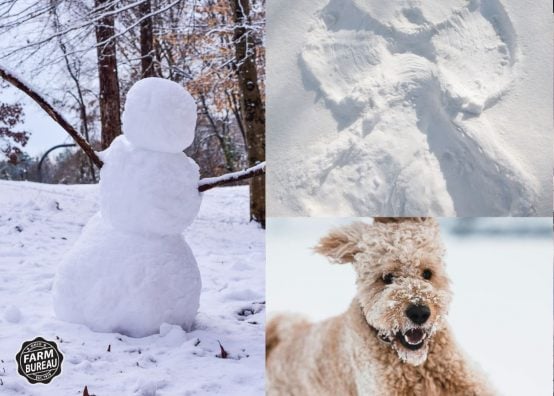
I’m going to give you a list of things that you can do that will get you outside and actually enjoy the snow.
Read More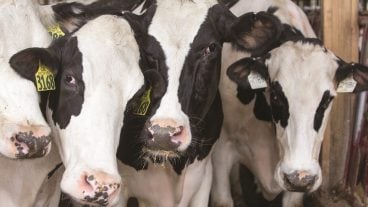

As kids, we are often told to try new things, whether it be a new food, a new activity or…
Read More
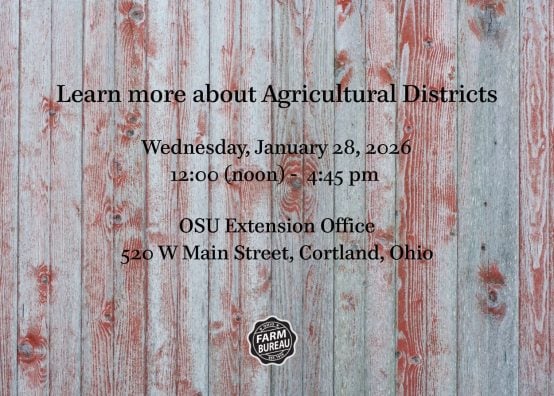
Learn more about ag districts from noon to 4:45 p.m. Jan. 28 at the OSU Extension Office, 520 W. Main Street in Cortland.
Read More
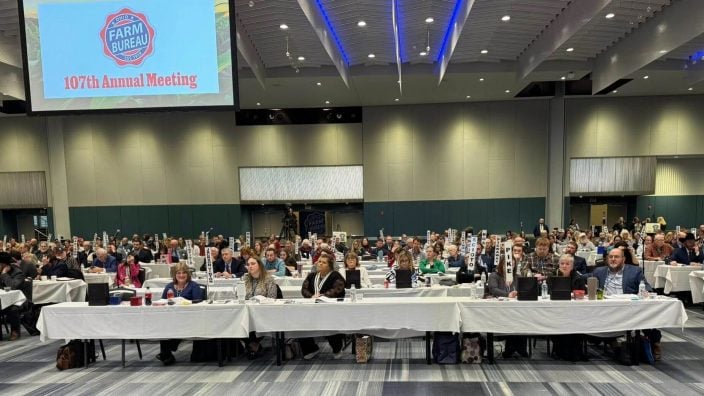
We aren’t just reacting to change — we’re shaping the future of agriculture, one conversation and one decision at a time, together.
Read More

Today, there are close to 15,000 farms growing Christmas trees in the U.S., and over 100,000 people are employed full- or part-time in the industry.
Read More