




Don’t raise a stink over insect’s emergence
Stink bugs also known as the Brown Marmorated Stink Bug (BMSB in the entomology world) are one of the earliest signs of spring to me here in Ohio.
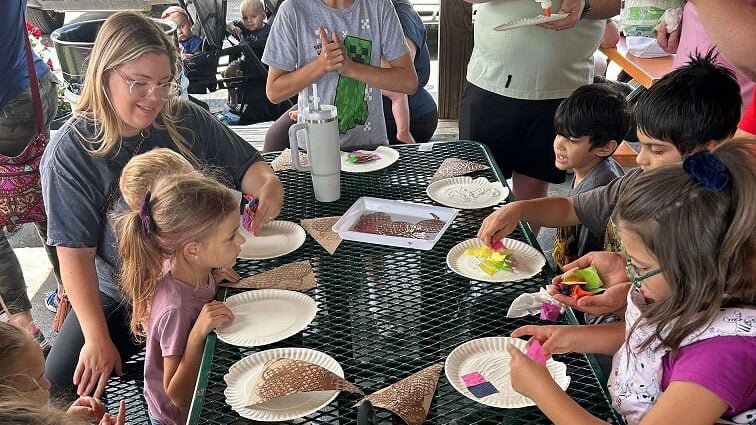
Read MoreAs a dairy farmer, June is one of my favorite times of the year. June is National Dairy Month. With that, it gives us dairy farmers an extra chance to celebrate what we do daily, and to promote our product and educate consumers about farming. Last week, myself and fellow Trumbull County Farm Bureau board members did a collaboration with Bacconi’s Lickety Split. At the event, we read a dairy story to the kids and had them complete a fun farm craft. We also took time to answer several wonderful questions about cows and farming. At the end, Bacconi’s very generously donated all kid participants a free ice cream treat.
Although we received numerous questions from the kids, and parents participating, I thought I would highlight a few of the top questions I received from those kids, in addition to a few questions I am asked on a regular basis being a dairy farmer.
Q: Do brown cows give chocolate milk?
A: No, all dairy cows, no matter the color of their fur, give white milk. There are a couple breeds of dairy cows that have a higher beta-carotene content, or fat content, in their milk that might give it a richer, yellow color. But there is no strawberry, or chocolate milk coming directly from cows. Any flavored, or colored milk, has stuff added to it.
Q: How much water do cows drink daily?
A: A good way to describe the amount that a cow drinks in a day is a bathtub full of water. Roughly depending on the size of the cow, this breaks down into 30 to 50 gallons of water per day.
Q: How much milk does a cow give per day?
A: Cows are milked at least twice per day, and some farms milk three times per day, so the amount can vary based on that. On average, a cow produces about 6 to 7 gallons of milk per day.
Q: Is all milk antibiotic free?
A: Yes. Cows get sick on occasion, and we treat them with medicine accordingly under the supervision of a licensed veterinarian, but any milk that is for human consumption is antibiotic free. We follow very strict milk withholds on any cow that has been treated. Any milk from a treated cow is separated from the rest of the milk and disposed of. In addition, milk goes through numerous tests on the farm and in processing to ensure there are no residues, and the dairy products you buy are 100% completely free from antibiotics.
As farmers and representatives of the agriculture industry, we love answering these types of questions. We are very passionate about what we do, and we love sharing our farm stories and what it takes to get food from farm to table. With that, we hope you have a great rest of your June, and we hope you have an extra little dairy treat this month in honor of all of our hard-working dairy cows and dairy farmers. See how many licks it takes you to get to the end of your ice cream cone — the average is 50 licks per scoop.
Submitted by Julie Holler McCormick, a member of the Trumbull County Farm Bureau Board of Trustees.
OFBF Mission: Working together for Ohio farmers to advance agriculture and strengthen our communities.


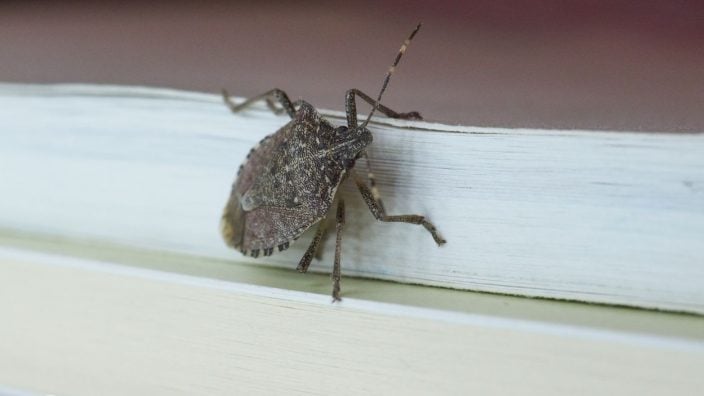
Stink bugs also known as the Brown Marmorated Stink Bug (BMSB in the entomology world) are one of the earliest signs of spring to me here in Ohio.
Read More
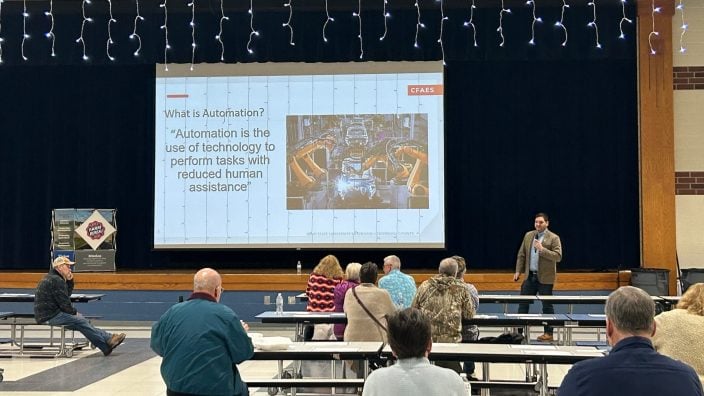
Through all of life’s changes, Trumbull County has become not just a place we work, but the place we call home.
Read More
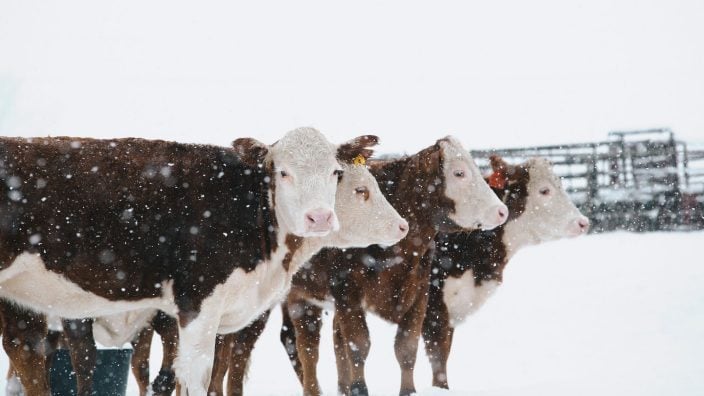
Most livestock animals are well adapted to cold weather, but farmers take extra measures when extreme temperatures come.
Read More

We often talk about the moments that shape us — big decisions, career paths and life milestones. But more often than not, it’s not the moments that define us. It’s the people.
Read More

The purpose of this $1,500 grant is to help offset farm operation costs. This can include but is not limited to: fuel costs, fertilizer costs, equipment costs, land rent, etc.
Read More

I’m going to give you a list of things that you can do that will get you outside and actually enjoy the snow.
Read More

As kids, we are often told to try new things, whether it be a new food, a new activity or…
Read More
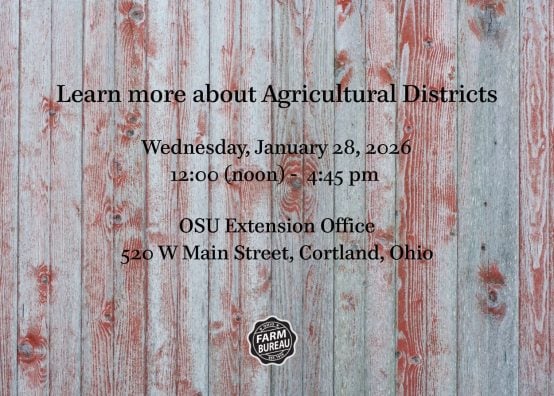
Learn more about ag districts from noon to 4:45 p.m. Jan. 28 at the OSU Extension Office, 520 W. Main Street in Cortland.
Read More
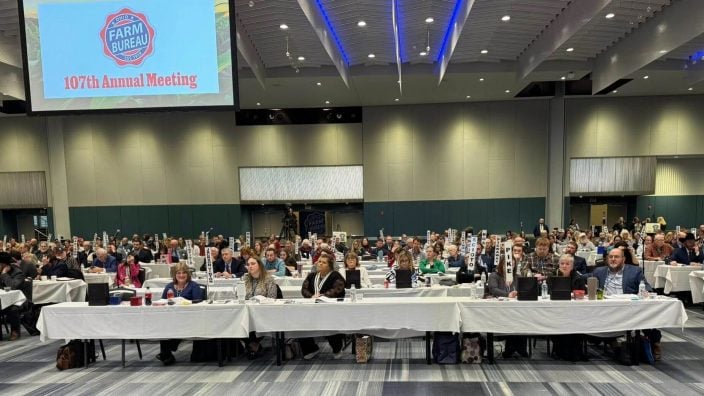
We aren’t just reacting to change — we’re shaping the future of agriculture, one conversation and one decision at a time, together.
Read More

Today, there are close to 15,000 farms growing Christmas trees in the U.S., and over 100,000 people are employed full- or part-time in the industry.
Read More