




Don’t raise a stink over insect’s emergence
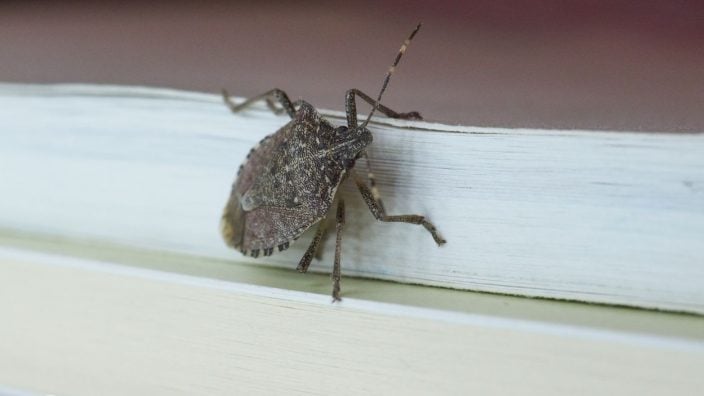
Stink bugs also known as the Brown Marmorated Stink Bug (BMSB in the entomology world) are one of the earliest signs of spring to me here in Ohio.
Read MoreHello Everyone.
In northeast Ohio, we usually complain about too much rain and water, and look for drainage options to move it off our property.
For the past two years, we have been in drought conditions for at least a portion of the summer and we need to consider how to put water back. As I’m writing this, portions of Trumbull County are classified as D0 — Abnormally Dry — by the U.S. Drought Monitor. This is a dramatic shift from this spring, when we had so much rain that planting was delayed by two-to-three weeks.
Watering can be expensive, time consuming and wasteful if not done correctly. Plants don’t care if the water comes from a sprinkler, soaker hose or a bucket, as long as it has water when it needs it. Some watering options can be easier than others, however.
Drip irrigation systems are the most efficient as they place water exactly where the plant needs it and do not water the nongarden areas. These systems work great for vegetable and ornamental gardens because you can put an outlet on each plant. Soaker hoses are also useful for flower and vegetable beds, but can be cumbersome to place next to every plant. They also will water areas that you may not want to water.
When watering, you need to get moisture down into the soil, not just the surface. To do this, you need to add the equivalent of 0.25″ of rain. If you are using a sprinkler, you can measure the amount of water applied by placing containers in the watering area and measuring the depth of the collected water. For other irrigation systems, you will need to collect water under the soaker hose or an irrigation outlet. If you’re like me, you may forget that the sprinkler is running. You can attach timers to your hose to start and stop watering on a schedule. This also makes watering earlier in the day much easier.
Why am I talking about watering plants in August? Well, it’s because dry weather this year will influence how well perennial plants will perform next year. Now is the time perennial plants start to accumulate sugars, starches and other nutrients to prepare for winter and spring regrowth. Without adequate water, this process slows down or stops altogether. Regular, consistent watering is necessary for healthy plant growth.
You should plan to water perennial plants until they have entered dormancy. This is indicated by dropping leaves, dying back or the lack of new growth.
Once plants go dormant for the winter, their water requirements drop off quickly. Watering until dormancy will promote strong roots, promote nutrient uptake and help prepare flower and leaf buds for next year.
After two dry summers in a row, the long-term consequences of drought may be visible in the next couple of years. You may notice less vigorous spring growth, smaller flowers, less fruit and more susceptibility to insects and diseases. This may be concerning, but for most healthy long-lived perennials, they should recover over the next growing season, assuming adequate soil moisture.
As always, if you have questions about plants in your garden give OSU Extension a call at 330-638-6783. Our staff and volunteer Master Gardeners can help all your growing questions.
Submitted by Lee Beers, an Agriculture & Natural Resources Educator for OSU Extension-Trumbull County. He can be reached by email.
OFBF Mission: Working together for Ohio farmers to advance agriculture and strengthen our communities.


Stink bugs also known as the Brown Marmorated Stink Bug (BMSB in the entomology world) are one of the earliest signs of spring to me here in Ohio.
Read More
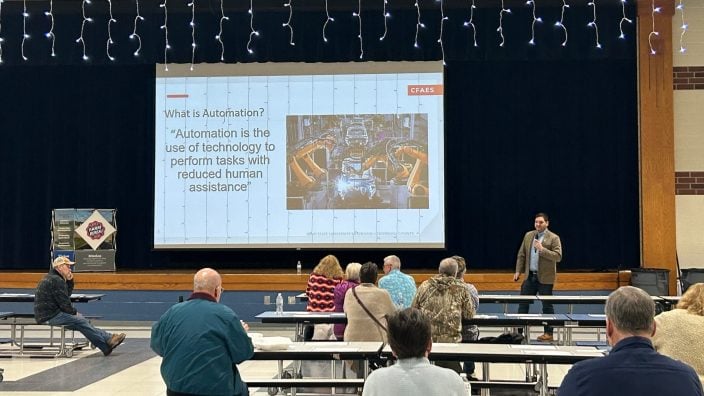
Through all of life’s changes, Trumbull County has become not just a place we work, but the place we call home.
Read More
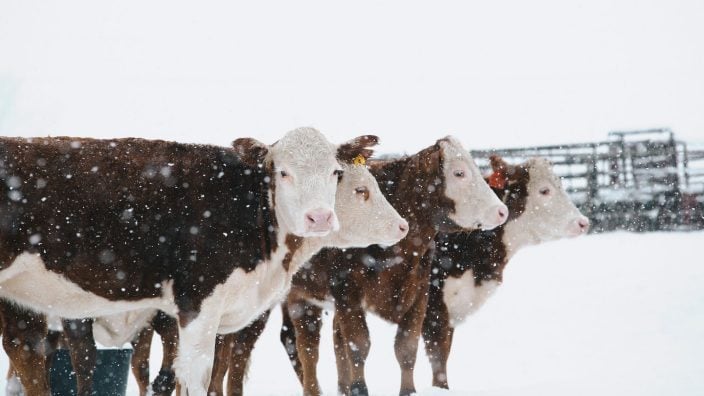
Most livestock animals are well adapted to cold weather, but farmers take extra measures when extreme temperatures come.
Read More

We often talk about the moments that shape us — big decisions, career paths and life milestones. But more often than not, it’s not the moments that define us. It’s the people.
Read More

The purpose of this $1,500 grant is to help offset farm operation costs. This can include but is not limited to: fuel costs, fertilizer costs, equipment costs, land rent, etc.
Read More
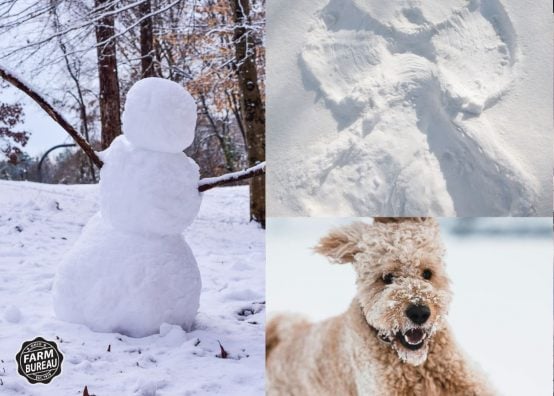
I’m going to give you a list of things that you can do that will get you outside and actually enjoy the snow.
Read More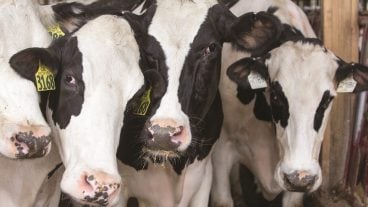

As kids, we are often told to try new things, whether it be a new food, a new activity or…
Read More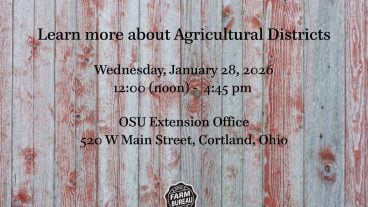

Learn more about ag districts from noon to 4:45 p.m. Jan. 28 at the OSU Extension Office, 520 W. Main Street in Cortland.
Read More
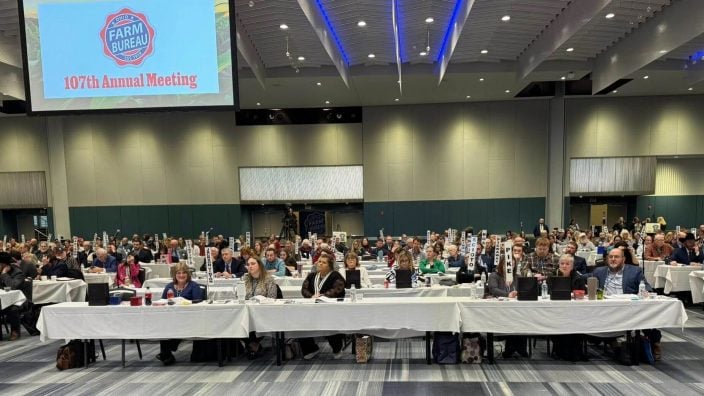
We aren’t just reacting to change — we’re shaping the future of agriculture, one conversation and one decision at a time, together.
Read More

Today, there are close to 15,000 farms growing Christmas trees in the U.S., and over 100,000 people are employed full- or part-time in the industry.
Read More