


July/August 2025 Our Ohio
Protecting Ohio agriculture is deeply woven into the fabric of what Ohio Farm Bureau does day in and day out. The theme of this edition is ag and the law.
Read MoreOver the past 15 years, OFBF has been involved in over 60 civil cases in state and federal courts, as well as over 100 administrative cases before the Federal Energy Regulatory Commission and the Ohio Power Siting Board.
Ohio Farm Bureau has a strong track record advocating for members in the courtroom and has developed a reputation for being a trusted and influential voice in the legal system.
When the organization gets involved in a case, people take notice. Even Supreme Court justices have readily said they pay close attention to what Ohio Farm Bureau has to say.
While Ohio Farm Bureau is selective in the cases it gets involved in, it still manages a heavy caseload. In fact, over the past 15 years, OFBF has been involved in over 60 civil cases in state and federal courts, as well as over 100 administrative cases before the Federal Energy Regulatory Commission and the Ohio Power Siting Board.
Ohio Farm Bureau is strategic in the cases it chooses to engage in, and cannot engage in every case presented.
Ohio Farm Bureau will generally not get involved in cases at the trial court stage, where the judge or jury is making factual determinations. Farm Bureau usually gets involved on appeal, where the focus is on how the law is applied to those facts. At the appellate stage, the court is charged with interpreting statutes, regulations and case law. How the judge decides these appellate cases often sets a precedent that will be followed in future cases involving the same laws.
If a member has a case that may meet the above criteria, either the member or their legal counsel should contact Ohio Farm Bureau’s legal team, which will analyze the case and determine whether it can get involved. Since all legal cases have strict deadlines, the sooner someone reaches out to Ohio Farm Bureau, the better.
Ohio Farm Bureau’s effectiveness in legal advocacy is due in part to its selective criteria, which limit involvement to cases most likely to create an impact for agriculture. However, even when Farm Bureau cannot get involved in a case, our lawyers are always willing to consult with members’ attorneys to provide support or resources.
Usually, Ohio Farm Bureau files what is called an amicus curiae brief with the court. Amicus curiae is Latin for “friend of the court.” In its briefs, the organization is able to provide context and perspective on how the case will impact not just the parties in the case but also other Farm Bureau members, the broader agricultural community, and the public at large.
In many cases, the organization can also provide a historical perspective, explaining how and why the law or regulation was first enacted, what problems it was intended to address, and how it has evolved over time. Often, this is valuable information that only Farm Bureau can provide, and the courts are extremely grateful for it.
In rare situations, Ohio Farm Bureau will get involved at the trial stage either as a plaintiff or defendant. For example, the organization will occasionally ask the court to allow it to be a co-defendant so that it can help develop the facts of the case and be involved in any settlement negotiations.
Many times, Ohio Farm Bureau files these cases on its own, or together with the county Farm Bureau where the case originated. Other times, it will file alongside other interested parties like the agricultural commodity groups in Ohio, American Farm Bureau Federation, or other state Farm Bureaus around the country.
Case question: When the government takes property but doesn’t follow the law and provide compensation, should landowners be able to take their case to federal court?
Ohio Farm Bureau has been involved in dozens of cases dealing with the government’s ability to use its power of eminent domain to take property for a public use. While the organization has worked hard to ensure landowners receive a fair process and just compensation in these situations, unfortunately, some government actors and developers work just as hard to find ways to circumvent landowner protections.
For example, Ohio Farm Bureau filed an amicus brief before the U.S. Supreme Court in a case titled Knick v. Township of Scott, Pennsylvania. Though this case originated in Pennsylvania, it impacted landowners across the country by requiring all takings claims to go through state courts. Ohio Farm Bureau argued that state court procedures were inadequate, specifically in Ohio, where there is no clear process called “inverse condemnation” to use when the government takes property but doesn’t follow the law and provide compensation. The U.S. Supreme Court agreed with OFBF’s position and held that landowners can also use the federal courts for takings claims. The Supreme Court cited the arguments and examples of abuse that Ohio Farm Bureau raised in its amicus brief, and noted Ohio was the only state without a procedure for inverse condemnation.

Case question: Should utilities that want to take land for projects be allowed to take far more than what is necessary?
Ohio Farm Bureau filed a total of nine amicus briefs in a series of connected cases titled Ohio Power Company v. Burns (v. Bohlen, v. May, v. Dexter). Eight of the briefs were filed in the Court of Appeals for the 4th District in Ohio, and the final brief was filed with the Supreme Court of Ohio. Thanks in large part to Ohio Farm Bureau’s persistent advocacy, the Ohio Supreme Court ruled that condemning utilities can no longer simply assert that an entire project is necessary, and thereby gloss over the individual terms of the easement and how they apply to each property. Rather, the trial court must do a parcel-by-parcel review of all the terms of the easement.
This is an enormous win for landowners who are trying to prevent the government or utility companies from taking far more rights than they actually need for the project at hand.
Case question: Should farmland that is permanently preserved through an agricultural easement be forced to give way to pipelines that are expressly prohibited under the easement?
When Columbia Gas attempted to take property through eminent domain across preserved farmland in Columbia Gas of Ohio v. Bailey, Ohio Farm Bureau filed an amicus brief urging the Court of Appeals for the 3rd District of Ohio to uphold the terms of the agricultural easement and deny the appropriation. In a victory for the landowner and Ohio Farm Bureau, the court found that the agricultural easement was a prior public use and that it could not be disturbed for another (new) public use. This case confirms that perpetual farmland preservation easements will be upheld to preserve farmland and block the very type of development that the easement was intended to guard against.
Case question: Should county boards of elections be required to put poorly-worded and legally-deficient county charter petitions on the ballot?
 Ohio Farm Bureau has also been involved in a number of important cases dealing with Ohio’s election laws. In McGinn v. Walker, groups that were trying to place county charters on the general election ballots in Athens and Medina counties filed a writ of mandamus with the Ohio Supreme Court, asking the court to order their respective boards of elections to approve their proposed charters and place them on the ballot. The language in the county charters would have had disastrous impacts on agriculture and Farm Bureau members. Provisions within the charters could have been easily construed to prohibit all agricultural production, or at least make it so regulated that agricultural production would be practically impossible. Furthermore, the “rights” granted within the charters would have opened farmers up to significant legal liability. Ohio Farm Bureau filed an amicus brief in this expedited case, arguing why the charters failed to meet the threshold requirements of the law for a valid charter. The Supreme Court agreed and cited OFBF’s brief to explain why the charters failed to meet the necessary requirements of the law to be valid charters.
Case question: What data should the Ohio Department of Taxation use to establish woodland clearing costs when calculating the deduction in the CAUV formula?
Ohio Farm Bureau has also been involved in a handful of cases involving property taxation, particularly Ohio’s Current Agricultural Use Value (CAUV) laws. Ohio Farm Bureau filed three separate amicus briefs before the Ohio Supreme Court in an eight-year court case titled Adams v. Harris. While the case was slowed down by lots of unique procedural issues (it is the government after all), Ohio Farm Bureau’s briefs argued that the Ohio Department of Taxation needed to use reliable data provided by industry experts and landowners when setting the woodland clearing cost deduction in the CAUV formula. At the end of the prolonged battle, the Supreme Court issued a unanimous decision reprimanding the tax department and ordering it to set a new, evidence-based woodland clearing cost. The tax department finally did so, and increased the clearing cost from $1,000 per acre to $4,476 per acre. This hard-fought increase dramatically reduced the CAUV value on most woodlands, resulting in lower taxes for landowners.
Case question: Should Lake Erie be able to sue farmers? (Yes, you read that correctly)
When voters in Toledo approved the Lake Erie Bill of Rights (LEBOR), Ohio Farm Bureau sprang into action and worked closely with Ohio Farm Bureau member Mark Drewes to challenge the new law. LEBOR purported to give legal rights to Lake Erie and to give Toledoans the right to sue farmers on behalf of the lake. Ohio Farm Bureau provided significant behind-the-scenes support in this effort, which resulted in a federal judge striking down LEBOR in Drewes Farms Partnership v. City of Toledo.
Case question: Is Ohio doing enough to address water quality in the Western Lake Erie Basin, and should agricultural drainage tiles require federal permits?
Ohio Farm Bureau filed a Motion to Intervene in a federal lawsuit against the U.S. Environmental Protection Agency that began earlier this year by the Chicago-based Environmental Law and Policy Center (ELPC), the Board of Lucas County Commissioners, and the City of Toledo. In the lawsuit, titled Board of Lucas County Commissioners v. U.S. Environmental Protection Agency, the groups make baseless claims alleging that the Total Maximum Daily Load (TMDL) of nutrients such as phosphorus into the Western Lake Erie Basin, set by the EPA, is insufficient to meet both Ohio and federal water quality standards. ELPC is also arguing that subsurface drainage tiles are “point sources” under the Clean Water Act that need to have National Pollutant Discharge Elimination System (NPDES) permits. This would have a disastrous impact on all landowners who have subsurface drainage tiles.
With the guidance and direction provided by member-developed policies, Ohio Farm Bureau will continue to fight on behalf of its members, including when those battles need to be fought in the courtroom.
Ohio Farm Bureau has fought for members in various ways for more than a century. In the last 15 years alone, the organization has helped support what’s best for members and farmers in more than 60 civil cases and over 100 administrative cases that have a direct impact on everyday lives.
Key questions
Government Takings / Eminent Domain – 28 cases
Adverse Possession / Rights of Reversion – 2 cases
Environmental Regulations – 3 cases
CAUV / Taxation – 6 cases
Energy / Oil & Gas – 8 cases
County Charters / Elections – 13 cases
In addition to court cases, Farm Bureau represents members’ interests in administrative cases too. An administrative case is a legal proceeding before a government agency, rather than a court. Some examples are the Federal Energy Regulatory Commission and the Ohio Power Siting Board. Administrative cases often deal with solar, wind, pipeline and other energy development issues. Key questions in all administrative cases start with: Is the developer taking the appropriate steps to:
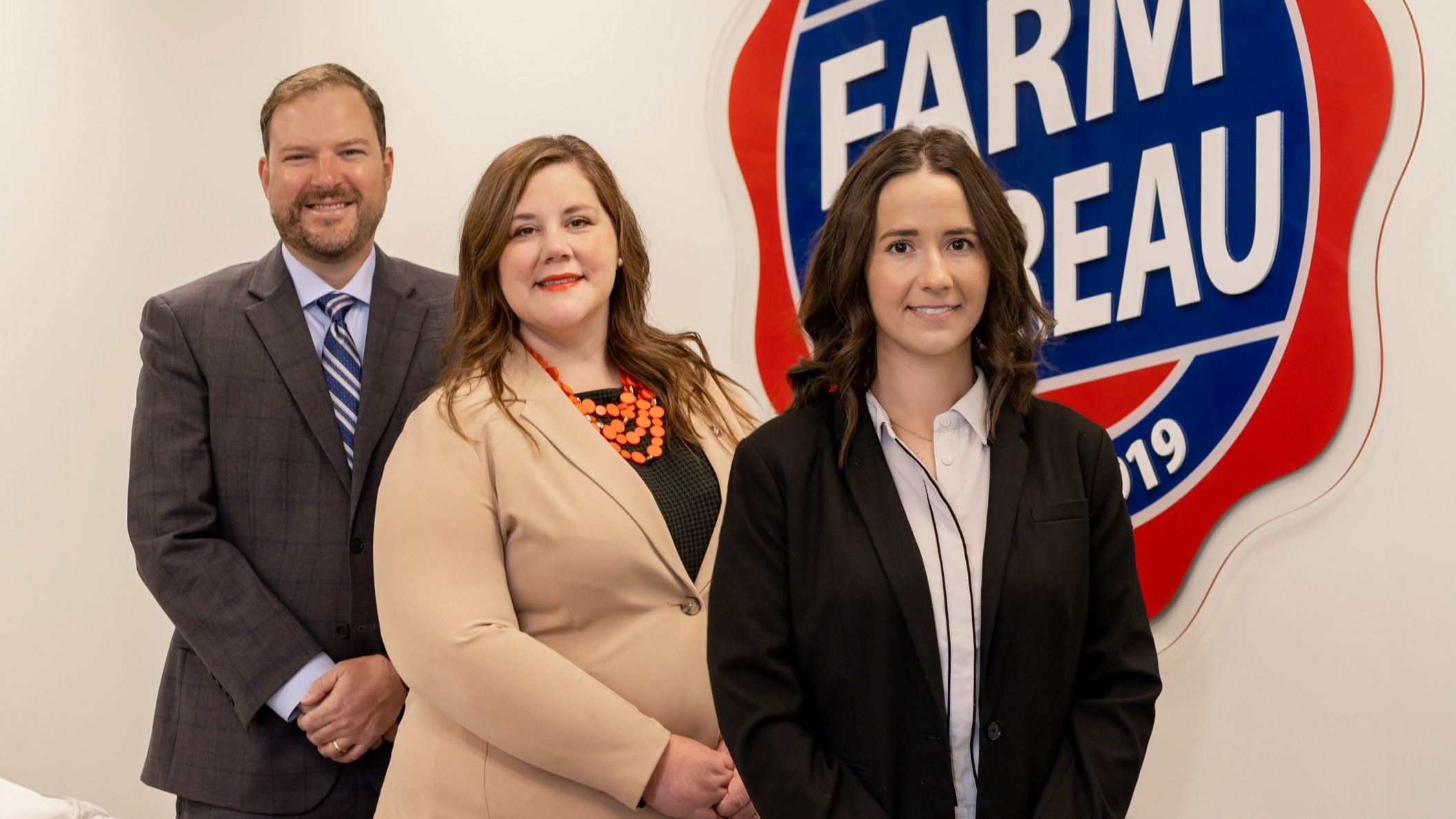
Photo caption: Ohio Farm Bureau’s legal experts are, from left, General Counsel Chad Endsley, Associate General Counsel Leah Curtis and Director of Legal Education and Member Engagement Leah Hetrick.


Protecting Ohio agriculture is deeply woven into the fabric of what Ohio Farm Bureau does day in and day out. The theme of this edition is ag and the law.
Read More

Over the past 15 years, OFBF has been involved in over 60 civil cases in state and federal courts, as well as over 100 administrative cases before the Federal Energy Regulatory Commission and the Ohio Power Siting Board.
Read More
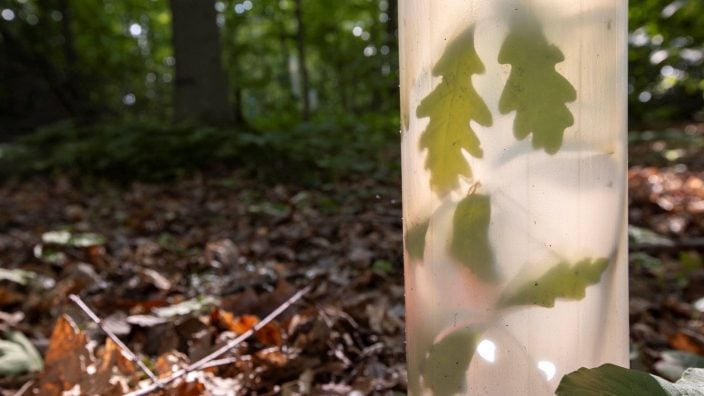
Overall, proper care, maintenance and communication are all essential parts of the process when it comes to trees.
Read More

It is essential that members with an agritourism operation post a liability sign on their property. Contact the county Farm Bureau office about acquiring that sign.
Read More
It is evident that attacks on agriculture are constantly coming from various angles: Ohio Farm Bureau and American Farm Bureau are flush with some of the best farm law experts.
Read More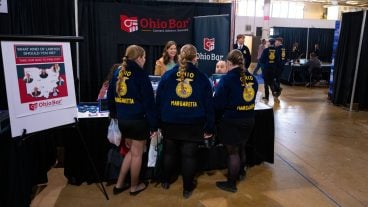
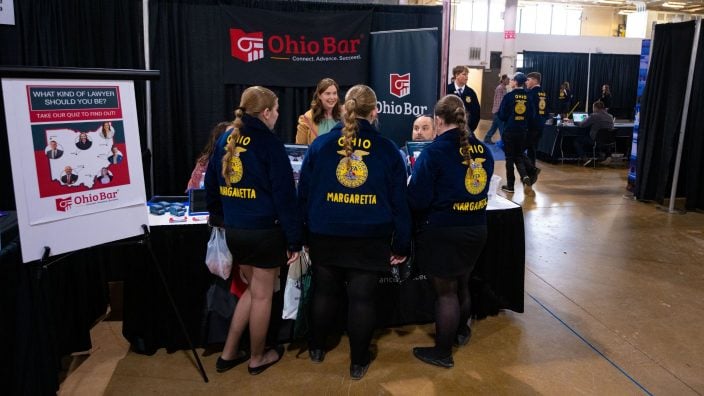
Eight-two of Ohio’s 88 counties are underserved by legal representation. The Ohio Rural Practice Initiative is a several-pronged approach to raise awareness of the issue.
Read More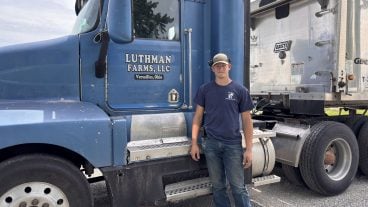
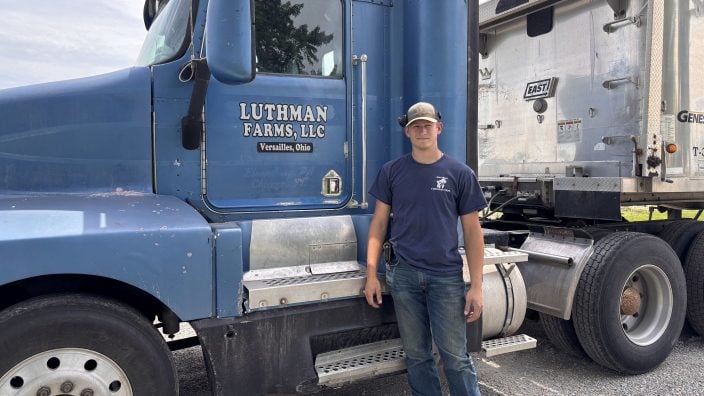
To be eligible for the $500 grant, an applicant must be a Darke County resident and Farm Bureau member, 18 to 25 years of age.
Read More

Farm Bureau members have numerous resources at their fingertips for the latest information on a host of laws and regulations directly impacting all of agriculture.
Read More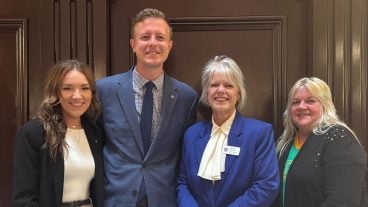

Farm Bureau staff and members testified on behalf of an annexation bill that aims to preserve farmland in the state by having a more transparent annexation process.
Read More
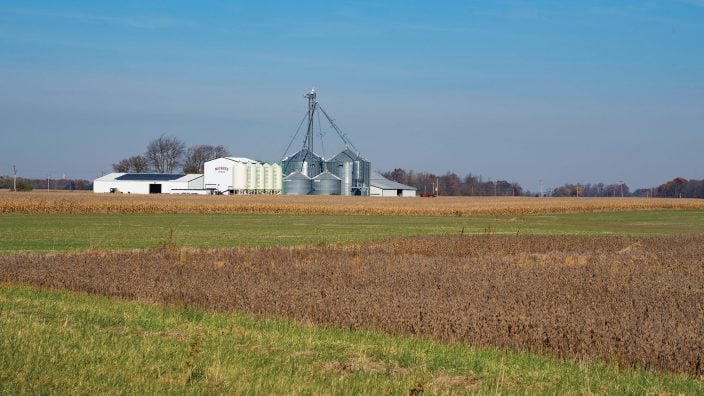
Ohio Farm Bureau has information on programs and tips on how to start the farm succession conversation, as do several of the organization’s partners.
Read More