





Don’t raise a stink over insect’s emergence
Stink bugs also known as the Brown Marmorated Stink Bug (BMSB in the entomology world) are one of the earliest signs of spring to me here in Ohio.
Read MoreIt’s back-to-school time. Normally, I don’t associate farmers or farming with going back to school. Sure, I have to make breakfast, pack my lunch and decide what to have for dinner, which all involve agriculture, but until I sat down to write this article, I didn’t look further than that. However, after a little bit of thinking about how I could tie farming into school, it hit me — the moment I went to pick up a good old-fashioned wooden pencil.
See, farmers contribute to the back-to-school rush in many ways; however, it might not be in the way we traditionally view agriculture. Let’s explore that wooden pencil that triggered this entire article.
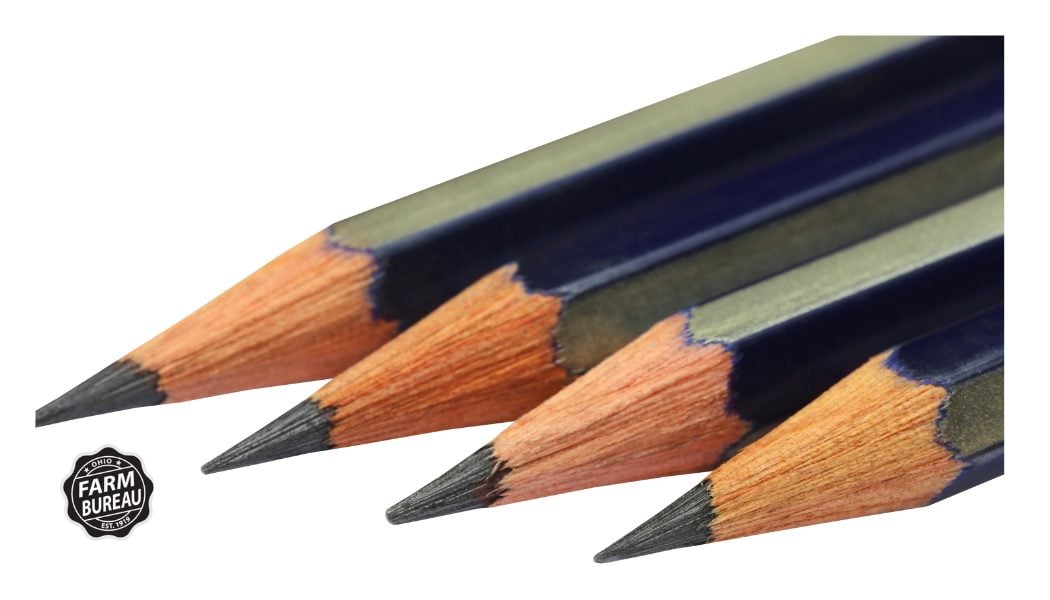
Pencils just don’t randomly appear; I’ve never seen a pencil in the wild. Pencils have to be created, and the main way to make those wooden pencils is with wood. Where does wood come from? Yes, the forest, but also tree farms. Wooden pencils aren’t just made with any old type of wood; the wood needs to have specific properties, like the ability to sharpen, machine and be softer.
Incense cedar is the desired wood for wooden pencils, and it grows abundantly in California and Oregon. One 20-foot-tall tree can make 2,500 pencils, which means that more than 8 million of these trees are harvested each year. Some companies, like Blackwing, use sustainably sourced incense cedar so that wild populations of the tree are more prevalent than they were 100 years ago. Other companies like Faber-Castell harvest their wood from sustainable forests planted in Brazil. Even those highly desired Ticonderoga pencils result from incense cedar wood from Northern California. So while pencils may not seem like an agricultural product, some of the materials used in pencils are made by farmers — tree farmers (foresters)!
Additionally, when we’re thinking about trees and tree farmers, we can’t forget paper itself. Whether it’s in notebook form or loose-leaf, I’m sure every student is going back to school with plenty of paper. Alabama, Georgia, Mississippi, Louisiana, Arkansas and South Carolina are often referred to as the “world’s wood basket” since they produce over half of all the sustainable timber in the country. Therefore, much of the pulpwood used to make paper comes from these states. Together, these states produced 29.9 million cords of wood. A cord of wood is a pile that is 8 feet long, 4 feet wide and 4 feet high, and stacked as tightly as possible. Almost all of this wood is sustainably grown by tree farmers and helps to support nearly 529,000 jobs.
And just so other farmers don’t feel left out, traditional agriculture also contributes to the back-to-school push. Crayons, art supplies, glue, clothing and some fuels also come from farmers. Today, many crayons are made out of soybean oil, which has replaced petroleum-based paraffin wax, which made crayons safer for students. Crayons made with soybean oil have more vibrant and smoother colors, which makes teachers and students happier. The top soybean-producing states are Illinois, Iowa, Minnesota and Indiana, which provide more than 60,000 jobs to people in those states.
While discussing crayons, let’s talk about art supplies in schools. Hog and cattle farmers play a crucial role in art supplies, especially for paint brushes, where their animals’ hair is used to create paint brushes. Texas, Nebraska and Kansas are the top cattle-producing states in the U.S., raising 24.2 million head of cattle out of the U.S.’s total 86.6 million head of cattle. At the same time, Iowa, Minnesota and North Carolina produce 41.8 million head of hogs out of the total 74.6 million head of hogs. Cattle numbers also apply to glue since glue is made from beef byproducts.
Additionally, clothing like cotton, wool, leather and more comes from agricultural products. Warm winter hats and gloves made of wool benefit sheep farmers in the U.S. Cotton growers in the Southern U.S. sell their product to clothing manufacturers to make your favorite T-shirts and clothing options. Leather for shoes and other clothing options comes from U.S. beef farmers as well.
Countless other products are coming from agriculture that help make back-to-school easier for students and parents. So while you’re out shopping for those school supplies and back-to-school clothing, take a moment to thank a farmer for supplying all the great products you’re purchasing for another successful school year.
Submitted by Christen Clemson, a member of the Trumbull County Farm Bureau who completed her Ph.D. at the Pennsylvania State University. She and her family farm in Mecca Township.
OFBF Mission: Working together for Ohio farmers to advance agriculture and strengthen our communities.


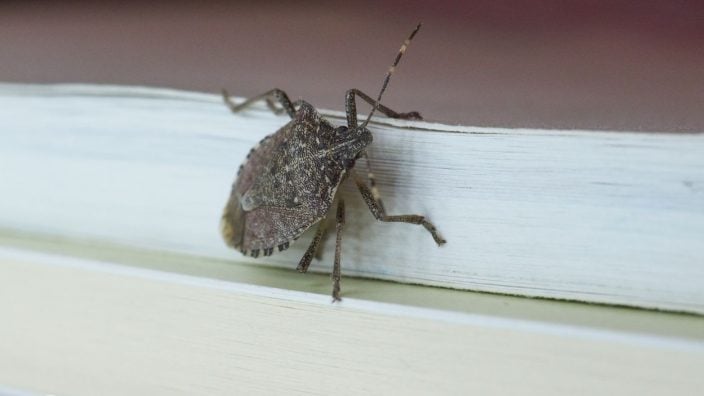
Stink bugs also known as the Brown Marmorated Stink Bug (BMSB in the entomology world) are one of the earliest signs of spring to me here in Ohio.
Read More
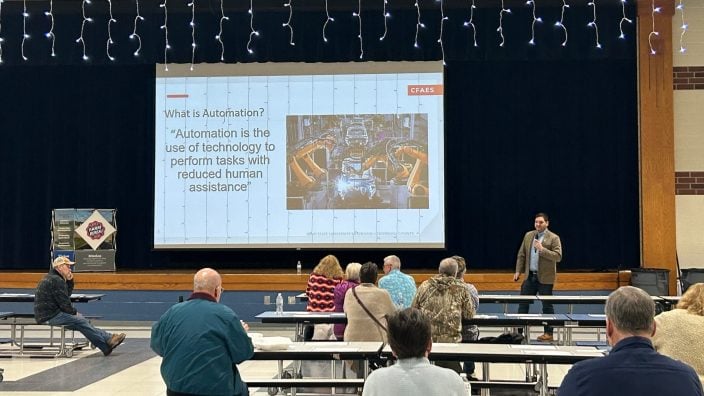
Through all of life’s changes, Trumbull County has become not just a place we work, but the place we call home.
Read More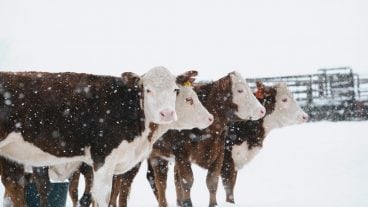
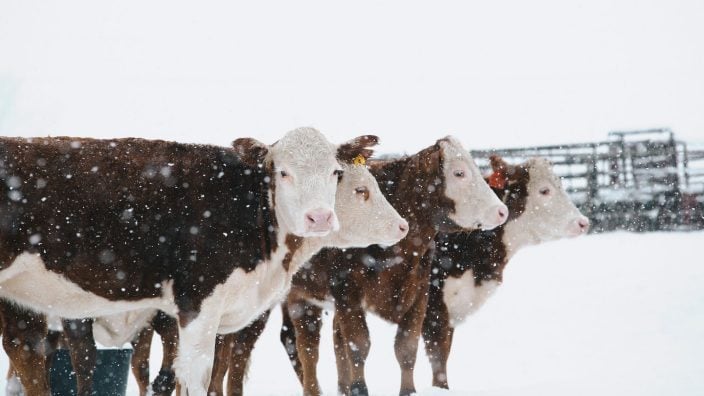
Most livestock animals are well adapted to cold weather, but farmers take extra measures when extreme temperatures come.
Read More

We often talk about the moments that shape us — big decisions, career paths and life milestones. But more often than not, it’s not the moments that define us. It’s the people.
Read More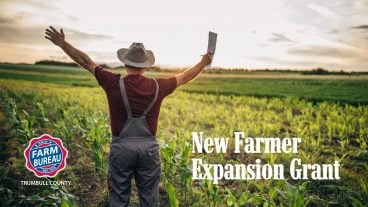
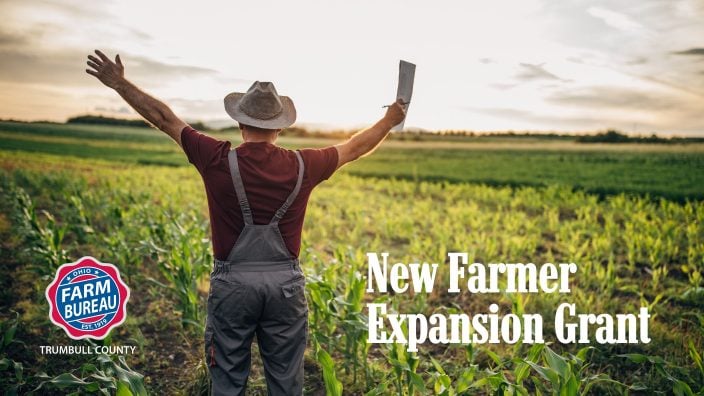
The purpose of this $1,500 grant is to help offset farm operation costs. This can include but is not limited to: fuel costs, fertilizer costs, equipment costs, land rent, etc.
Read More

I’m going to give you a list of things that you can do that will get you outside and actually enjoy the snow.
Read More

As kids, we are often told to try new things, whether it be a new food, a new activity or…
Read More
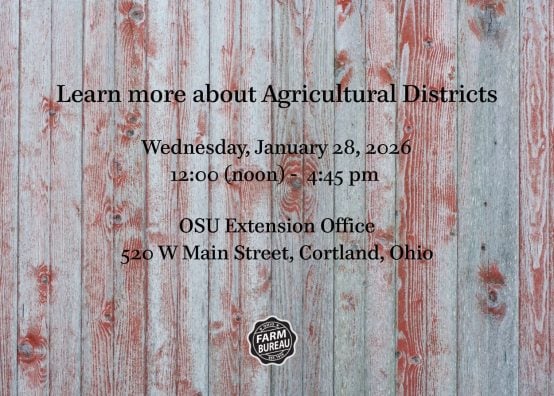
Learn more about ag districts from noon to 4:45 p.m. Jan. 28 at the OSU Extension Office, 520 W. Main Street in Cortland.
Read More
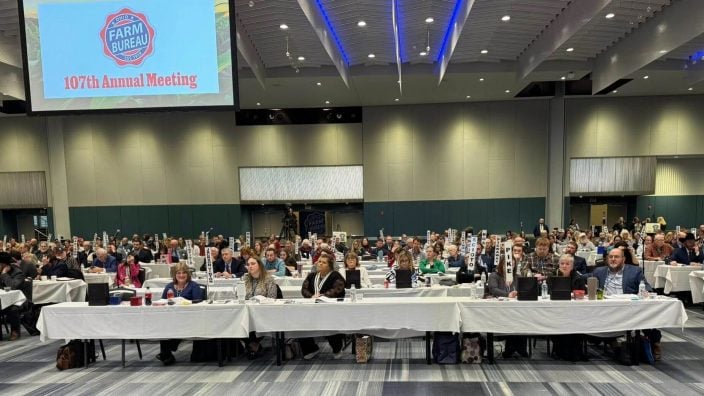
We aren’t just reacting to change — we’re shaping the future of agriculture, one conversation and one decision at a time, together.
Read More

Today, there are close to 15,000 farms growing Christmas trees in the U.S., and over 100,000 people are employed full- or part-time in the industry.
Read More