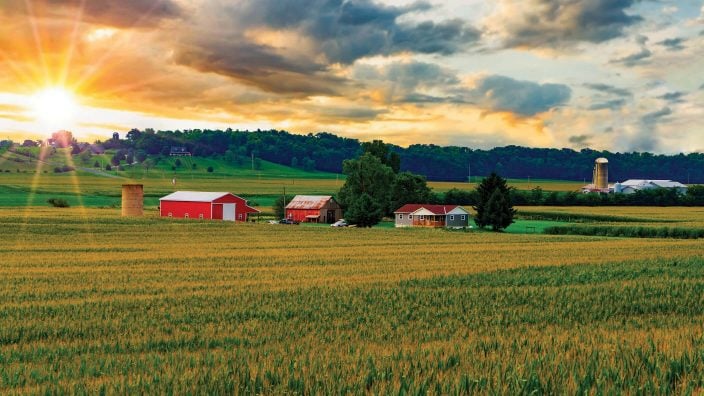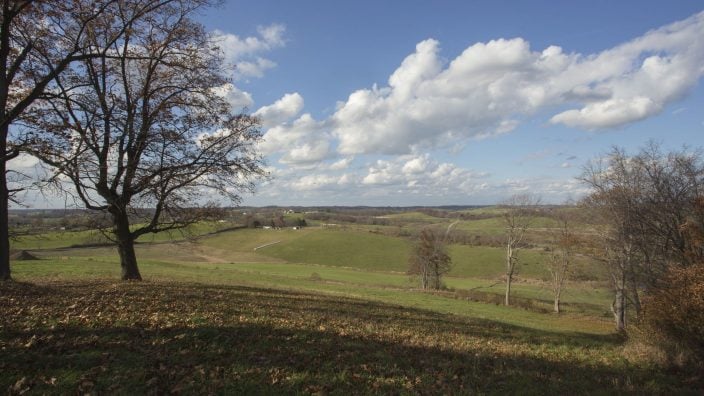
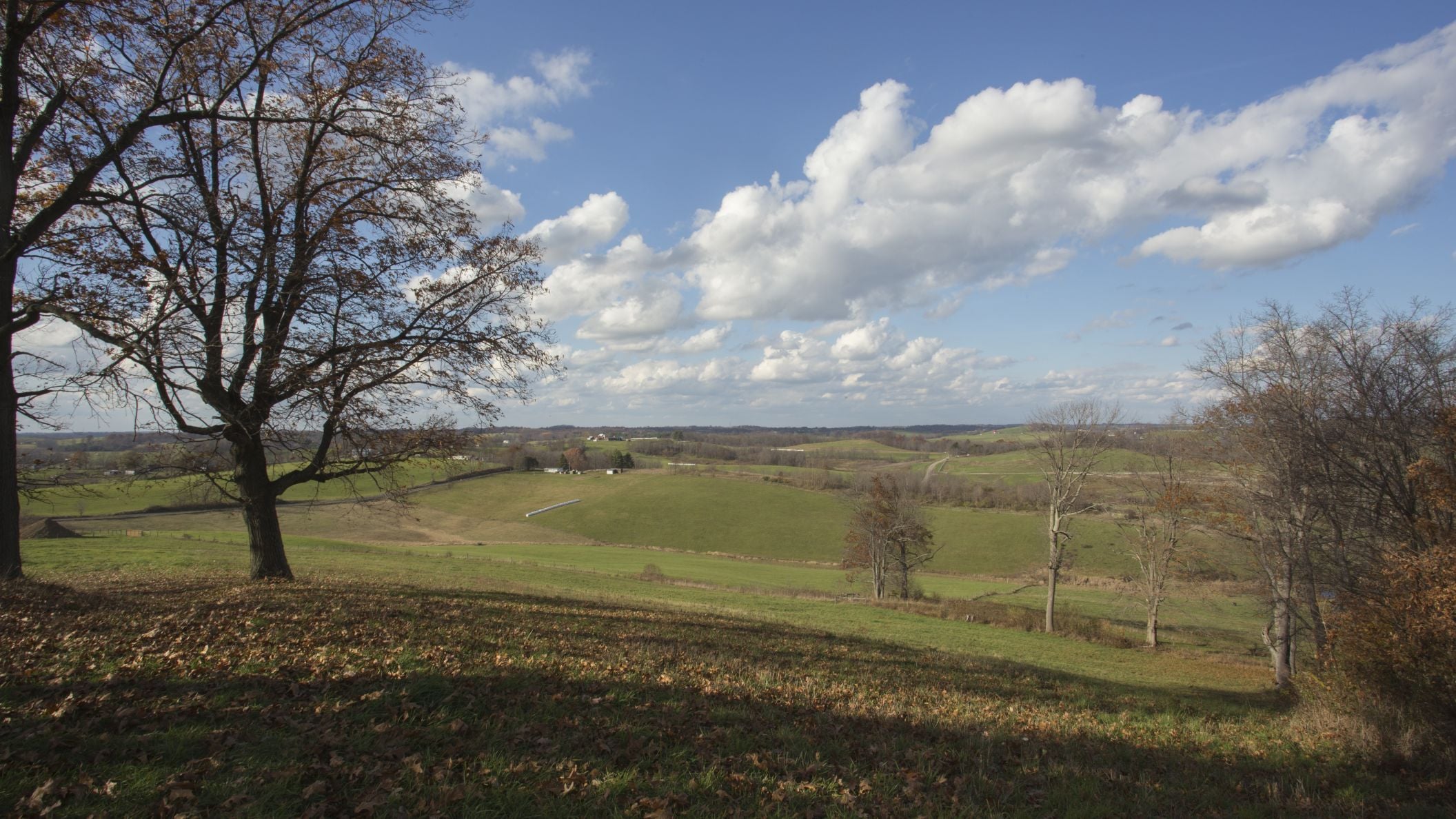
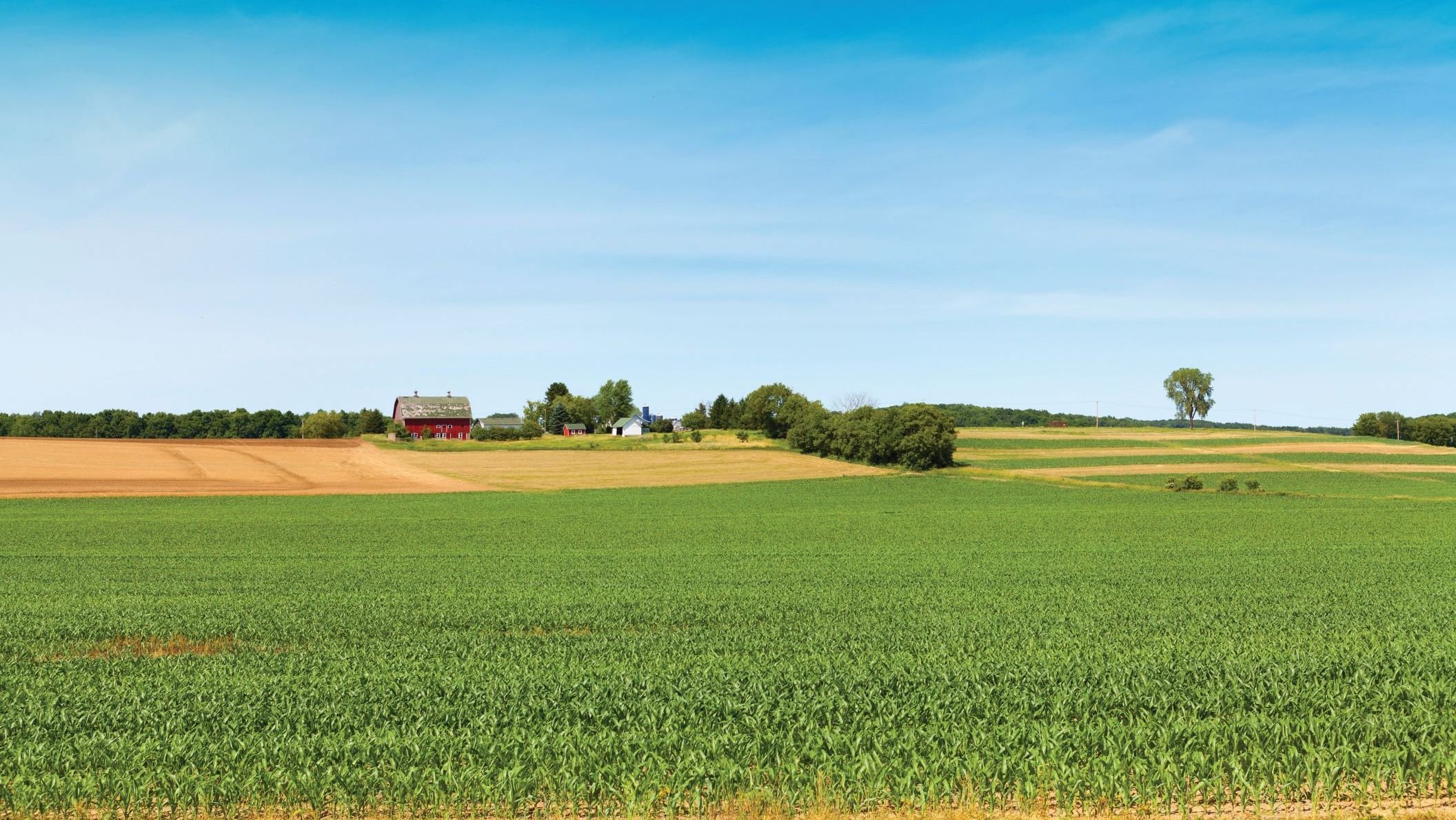
Rural Belmont County Ohio

Many discussions are occurring regarding property tax reform. Ohio has taxed property since before it gained statehood. Today, real property tax is approved, charged, collected and spent at the local level. The property tax rate is made up of 10 mills (or 1% tax rate of local property values) that represent inside millage, and additional mills of tax levies that have been voted upon by the citizens in the taxing district. Inside millage is divided up amongst schools and the other local entities, including funding county and township government, law enforcement, fire and safety services, OSU Extension, libraries, health departments and other entities. Many of these entities can also have additional voted levies for specific purposes. Schools are typically funded with at least 20 mills of funding, and under state law in place since the 1970s, the school’s funding will not drop below 20 mills (or 2% tax rate of local property values). That 20 mills can be a combination of inside 10 mills and additional voted operating millage. Schools must have at least 20 mills of funding to qualify for state school funding aid.

Statewide, property taxes annually collect approximately $22 billion. Approximately ⅗ of property taxes are used to fund schools, while the remainder funds other local entities. For comparison, the state income tax collects an estimated $10 billion, and the state portion of the sales tax collects an estimated $14 billion. The state of Ohio must have a balanced budget, so aside from the rainy day fund (which is limited in its collection and use), the state is spending revenue it collects through the various state taxes and fees. Additionally, the state currently pays around 9% of the local property tax burden via a refund to the local entities.

Again, property taxes generally fund local governments and services. In addition to property taxes, schools can have an income tax if voted on by the electorate. Cities also have the opportunity to levy an income tax. Counties can levy a sales tax up to 1.5% which is added on to the state’s 5.25% sales tax. (Regional Transit authorities can also levy up to 1% of sales tax). Townships do not have taxing authority beyond property tax levies. Local government entities would also receive some funds through the local government fund, and schools receive state aid based on a formula that considers their local property wealth and local income level. Even with these additional tax authorities for some entities, all these entities still largely depend on property tax for their funding source.

Members often point to the DeRolph case which ruled Ohio’s school funding process unconstitutional. The Supreme Court of Ohio’s ruling actually stated that the use of property tax as the primary funding source for schools was unconstitutional, not that property taxes could not be used as a part of the funding for schools. Lottery money is used by the state for schools and contributed $1.51 billion in the last year. This money is used by the state as part of its obligation for funding and is not, as many think, a fund that is in addition to, or on top of, what the state funds for schools.

Property taxes in other states

In an analysis by the Tax Foundation, Ohio’s property taxes paid as a percentage of Owner Occupied Housing Value was 1.31%, ranking 8th highest in the country. Note that this is a comparison of total taxes paid statewide to total housing value statewide. Individual localities and counties will vary significantly. See taxfoundation.org/data/all/state/property-taxes-by-state-county/ for additional analysis. Remember that every state’s mix of taxing policies and funding sources is different, so comparing only property tax will ignore the income tax, sales tax and other taxes that may be used differently than Ohio. Unfortunately, there is not a good resource comparing property taxes on agricultural land, nor analyzing business or commercial real estate property tax. 

Questions to consider

  • Property taxes currently raise approximately $22 billion annually from both classes of property. State sales tax currently raises approximately $14 billion, and state income tax approximately $10 billion. Assuming some replacement of property tax revenue is necessary if property taxes are eliminated, how would that revenue be raised and what would the impact be on agriculture? 
  • Aside from the first 10 mills, property tax levies are approved by a majority of voters. If property taxes are eliminated, is the loss of local control over taxing a concern?
  • Our current policy says property taxes are our least palatable tax; does that mean property taxes should be eliminated? 
  • With potentially more taxation being at the state level via sales, income and other taxes, how should those dollars be distributed?
  • We have seen the Legislature look to sales tax exemptions to fund an income tax reduction. Would eliminating such exemptions be valid if done in response to a full elimination of the property tax? 
  • Schools are funded significantly through property taxes. While the Ohio Supreme Court has ruled schools should not be primarily funded through property tax, the Courts have released jurisdiction of the case and the fact remains that schools are still largely funded through property tax. How would the funds for schools be collected? Would local dollars stick with local schools without a property tax funding basis?
  • Proposals exist to eliminate the inside millage and require all millage to be voted on. Keep in mind that inside millage largely funds core services like law enforcement and safety, but also that it inflates with increases in property value without a vote. Should we have a policy position on this?
  • Most voted levies do not inflate, as they can only collect what they did in their first year. This fuels the need for entities to regularly return to the ballot, something that is fairly unique to Ohio and often misunderstood by voters. How do you feel about regular, repeated asks for levies even if warranted because funding does not keep pace with inflation?
  • The state has significantly reduced the income tax rate in recent years, has reduced the tangible personal property tax rate for utilities, eliminated the corporate franchise tax, and largely eliminated the Commercial Activity Tax (CAT). What is the appropriate balance between state taxes, local taxes and services?
To grow a network and gain perspective and knowledge in the industry through personal and professional development has been invaluable. Every day I learn and grow.
Ryanna Tietje's avatar
Ryanna Tietje

Henry County Farm Bureau

Farm Bureau connections
The issue of property taxation remains as one of the biggest challenges our members face today. Ensuring agricultural property is valued for its agricultural potential and not development is critical to the continued success of Ohio agriculture.
Matt Aultman's avatar
Matt Aultman

Darke County Farm Bureau

Giving farmers a voice
Farm Bureau is what really got the word out. It’s been one of their goals to get this done.
Bill and Charlotte Wachtman's avatar
Bill and Charlotte Wachtman

Henry County

10-year campaign for safer roads
I could not have done it without the resources I have found through Farm Bureau.
Gretchan Francis's avatar
Gretchan Francis

Trumbull County Farm Bureau

Bringing the farm back to life
Because we are younger farmers just starting out, Farm Bureau has a lot of good opportunities and resources to help us grow in the future.
Hannah Kiser's avatar
Hannah Kiser

Sandusky County Farm Bureau

Farm Bureau involvement
Through the Select Partner program, we became educated in farm insurance and weren't just selling policies. It became more and more clear why farmers need an advocate like Ohio Farm Bureau.
Chad Ruhl's avatar
Chad Ruhl

Farm manager, CSI Insurance

Select Partner Program
So many of the issues that OFBF and its members are advocating for are important to all Ohioans. I look at OFBF as an agricultural watchdog advocating for farmers and rural communities across Ohio.
Mary Smallsreed's avatar
Mary Smallsreed

Trumbull County Farm Bureau

Advocacy
Suggested Tags: