


Legal with Leah: The questions around data centers
Leah Curtis joins this Legal with Leah to talk about what data centers mean for local communities and how to stay engaged in the development process
Read MorePlans for data centers continue to pop up around Ohio, and so do the questions that come with them. Leah Curtis, associate general counsel for Ohio Farm Bureau, joins this Legal with Leah to talk about what these centers mean for local communities and how to stay engaged in the development process.
Ryan Matthews [00:00:00] Data centers are a hot topic in the Buckeye State, and it seems more and more plans for them are popping up across the state. Leah Curtis, associate general counsel, joins us for this Legal with Leah to help us understand the drive behind data centers and what it means for our communities. Thanks for joining, Leah.
Leah Curtis [00:00:17] Thank you.
Ryan Matthews [00:00:18] Now to dive us right in. Leah, can you tell us why does it seem like so many data centers are wanting to locate here in Ohio?
Leah Curtis [00:00:26] So there’s probably a lot of reasons why Ohio has become a bit of a target, but keep in mind, we’re not the only ones. There are a lot of data centers happening in areas like Virginia and Pennsylvania as well, but a major issue is probably our accessibility to large quantities of availability of water. We have abundant water resources. We do not have a lot of regulation of water use in the state of Ohio, particularly when you think about Western states that have a lot of restrictions on water use. Another aspect is probably our electrical infrastructure. Because of our population, it’s pretty relatively easy to tap into power resources kind of everywhere in the state. We also are within a reasonable distance of 60% of the U.S. population, which allows for quicker data delivery. We have fiber optic infrastructure available in lots of areas already. And then, you know, we have a favorable tax and business structure here. We have a sales tax exemption for data centers, and we have flexible zoning. And really we have areas of the state still that are completely unzoned. And so, you would allow for siting of different uses, you know, business decisions like this are going to be based on a lot of different factors. You know, there’s not just one thing and there’s not really, it’s not a hierarchy either, but certainly, it’s clear to I think everyone that Ohio has become a bit of a target location for this type of development and these types of projects.
Ryan Matthews [00:01:51] With you going into some of those details, it makes sense why data centers are incentivized to come into the Buckeye State. Now, can data centers locate anywhere that they want?
Leah Curtis [00:02:02] Well, data centers like really any other industrial use or really any of the land use, they can locate wherever land use regulations will allow them to. So that is going to be local zoning. Land use in the state of Ohio is largely going to be controlled at the local level through that local zoning, and that’s going to determine if a different use can be present or is not allowed. If there isn’t any local zoning, there’s probably nothing preventing something like this being built. Even if there is zoning, if the districts, the zoning districts do allow for heavy industrial uses or certain types of listed uses, that may be where they can site as well. On the same flip side, zoning regulations can also prevent siting of data centers or other heavy industrial users if those regulations are written that way. And that’s why communities really need to engage in that zoning conversation regularly, maybe even continuously. And discuss how they want that community to be organized. So they can kind of think about, you know, is that something we know these are happening? Is that something that we want to locate in our area? And if so, where would it be?
Ryan Matthews [00:03:10] Can you talk a little more to data centers if they have to get a zoning change or a conditional use permit to locate?
Leah Curtis [00:03:17] Sure. So, if a project needs to look for a zoning change, then the local officials are going to review the zoning code. They’re going to use the limitations in the zoning code to determine whether a change should be granted. Similarly, with a conditional use permit, a conditional use permit usually means that it can be located there, but conditions can be placed upon that land use. So again, they’re going to see what are the parameters, can we grant that use? But it’s important to think about, you know, I’m being kind of not specific here and that’s because every zoning code is going to be a little different. And so it’s going to be dependent upon what that individual zoning code says, what are the requirements for a change, what are requirements for permit for that zoning code and use that to determine: can it be located in a specific area.
Ryan Matthews [00:04:09] You also talked about these data centers wanting to come to Ohio because, in some places, it’s perfectly located for resources or we already have that infrastructure in place. Won’t these data centers use a lot of electricity or energy resources and how is that paid for and how was that regulated?
Leah Curtis [00:04:27] Yeah, I mean that is a big concern that you’ll hear about, you’ll read about if you are doing research on these topics, and particularly there’s a concern about the speculation, right, of you know they’re saying they’re going to come, they’re saying they need this much power. You know, what happens if we generate that much power and then they don’t use it? So the Public Utilities Commission, PUCO, they have recently agreed to a tariff structure with at least one electric provider. That will allow that provider to charge data centers up to 85% of their projected power needs. And that’s to try to prevent cost shifting. It’s to prevent the, ‘we created this much electricity and now nobody’s using it.’ So we have to spread that cost across to everybody. That’s going to, that’s being litigated. We’ll see kind of where that goes from here. And then I think the other concern that we’ve talked about a lot in our publications and our podcasts is that grid reliability and capacity. Those are going to continue to be concerns here in Ohio and really everywhere, I think, as we add in these new power demands. But of course, as a power user, they are going to pay their power bills like the rest of us. It’s just that they have such a larger demand than kind of your normal power users.
Ryan Matthews [00:05:41] I know that’ll be some important conversations as these data centers get turned on and for our members and community members to really focus in and see how that’s kind of getting divided up and making sure that the cost is going where it belongs and making sure that the demand, not just for data centers, but for our communities is being utilized correctly. Now, in these conversations, a lot of times people might hear. Tax increment financing. Could you talk a little bit about what is that and how can a data center use it?
Leah Curtis [00:06:15] Yeah, so a tax increment financing or a TIF, you’ll hear people say, oh, it got TIFed or it’s a TIF. That is essentially allowing for the redirection of what’s essentially property tax money to infrastructure improvement, to support new investment or economic development. So what typically happens is that property technically is exempt from property taxes, but what happens is they pay that amount of property taxes into a fund that’s the TIF. And that funds road infrastructure, electric infrastructure, water and sewer lines, all those kind of things that need to be provided for economic development purposes. They may also TIF a portion of the property’s value, so maybe they pay on the existing value, but then the new development is TIFed, and they may have an arrangement for payments in lieu of taxes or pilots where they’re kind of spreading out that value instead of not paying a lot at the beginning and then paying a lot more after things are developed. They kind of spread it out over. But you know those are things that are approved by your local governments. So the local authority in charge of that property. And that’s another thing to kind of keep an eye out for in this development and talk to your local officials about as well.
Ryan Matthews [00:07:33] Bringing it local and talking about how people can keep an eye out, how can someone know if something like this is coming to their area?
Leah Curtis [00:07:42] So keep in mind that like a lot of economic development, a lot these projects are gonna have some nondisclosure agreements, probably with the people selling the property, maybe even with local officials that are engaging in kind of preliminary discussions. At the same time, your local government meetings are open for you to attend. They are usually not very well attended, but that’s how you find out what’s happening. Typically, agendas are posted ahead of time, either in the paper or online. And so, you know, they’re your local officials. You have a right to talk to them, to ask them questions. Just remember that this is new to them also, just like it is to the rest of us. And so they may not have all the answers. They may not know exactly all the things that you’re asking, but asking those questions are important. And that’s part of engaging in your community. And then the other thing I would say is just be familiar with your zoning code. If you do have a zoning code in your area, that’s going to help you now. What is the process for changes or for permits? What kind of notifications happen? Where do they happen? And that way you can direct your energy to those types of issues.
Ryan Matthews [00:08:51] Definitely some good takeaways just to stay proactive on what’s going on in your community and making sure you’re familiar with all those different zoning codes. Now you mentioned Ohio Farm Bureau a little bit and Ohio Farm Bureau members. Can you talk to what is Ohio Farm Bureau’s policy on this issue?
Leah Curtis [00:09:09] So I’ll just say, as far as specific to data centers, we don’t have a lot of specific data center policy. At our most recent annual meeting, we did pass policy that would oppose data centers being considered public utilities under the law. But we, in general, we have obviously a lot of policy that deals with land use, with farmland preservation, kind of all those topics that this touches on. So… But of course, we do support that land use regulation be controlled at the local level and be done by local officials. And that’s so that local communities can be involved. And our policy does specifically say we encourage our Farm Bureau members to be involved in that process, particularly when it comes to land use. And then at the federal level, at our most recent American Farm Bureau annual meeting, there was also a policy to support the responsible development of these types of facilities. Making sure that water and energy use is prioritized for residential and agricultural use. You know, making sure that costs are not shifted onto the rest of the domestic power users, residential and agricultural. So kind of all of those types of issues that we’ve talked about supporting, taking a good look at those and making sure we are still prioritizing residential and agricultural use.
Ryan Matthews [00:10:33] As a grassroots organization for Farm Bureau, when policy gets passed on the local, state or national level, that kind of becomes the playbook. That’s what becomes our priorities and what we advocate for. So could you go a little bit deeper into how is Ohio Farm Bureau engaging in this issue when it comes to data centers?
Leah Curtis [00:10:51] Sure. So, you know, kind of right here at the beginning of the year, the Ohio EPA did release for comment a general NPDES (National Pollutant Discharge Elimination System) permit for data centers. And so we provide a comment to that raising concerns about the prospect of using that general permit. That would mean essentially that all the data centers would operate under one general permit rather and individual specific permits. We’re also supportive of House Bill 646, which is a bill supporting a data center study commission, so that we do kind of have a state level review of this issue, the concerns, the impacts that will occur. And really that can create kind of a resource at the state level that everybody can work off the same information. And then as I said, on kind of the more general aspects that touch on this issue, we have engaged in a lot of farmland preservation issues over the years, particularly when you think about eminent domain, we’ve been involved in a lot of litigation over that, particularly relative to infrastructure development and making sure that farmland is protected. In particular, we were involved in a lawsuit that dealt with farmland that was protected by an ag easement, where a court did find that that was a prior public use. And so that prior public use cannot necessarily be disturbed by other eminent domain and other public uses unless there is a specific review of that. So lots of concerns about water quality and farmland use, and then generally the loss of farmland. And that’s not really specific to data centers. That’s loss of farm land to this development, to housing, to urban sprawl, to other development. That is something we’re really focused on and we’re going to continue to be focused on as we move here through 2026. Not just at our state level, but also at the federal level. We’ve pushed for American Farm Bureau to develop a task force to review how we can treat farmland at the federal level as a strategic resource for the country.
Ryan Matthews [00:12:58] Last question here, and I know we talked about keeping a pulse on local developments and local policy, but how else can Farm Bureau members stay engaged on this issue?
Leah Curtis [00:13:12] So, ultimately, keep in mind that the issue of where these things happen or where things occur is a local activity and it’s going to hinge on those local activities. So it’s a great space for county Farm Bureaus to be involved. County Farm Bureaus typically have really great relationships with their local officials. They’re great at providing opportunities to come together with local officials, so that’s a space that really our county Farm Bureaus shine at. But then, you know, even on the individual level. Take the time to engage with your public officials. Gather your thoughts, do some research, use verifiable, reliable sources. There’s lots of universities that I’ve seen put out information about data centers and different concerns. So the information is out there. And then engage respectfully, right? Calling names, yelling, hyperbole, that’s not going to help your argument. State your concerns, talk about why they matter, why they matter to you, and have a conversation. Let other people speak, too. And then the last thing I just want to stress is we see a lot of people engaging with this issue on social media, which is great, and social media can be a great tool. But commenting on people’s Facebook posts or Instagram or whatever, that doesn’t make your comments part of the public record. Going to the meeting. And talking during public comments, sending your letter to the public body, that puts you on the record; that makes you part of the public discussion. So, you know, do whatever you want, use social media to organize, to gather information, but the world is run by people who show up. So, show up, make your concerns known, have those conversations, but at the end of the day, these are local decisions. So, engage with your local officials. They are your local official. Go and talk to them.
Ryan Matthews [00:15:11] Leah Curtis, Associate General Counsel for this Legal with Leah, thanks again for being here.


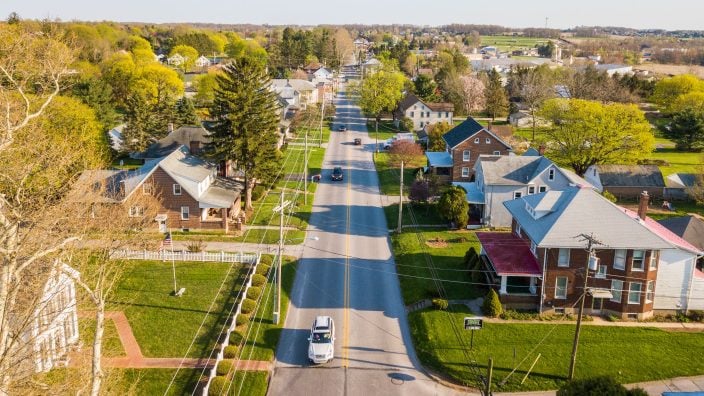
Leah Curtis joins this Legal with Leah to talk about what data centers mean for local communities and how to stay engaged in the development process
Read More
Ohio Farm Bureau advocated for a change in the law to allow family members and employees to handle pesticides while under the supervision of a licensed applicator. The rules around HB 10 are being finalized.
Read More
Four property tax reform bills were signed into Ohio law at the end of 2025. Ohio Farm Bureau Associate General Counsel Leah Curtis breaks down the bills and what the changes mean for Ohioans.
Read More

Learn what the requirements are to legally fly a drone in Ohio as well as steps the Ohio Legislature has taken in terms of security concerns.
Read More
In 2025, about 21 counties are going through a reappraisal or update, and because Ohioans pay taxes one year behind, they will see new property tax bills in January 2026.
Read More
Any unlicensed handlers who use restricted use pesticides will need to have additional training. Farm Bureau will be working on legislation to give employers a choice on how to provide training.
Read More
Current Agricultural Use Value is often discussed as a farmland preservation tool, but there are some other tools in the law that landowners can consider.
Read More
Update: As of Feb. 27, 2025, the Financial Crimes Enforcement Network announced no fines, penalties or enforcement action will be taken against companies based on failure to file or update BOI by March 21.
Read More

Update: As of Feb. 27, 2025, the Financial Crimes Enforcement Network announced they would not issue any fines or penalties or take enforcement action against companies based on failure to file or update beneficial ownership information reports by the March 21, 2025, deadline.
Read More

Update: As of Feb. 27, 2025, the Financial Crimes Enforcement Network announced they would not issue any fines or penalties or take enforcement action against companies based on failure to file or update beneficial ownership information reports by the March 21, 2025, deadline.
Read More