







Don’t raise a stink over insect’s emergence
Stink bugs also known as the Brown Marmorated Stink Bug (BMSB in the entomology world) are one of the earliest signs of spring to me here in Ohio.
Read MoreStanding in line at the grocery store, I overheard a conversation between the cashier and a customer.
The customer wanted to know why the cost of eggs was so high, and the cashier responded that she had heard that the chickens were sick. I respectfully cut into the conversation and confirmed illness was the culprit in the form of Bird Flu. Then as I drove home, I realized I didn’t really know much about it other than it was being spread by wild, migrating birds. So, I started to do some research.
The bird flu affecting the U.S. beginning in February 2022 is actually called Highly Pathogenic Avian Influenza. HPAI is a highly contagious virus that spreads quickly and can be fatal to flocks, both commercial and noncommercial. Chickens, turkeys, pheasants, quail, domestic ducks, geese and guinea fowl can be infected. Surprising, at least to me, is that the most susceptible are laying hens — chickens raised for the eggs they produce.
This aggressive virus is carried by free flying waterfowl such as ducks, geese and shorebirds. While these wild birds seldom show symptoms, the CDC states that HPAI “can cause disease that affects multiple internal organs with mortality up to 90 to 100 percent in chickens, often within 48 hours.”
Since February, about 52.7 million chickens have died. Some birds have died from the disease itself, but many more are being culled through flock “depopulation” in an effort to stop the virus from spreading. Early on in the outbreak, many of the early infections centered along the intersection of the Central and Mississippi flyways of migratory birds. As those birds migrated, so did the virus to 46 states so far.
As I was reading up on HPAI, it jogged my memory about another bird flu outbreak. A lot of poultry died then too (50 million), but the strain of the virus was different. It was 2014-15 and 4-Hers with poultry projects weren’t allowed to bring their birds to the fair. The mode of spread was farm-to-farm meaning taking infected birds or contaminated clothing/equipment to another farm.
Even though both outbreaks began in the winter, another difference was that the outbreak in 2014-15 was over when the warm weather of June arrived. In 2022, the infections continued through the summer and surged in the fall. It was in September when Ohio experienced detections in a backyard flock in Ashland County and a commercial flock in Defiance County.
The CDC states that the virus does not pose a risk in the nation’s food supply, given proper handling. Like any poultry or eggs, heating food to an internal temperature of 165 degrees Fahrenheit kills any bacteria and viruses present, including HPAI.
The next question is the virus going to go away?
No one is saying that. Experts are comparing our current strain with those in Europe and elsewhere. On the surface they look very similar, but on the inside, they are very different. Viruses are notoriously quick to mutate, and HPAI is no exception. There is hope that wild bird populations will build up immunity to the virus, by experts warn that it will take months to determine whether that is happening at a meaningful level.
In the current times of inflation, it is unfortunate that HPAI will likely play its part in egg prices remaining high. Let’s pray that HPAI will continue to mutate and weaken and that wild bird populations will build immunity, thus protecting our domestic flocks.
Submitted by Mary Smallsreed, a member of the Trumbull County Farm Bureau and grew up on a family dairy farm in northeast Ohio.
OFBF Mission: Working together for Ohio farmers to advance agriculture and strengthen our communities.


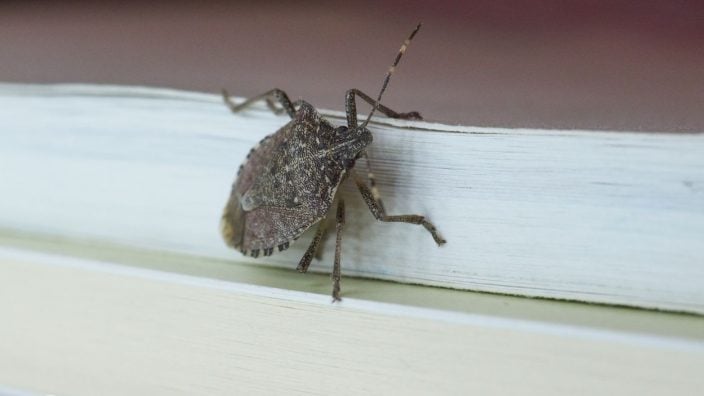
Stink bugs also known as the Brown Marmorated Stink Bug (BMSB in the entomology world) are one of the earliest signs of spring to me here in Ohio.
Read More
Through all of life’s changes, Trumbull County has become not just a place we work, but the place we call home.
Read More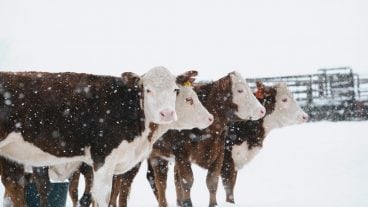
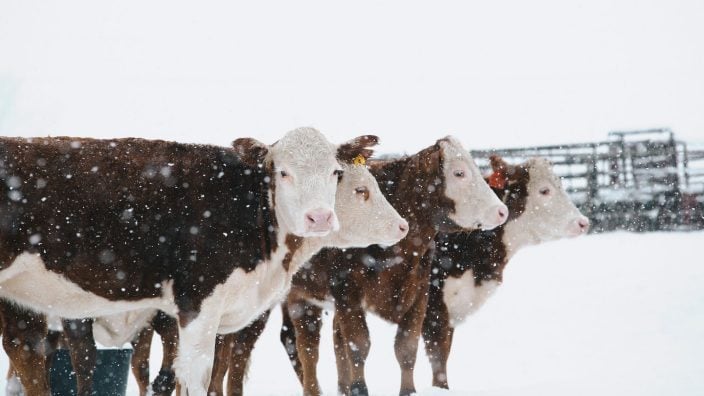
Most livestock animals are well adapted to cold weather, but farmers take extra measures when extreme temperatures come.
Read More

We often talk about the moments that shape us — big decisions, career paths and life milestones. But more often than not, it’s not the moments that define us. It’s the people.
Read More

The purpose of this $1,500 grant is to help offset farm operation costs. This can include but is not limited to: fuel costs, fertilizer costs, equipment costs, land rent, etc.
Read More

I’m going to give you a list of things that you can do that will get you outside and actually enjoy the snow.
Read More

As kids, we are often told to try new things, whether it be a new food, a new activity or…
Read More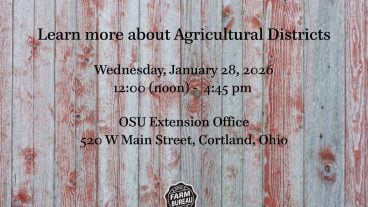

Learn more about ag districts from noon to 4:45 p.m. Jan. 28 at the OSU Extension Office, 520 W. Main Street in Cortland.
Read More
We aren’t just reacting to change — we’re shaping the future of agriculture, one conversation and one decision at a time, together.
Read More

Today, there are close to 15,000 farms growing Christmas trees in the U.S., and over 100,000 people are employed full- or part-time in the industry.
Read More