


Don’t raise a stink over insect’s emergence
Stink bugs also known as the Brown Marmorated Stink Bug (BMSB in the entomology world) are one of the earliest signs of spring to me here in Ohio.
Read MoreLittle did I know, as I watched Grandpa push the hay wagon into the barn, that that would be our last summer making hay.
The smell of fresh-cut hay always takes me back to the last few years that my grandfather was alive. Even after all the animals were gone and most of the grass had been converted into fields, Grandpa always found a way to bale at least a 100 hay bales every summer. I know that is not a lot; some people do thousands or even hundreds of thousands of bales of hay in a summer, but for a two-person crew (one in his late 80s and early 90s and one in her early 20s), it was a job. Grandpa took great pride in mowing the hay, tedding (curing) and raking it into rows for us to bale.
For those who may not be in the know, there is a difference between hay and straw. Straw is the leftover stalks of grain after the heads have been combined. There are three types of straw available: barley, oat and wheat. Normally straw is a very bright yellow and used mostly for animal bedding or decoration in the fall. Hay is made from legumes or grass, and it is usually still a green color and smells like dried, fresh-cut grass. Hay is used for animal feed. In fact, here in the U.S., we produce five different types of hay. These types of hay include timothy hay, orchardgrass, oat hay, triticale and alfalfa.
Timothy hay is essentially how people use celery when they are on a diet. It gives you something to chew on when you’re hungry, but it actually takes more calories to eat that celery stick than it provides. Orchardgrass also is not as picky as timothy and can be grown all over the United States since it is adaptable to rainfall. Oat hay is nutritious and high in both protein and energy content and can be fed to both horses and cattle. Oat hay tends to be more popular in the western United States.
Alfalfa is incredibly important in the dairy industry because it contains high protein and high energy, and most animals love the taste of alfalfa. Alfalfa also can cause bloating in animals due to its high protein content; think about how you feel after you stuff yourself full of turkey on Thanksgiving. Alfalfa can have that same impact on animals. Alfalfa is so popular, it is sold and produced in all 50 states.
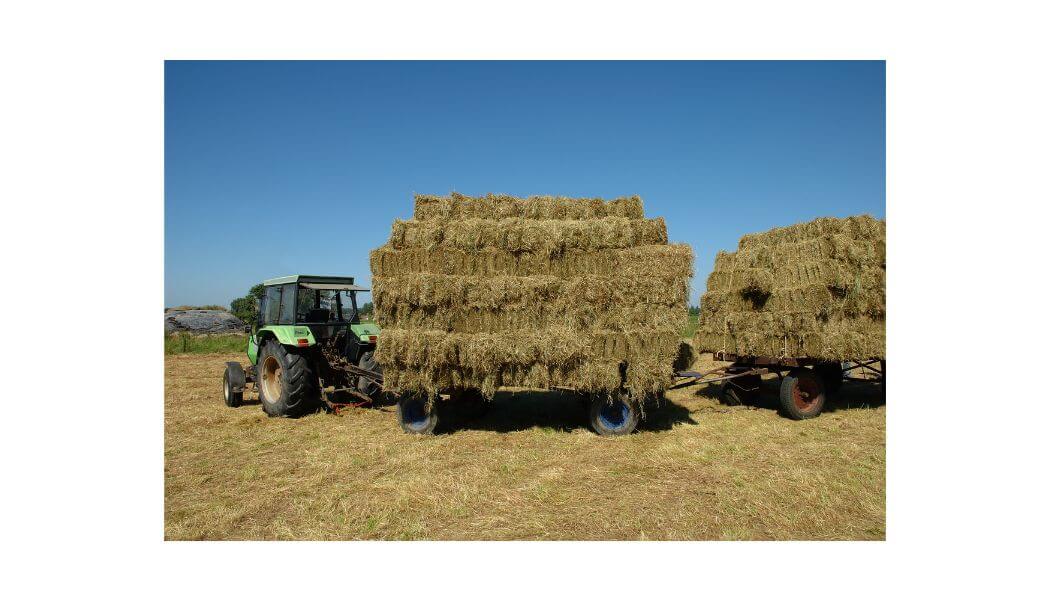
So back to hay baling with the two-person crew of Grandpa and me. Hay baling takes place in the hottest part of the day, on the hottest day possible, in the middle of summer. Remember, these fields are grass, so they also come with poison ivy, spiders, snakes and dust. Grandpa would hook up the tractor to the baler and then bale. Once the baling was done, he would unhook the baler and attach the wagon. This is where I came in. I was the bale tosser and stacker. My sole job was to pick the bale off the ground, toss it onto the wagon, then jump on the wagon and stack the bales in nice tight rows. Not a problem, easy, peasy, lemon squeezy for a girl who used it as her powerlifting workouts during the track off-season. However, if you know me, I hate one thing with an absolute passion (besides onions, but that’s another story). I hate spiders. Well, hay baling involves big, giant, hairy, creepy crawly wolf spiders. These wolf spiders, in the amount of time it took to unhook a baler and hook up a wagon, would decide to sun themselves on these bales. So when I would go to grab the twine to hoist the bale onto the wagon, wolf spiders would begin realizing that their sunning spot was moving and would begin descending the bale as fast as spiderly possible.
For someone who hates spiders, picking the bale up to chest level and tossing it onto the wagon with spiders raining down was absolute torture. Grandpa had very little sympathy for my fears and repeatedly yelled at me to hurry up, as well as the additional advice that the spiders were more scared of me than I was of them.
What would seem like hours later, soaked with sweat from my hair to my socks, covered in itchy grass dust, and still feeling the haunting crawl of spider legs on my arms, we would be done. A beautiful wagon of fresh, tightly stacked hay would be backed into the barn by my grandfather to be sold. The aroma of that hay was the sweetest smell, and every time I would open the barn doors to help someone load their newly purchased hay, I would smile at the smell and the pride in our work. Even though it was just the two of us, we made a pretty good team on those hot summer days baling hay.
The last summer my grandfather was alive, we made one field of hay. I remember dreading it a bit because no matter how many long sleeves I wore, I always walked away from baling with poison ivy. We only made 85 bales that summer; my grandfather had hoped for 100, but we fell just short. Little did I know, as I watched him push the hay wagon into the barn, that that would be our last summer making hay. A few of those bales are still in our barn; they were never sold and, at this point, they are too old to be sold.
However, when I walk into our barn, those bales bring both a smile and a tear to my eye. Those hot summer days with spiders raining down, sweat dripping from every pore on my body, and poison ivy a guarantee taught me that I could do hard things. I can’t tell you the number of times that the words “they’re more scared of you than you are of them” has come out of my mouth as I calmly trapped and relocated a spider from my house to the great outdoors. So while I’ll probably never be able to replicate those hot summer days baling, I’m always grateful for the lessons my grandfather taught me. And every time I go past a field and see someone baling, I smile because those hot summer days teach you more than a classroom ever could.
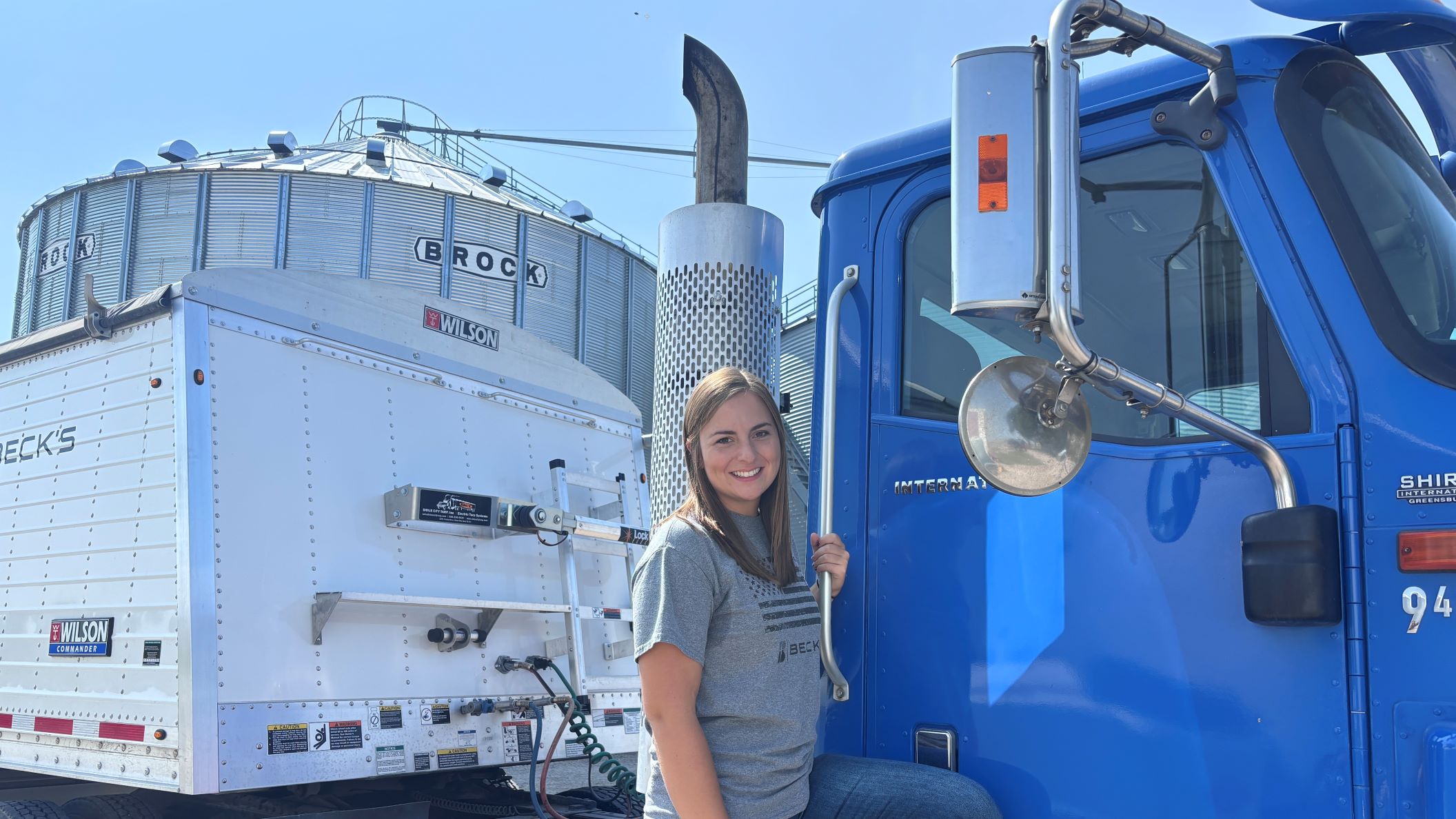
Submitted by Christen Clemson, a member of the Trumbull County Farm Bureau who completed her Ph.D. at the Pennsylvania State University. She and her family farm in Mecca Township.
OFBF Mission: Working together for Ohio farmers to advance agriculture and strengthen our communities.


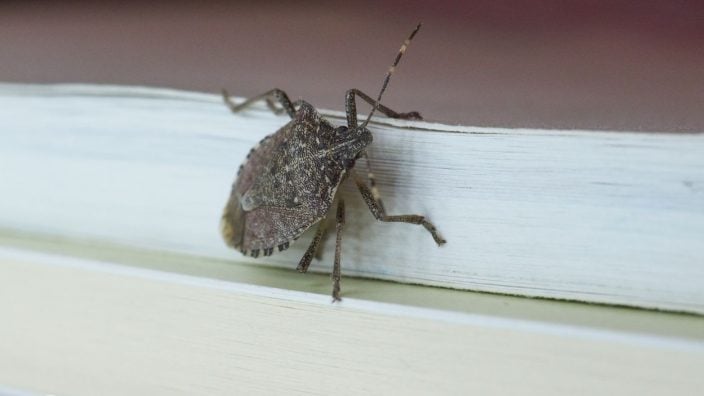
Stink bugs also known as the Brown Marmorated Stink Bug (BMSB in the entomology world) are one of the earliest signs of spring to me here in Ohio.
Read More
Through all of life’s changes, Trumbull County has become not just a place we work, but the place we call home.
Read More
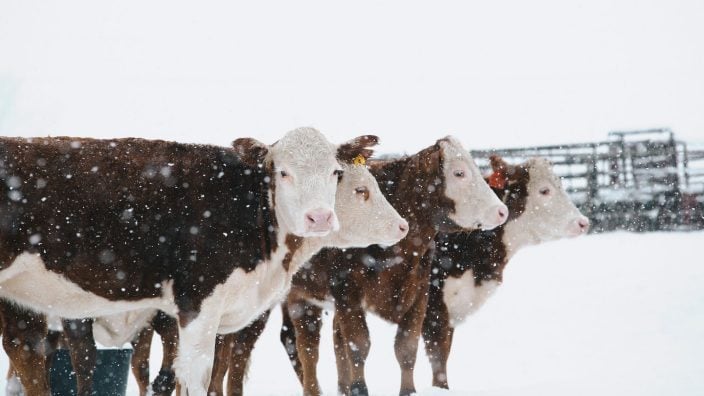
Most livestock animals are well adapted to cold weather, but farmers take extra measures when extreme temperatures come.
Read More
We often talk about the moments that shape us — big decisions, career paths and life milestones. But more often than not, it’s not the moments that define us. It’s the people.
Read More
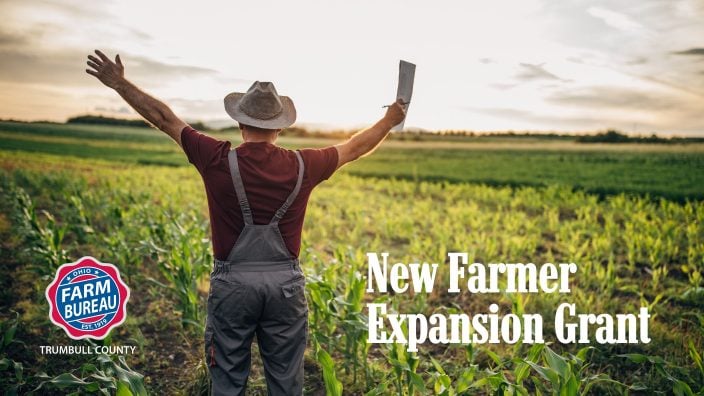
The purpose of this $1,500 grant is to help offset farm operation costs. This can include but is not limited to: fuel costs, fertilizer costs, equipment costs, land rent, etc.
Read More
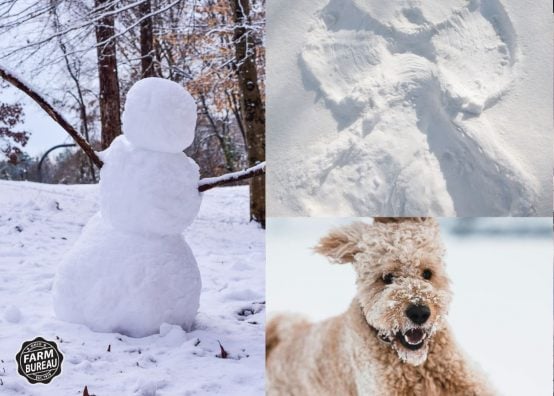
I’m going to give you a list of things that you can do that will get you outside and actually enjoy the snow.
Read More

As kids, we are often told to try new things, whether it be a new food, a new activity or…
Read More
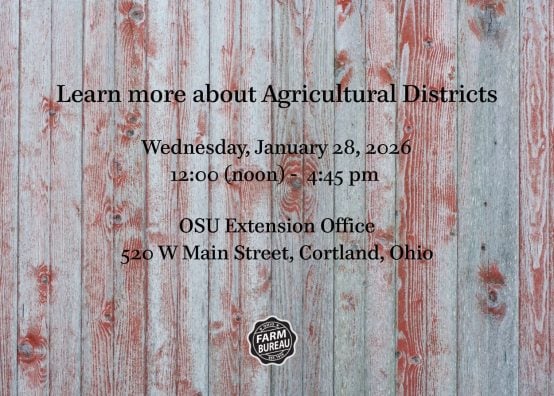
Learn more about ag districts from noon to 4:45 p.m. Jan. 28 at the OSU Extension Office, 520 W. Main Street in Cortland.
Read More
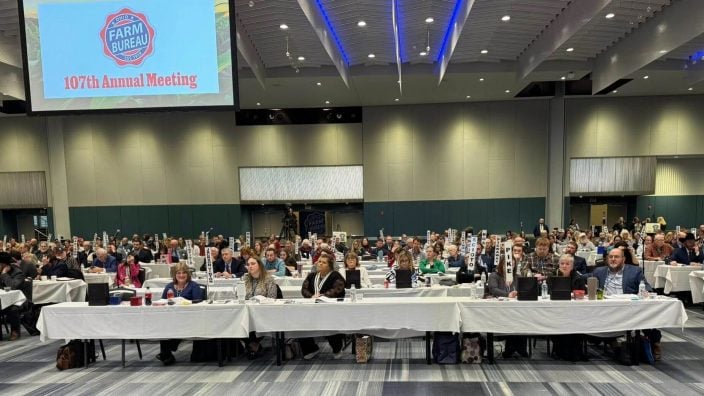
We aren’t just reacting to change — we’re shaping the future of agriculture, one conversation and one decision at a time, together.
Read More

Today, there are close to 15,000 farms growing Christmas trees in the U.S., and over 100,000 people are employed full- or part-time in the industry.
Read More