







Cows make Christmas extra cheerful
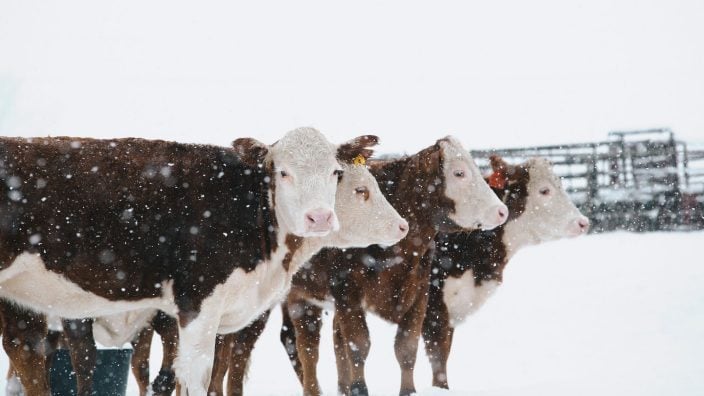
It might seem like a real chore to have to take care of the animals before any Christmas gifts or meals can happen, but to me it is such a special time.
Read MoreAs a kid, I remember running around the woods for hours, following in my grandfather’s footsteps as we inspected trees, admired wildflowers, listened to the birds, and tried to spy a deer bedded down in the tall grass. We spent hours together picking blackberries and looking for arrowheads. When we were done, we’d walk down the steps into the basement, leave our shoes, wash our hands, and head up for whatever meal we were late in eating. Never once did we think or even bother to check if there were any little hitchhikers on our clothes.
It wasn’t until I was home from college for planting that new reality set in. I don’t remember the exact day, but I’ll never forget the moment. My brother was on the tractor, and he had gone by some trees. When he pulled up to the end of the row, he got off the tractor and asked my mom and me to look at his arm; he was pretty sure he had pulled a tick off himself. We looked, but didn’t see anything. We weren’t sure whether to believe him or not, because, to be honest, we had never seen a tick before.
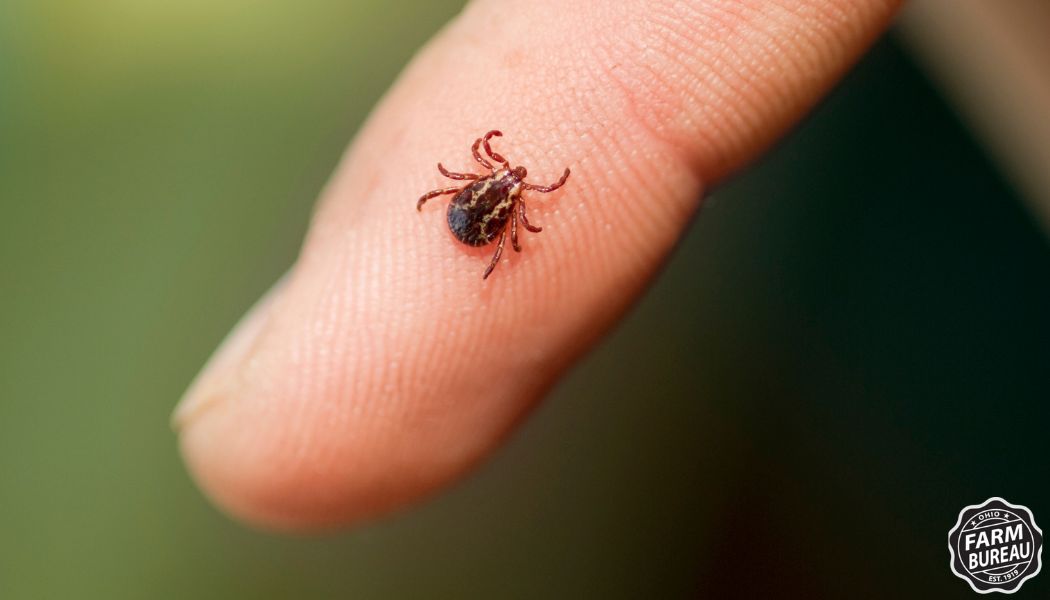
Now, even a simple walk with Shiloh, working in the garden, or mowing the lawn results in a thorough check of my clothes, shoes and body before walking into the house. If Shiloh is involved in the activity, she also receives a thorough check, even though she’s on flea and tick medicine. Even the cats are on flea and tick medicine. These interlopers that I’m paranoid about are ticks. Now, if you’re squeamish, you might want to stop there. This year, I’ve found more ticks on myself and Shiloh than I ever have before. It seems that this is a bad year for ticks. So with this being the case, I thought it would be helpful to share some information about these little blood sucking fiends.
The first tick found in Ohio was a blacklegged deer tick in 1989. While a few ticks were found between 1989 and 2008, the tick population exploded in 2009. Ohio is home to more than a dozen types of ticks, but people and pets are most likely to encounter three common tick species: the American dog tick, the blacklegged deer tick, and the Lone Star tick. The American dog tick is commonly found in grassy areas and places with minimal tree cover. The ticks feast on small and medium-sized animals as well as rodents. These ticks can transmit Rocky Mountain spotted fever and, in rare cases, tularemia. Adult females are the most likely culprits in human bite cases.
Blacklegged deer ticks are usually found in woody and brushy areas, where they obtain nutrients from deer, chipmunks, white-footed mice and deer mice. These ticks can carry Lyme disease, anaplasmosis, babesiosis, and Powassan virus disease. Peak activity for these ticks occurs in May or June, when the young are searching for a host. However, these ticks can be active in winter as long as the temperature is above freezing.
Last is the Lone Star tick; it is mainly found in the southern part of the state. These are found in woodland areas with dense undergrowth and feast on raccoons, squirrels, deer and birds. These ticks transmit ehrlichiosis, and they are aggressive biters who often transmit their disease to humans. Additionally, another tick, the Asian longhorned tick, is slowly making its way to Ohio, but has only been found in 11 counties.
So with all this information, what can a person do to keep themselves and their pets safe? So first, for pets. Ensure they are on a good flea and tick medication that effectively kills ticks. Whenever they go outside, check their paws and legs, ears and face for ticks that may have hitched a ride on them while they were exploring. Keeping lawns mowed and avoiding high grass will also help. For humans, when trail walking with your pet, keep to the center of the trail. Wear light-colored clothing so you can see if a tick is on you, and spray yourself with a product that repels ticks, such as Deet, picaridin, or IR3535. Make sure to read the instructions.
Additionally, when you come in from outside, take a shower within two hours to wash off any unattached ticks and do a visual inspection of your entire body! Ticks like warm spaces! So don’t forget belly buttons, ears, knees, between the legs, waist and especially in your hair. To kill ticks that might be hiding on clothes, tumble them in a dryer on high for 10 minutes. If you need to wash the clothes first, use hot water!
If you do happen to find a tick attached to you or your pet, don’t panic. There are numerous old wives’ tales about matches, oil and other random things. But it’s not that hard. Get a pair of sharp tweezers, grasp the tick as close to the skin as possible, and gently pull it straight out. If the mouth stays attached, monitor the area, but don’t panic; the body should heal itself. However, keep an eye on the area and consult a doctor if you notice anything unusual. Don’t ever crush a tick with your fingers. Dispose of live ticks in alcohol, a sealed bag, or flush them down the toilet, or wrap them in tape. Watch for symptoms of a tick-borne illness which can include fever, headache, joint pain, muscle aches, fatigue or a rash soon after a bite. Each tick disease will often show signs at different times. For example, Anaplasmosis signs may appear 5-21 days after a bite, Babesiosis is 7-56 days, Ehrlichiosis is 5-10 days, Lyme disease is 3-30 days, and Rocky Mountain spotted fever can occur 5-10 days after exposure. If you exhibit any of these signs, please consult a doctor immediately.
While ticks are creepy, and I would love to return to those simpler times when I could spend hours outside and wander through the woods and grass without a care, those times are gone. Everyone, including myself and Shiloh, is going to have to learn to co-exist with these little bloodsucking fiends. Taking precautions and being diligent will be the reality for each of us from now on. In fact, just writing this article made me a little paranoid. I think I’ll double-check myself and Shiloh right now just to be safe.
Submitted by Christen Clemson, a member of the Trumbull County Farm Bureau who completed her Ph.D. at Pennsylvania State University. She and her family farm in Mecca Township.
OFBF Mission: Working together for Ohio farmers to advance agriculture and strengthen our communities.
It might seem like a real chore to have to take care of the animals before any Christmas gifts or meals can happen, but to me it is such a special time.
Read More
Happy Thanksgiving, Everyone! I say it every year, but Thanksgiving is my favorite holiday. The gathering of friends and family…
Read More
We need to get back to being people who see the good before the differences. Because when agriculture thrives, communities thrive.
Read More
As we pull on our hoodies, light our jack-o’-lanterns and sneak just one more piece of candy, we can thank agriculture for giving us the most spooktacular night of the year.
Read More
It is currently illegal to sell unpasteurized milk in Ohio. There is a renewed interest in raw milk sales, so that could change.
Read More
Fatigue and stress can sneak up on even the most seasoned farmer. Please, take care of yourselves.
Read More
Traveling on roads with large, often oversized equipment adds to the stress.
Read More
Much of Ohio’s pumpkin crop ends up at farm markets, roadside stands and patches where families pick out carving pumpkins and pie pumpkins by hand.
Read More
Seeing these events be so successful and having kids so excited and eager to learn is truly heartwarming.
Read More
CEA will not replace traditional farming, but it is helping our food supply be more sustainably produced in the United States.
Read More