


Legal with Leah: Understanding Ohio’s 2026 CAUV Update
The 2026 Current Agricultural Use Value update brings lower values in many reappraisal counties and a significant policy win on permanent pasture.
Read MoreHouse Bill 10 introduced important reform to pesticide application rules in Ohio. On this Legal with Leah, Ohio Farm Bureau Associate General Counsel Leah Curtis explains why the changes matter for farm families.
Listen to Legal with Leah, a podcast featuring Ohio Farm Bureau’s Policy Counsel Leah Curtis discussing topics impacting farmers and landowners.
Ryan Matthews [00:00:05] Last year, the Ohio Legislature and Governor DeWine passed House Bill 10, which includes needed reform for the applications of pesticides. For This Legal with Leah, let’s hear why this legislation is so important to farm families with Ohio Farm Bureau Associate General Counsel, Leah Curtis. Leah, great to see you.
Leah Curtis [00:00:22] Great to see you too, Ryan.
Ryan Matthews [00:00:24] Now, just to start us off, Leah, can you share the recent history around pesticide applications when it comes to state and federal regulation?
Leah Curtis [00:00:34] Sure, so some people may remember we had an episode back, I think in the fall, we talked that the budget had changed pesticide law so that anyone that was applying a restricted use pesticide was going to need that private applicator license or a pesticide license. So historically, the law has been that employees and family members of a licensed applicator could apply restricted use pesticides so as long as they were supervised by the licensed applicator. So that was a big change, a lot of concern from us and hearing a lot a concern from our members. Just as a reminder, we did talk about this last time, but this was due to changes at the federal level. They actually happened back in 2017 but the state is required to come into compliance so that we can retain our status as a delegated state. And that the state can continue to license pesticide applicators. And that’s really important. We don’t want the federal government having to deal with them to do these licenses. So we do have to come into compliance. And so last we talked, we were working on trying to fix this situation, because we do understand how important it is to have this flexibility for farmers, for their employees, and their family members. And so as you mentioned, House Bill 10 recently was passed, and so we were able to restore that ability into the law for those family members and employees to be supervised.
Ryan Matthews [00:01:59] Can you talk a little more to why this change is important for farmers, family members, and employees?
Leah Curtis [00:02:07] For one thing, it’s the flexibility, right? You don’t always want to have to have just the one person who has the license or have everybody get licensed. You may not be able to get everyone licensed quickly, because you do have to do the education side. You’ve got to take the tests and you may not be able to a test to get that done. So it’s important to have that flexibility. And then the other side is that the definition of using a pesticide, which requires a license, is broader than just directly spraying it. It includes things like cleaning equipment and transporting and mixing and those things. Things that you can, with proper supervision, have someone else do that might not have a license. So having that flexibility for employees, for family members to be able to do that is important for people to keep their businesses moving.
Ryan Matthews [00:02:59] Now that state law better mirrors federal, can you share what family members and employees will need to do in order to apply these crop protection tools and then any other steps that the state agencies need to take?
Leah Curtis [00:03:12] So right now we are working through the regulatory process. So the Department of Agriculture handles the rules for pesticide licensing programs. So they are working on updating the rules to be consistent with the new law and the new changes. So we are looking through those. They’re out for comment and we’ll be providing comment and having discussion about those. Ultimately, what is going to happen is that employees and family members that are being supervised are also going to have to have some additional training. And that’s going to be in those rules. Now under the federal regulations we do understand that the worker protection standard training that many employers already provide to their employees, that is likely going to able to fulfill or at least in part if not in full the training requirements. So some people are already doing that. That’s probably going to be able to kind of double dip there. Even if you don’t do worker protection standard training, there is a list of topics rather than like an hours training requirement. So once that has worked out through the regulations, we of course will get that information out to everybody so they know exactly what they need to do.
Legal with Leah: Changes to Ohio Pesticide Licensing, recorded July 1, 2025




The 2026 Current Agricultural Use Value update brings lower values in many reappraisal counties and a significant policy win on permanent pasture.
Read More

A recent meteorite in northeast Ohio has sparked fascination and a few legal questions. Leah Curtis joins to discuss what this rare event means for landowners.
Read More

Leah Curtis discusses Rails to Trails projects, potential impact on farmland when these conversions happen and Farm Bureau’s role in a North Carolina case.
Read More

Leah Curtis joins this Legal with Leah to talk about what data centers mean for local communities and how to stay engaged in the development process
Read More
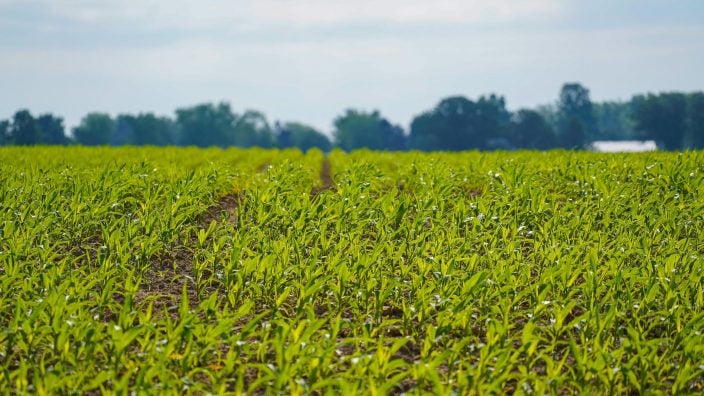
Ohio Farm Bureau advocated for a change in the law to allow family members and employees to handle pesticides while under the supervision of a licensed applicator. The rules around HB 10 are being finalized.
Read More
Four property tax reform bills were signed into Ohio law at the end of 2025. Ohio Farm Bureau Associate General Counsel Leah Curtis breaks down the bills and what the changes mean for Ohioans.
Read More

Learn what the requirements are to legally fly a drone in Ohio as well as steps the Ohio Legislature has taken in terms of security concerns.
Read More

In 2025, about 21 counties are going through a reappraisal or update, and because Ohioans pay taxes one year behind, they will see new property tax bills in January 2026.
Read More

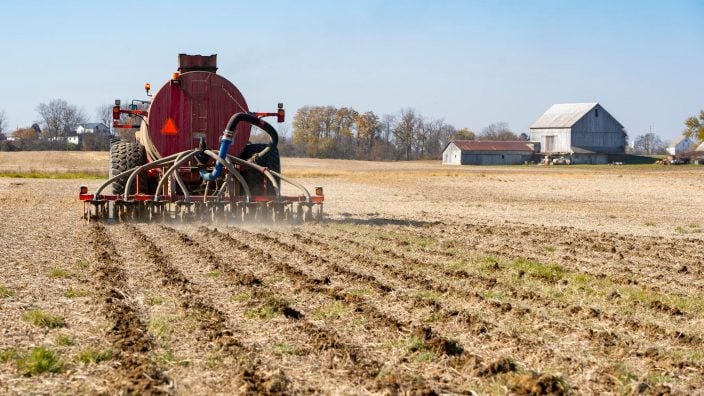
Any unlicensed handlers who use restricted use pesticides will need to have additional training. Farm Bureau will be working on legislation to give employers a choice on how to provide training.
Read More
Current Agricultural Use Value is often discussed as a farmland preservation tool, but there are some other tools in the law that landowners can consider.
Read More