



Applications for Ohio Farm Bureau Health Plans now available
Members have three ways to apply: contacting a certified agent, calling 833-468-4280 or visiting ohiofarmbureauhealthplans.org.
Read MoreAs a livestock producer who grew up helping out at the family’s small meat processing facility, Nate Like tends to hear stories about problems at the facilities. And increasingly, the Henry County Farm Bureau president has been hearing the same story over and over again—livestock producers who are having trouble getting their animals harvested. For some producers, the closest meat processor is too booked up or too far away. Others describe inconsistent enforcement of state regulations with some saying they are too rigid.
Every chance Like gets, he talks to local legislators whether it’s on his farm, at local meetings or in the nation’s capital. During the county Farm Bureau presidents trip to Washington, D.C. last year, he spent several minutes talking with U.S. Rep. Bob Latta about a friend who raised a steer that was born blind but otherwise healthy, as confirmed by his veterinarian. When he took the animal to be processed, he was told blind animals can’t be used for human consumption. The steer wasn’t allowed to return to its owner and was euthanized and discarded.
Under Ohio law, there are certain conditions in which livestock may be condemned during an ante-mortem inspection. These state laws follow federal regulations that are in place to protect public health, businesses and the livestock industry. For example, the U.S. Department of Agriculture has banned sick, blind and non-ambulatory cattle from human consumption in an attempt to assure that cattle inflicted with Bovine Spongiform Encephalopathy, otherwise known as “mad cow disease, do not get into the food chain.
“Under federal law, state meat and poultry inspection programs must be ‘at least equal to’ USDA’s federal program,” said Dr. Nick Wagner, chief of the Division of Meat Inspection at the Ohio Department of Agriculture. “ODA takes this obligation very seriously because we know how important it is to provide Ohio’s small meat and poultry processors an avenue to do business. The failure to follow state and federal law could ultimately put the entire program in jeopardy.”
“It all comes back to food safety and I’m a big proponent of that. But there needs to be some common sense,” Like said.
In agreement is Mark Ballmer, policy chair for Fulton County Farm Bureau. He’s been talking with Ohio Sen. Randy Gardner and state Farm Bureau staff members about the problem in his area. For example, he said a member’s cow broke its leg when it got caught in a processing plant gate. Because it couldn’t get up unassisted, the cow was declared unfit for human consumption, not allowed to return to its owner and was euthanized.
“There was nothing wrong with the animal. It just had the misfortune of breaking its leg at the plant,” Ballmer said. “This has been a big issue in our area. Before, maybe they were too lax (in enforcing rules), but now there’s no lax.”
OFBF state staff have been discussing members’ concerns with Wagner and the Ohio Association of Meat Processors. In response, ODA developed training guides for meat processing plants to ensure uniform enforcement of rules, developed educational materials and reached out to the livestock industry about state and federal regulations. It is working with processing plants on when it’s more appropriate to issue a noncompliance report for a violation instead of stopping all operations at the plant for a short period of time when any issue arises.
“Our ultimate goal is to uniformly regulate the industry in a fair, consistent and professional manner,” Wagner said. “We do this to protect the health of the public, ensure the success of Ohio’s meat and poultry businesses and the success of the livestock industry as a whole.”
An upcoming edition of Buckeye Farm News will take a look at the capacity of Ohio’s meat processing industry.
In response to concerns from livestock producers, the Ohio Department of Agriculture developed training guides for meat processing plants to ensure uniform enforcement of rules, developed educational materials and reached out to the livestock industry about state and federal regulations.
Photo caption: Farm Bureau member Nate Like (right) discusses regulations regarding livestock processing with Rep. Bob Latta.


Members have three ways to apply: contacting a certified agent, calling 833-468-4280 or visiting ohiofarmbureauhealthplans.org.
Read More
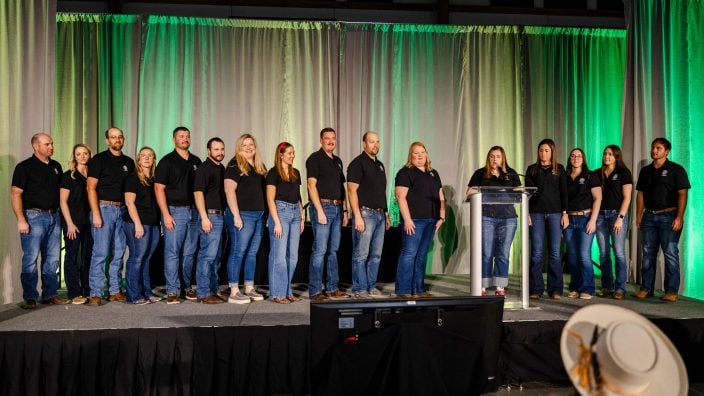
Members ages 18-34 who are interested in developing their leadership skills and enhancing programming for their peers should apply.
Read More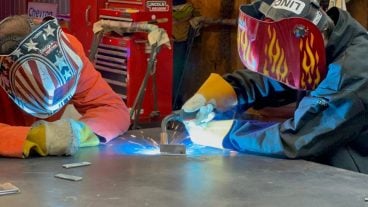
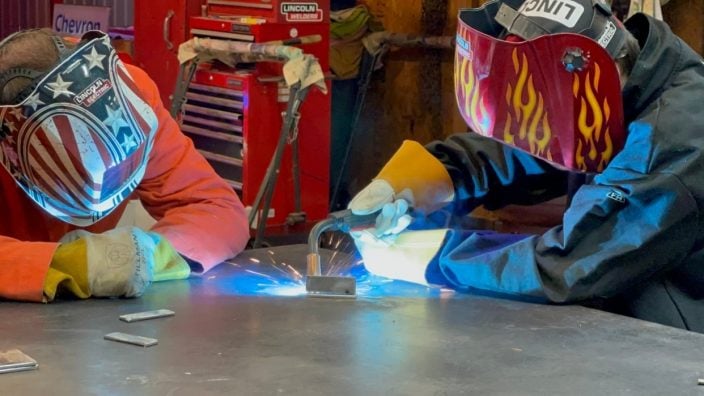
Senate Bill 328 is legislation designed to strengthen career-connected learning and better prepare students for Ohio’s workforce needs.
Read More

With the Family Forest Carbon Program, you can have a successful farm and get paid to grow healthy forests.
Read More
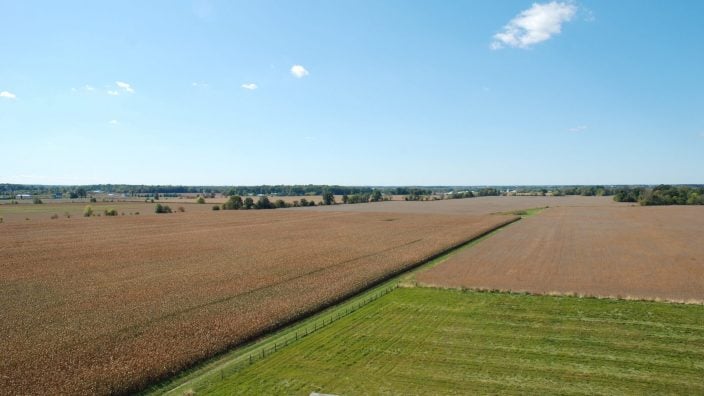
Ohio Farm Bureau recently sent a letter to Congress calling for the swift passage of the Farm, Food, and National Security Act of 2026 (HR 7567).
Read More
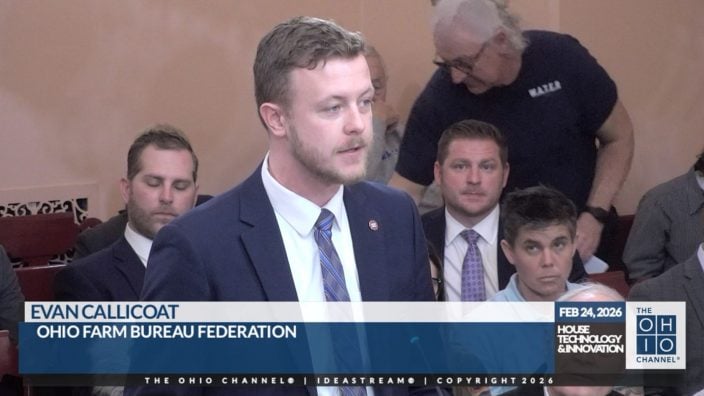
House Bill 646 would establish a Data Center Study Commission to examine the impact of rapid data center development across the state.
Read More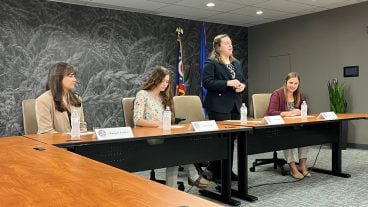
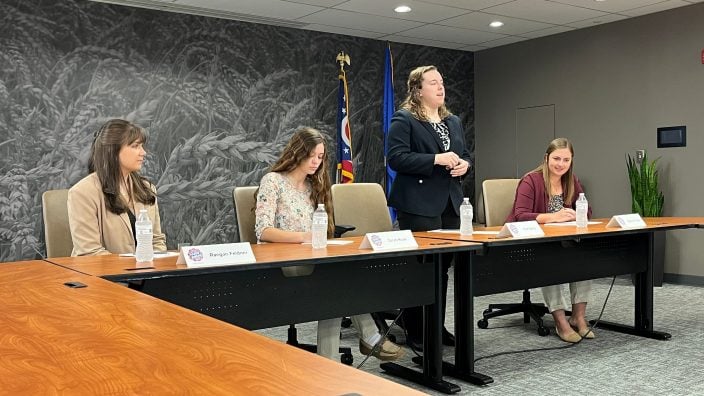
Collegiate Farm Bureau serves as a connection to current industry professionals and equips the next generation with the essential tools and resources needed to excel in their careers.
Read More

Ohio Farm Bureau members met one-on-one with state legislators and staff to discuss policy priorities impacting Ohio’s farms and rural communities.
Read More

Legacy nutrient deductions enable new farmland owners to claim deductions on the nutrients within the soil on which healthy crops depend.
Read More
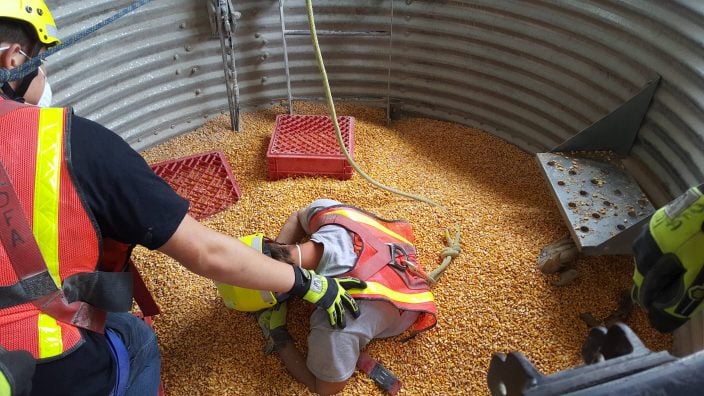
Farmers, agribusinesses and community members are encouraged to nominate their local fire departments for Nationwide’s Nominate Your Fire Department Contest through April 30.
Read More