







Applications for Ohio Farm Bureau Health Plans now available
Members have three ways to apply: contacting a certified agent, calling 833-468-4280 or visiting ohiofarmbureauhealthplans.org.
Read MoreOn March 23, the Kasich administration announced plans to propose a vast new regulatory authority over Ohio farmers. Among many provisions, the Ohio Environmental Protection Agency proposal would include classifying commercial fertilizer as an agricultural pollutant, which would dramatically increase the state’s power to dictate fertilizer application practices.
Ohio Farm Bureau immediately took action, relaying to legislators the negative impact these regulations would have to the farming community and secured from the legislature a commitment to work with Farm Bureau before a bill is introduced.
Farm Bureau views this proposal as an immense expansion of state regulatory authority. There has been no assessment of the plan’s agronomic, environmental or economic consequences and could leave farmers confused as there are already multiple existing regulatory systems in place.
Ohio Farm Bureau, always in close contact with lawmakers, will continue to communicate farmers’ commitment to water quality solutions. “Members of the General Assembly have traditionally been thoughtful and transparent as they deliberate complex agriculture and water quality issues,” said Ohio Farm Bureau Executive Vice President Adam Sharp. “We’re glad this EPA proposal must go through the legislative process before it could become law.” Farm Bureau’s message is that improving water quality and producing food are not mutually exclusive goals.
The EPA proposal was at the end of a busy week of water news and events. Following is a recap of other developments:
Farmers in the Western Lake Erie Basin are getting significant new resources to further their efforts to protect water quality. Farm Bureau and its partners will work with farmers to expand the number of individuals who have Nutrient Management Plans. In addition, the project will increase the use of soil testing to achieve improved nutrient management.
New research indicates that nutrient runoff can be meaningfully reduced when farmers have accurate data on crop nutrient needs and then follow a detailed plan that simultaneously maximizes efficient production and minimizes nutrient loss.
A series of workshops will provide farmers with individualized Nutrient Management Plans. Ahead of the workshops, farmers will be advised on obtaining soil tests from which their NMP will be written. The plans will be completed using a program developed by the Ohio Department of Agriculture.
The partnering groups presenting the workshops are the Ohio Certified Crop Adviser Program, Ohio Federation of Soil and Water Conservation Districts and Ohio State University Extension.
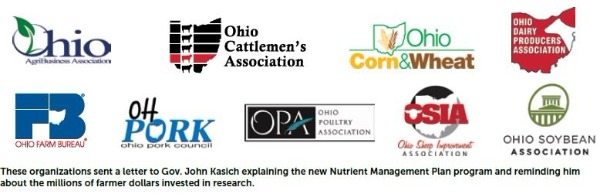
Ohio Farm Bureau, along with the groups represented above, sent a letter to Gov. John Kasich explaining the new Nutrient Management Plan program and reminding him about the millions of farmer dollars invested in research. The letter also reviewed the extensive regulations that farmers are already subject to and cautioned against arbitrary additions to these requirements. It asked that regulators be transparent as they consider actions that will impact farmers. The letter also noted the current economic conditions most farmers are facing and reminded the governor of the principles of his administration’s Common Sense Initiative to have an economy friendly regulatory climate for all Ohioans.
State Rep. Steve Arndt, R-Port Clinton, and Sen. Randy Gardner, R-Bowling Green, announced a plan to reduce nutrient loading into Lake Erie.
In a statement, the lawmakers’ announcement explained two major initiatives. The first is the Clean Lake Capital Fund, which may appropriate up to $100 million per year for five years for both Lake Erie algae reduction and agricultural best practices. Projects may include establishing tools to improve manure application processes, reduce open lake disposal of dredged materials, fund local government green infrastructure and projects to help reduce nutrient and sediment runoff.
The second provision is a new Soil and Water Support Fund, with some funding provided directly to soil and water conservation districts to assist farmers in soil testing, nutrient management plans, installing edge-of-field drainage devices, encouraging subsurface placement and conservation practices that may include riparian buffers, filter strips and cover crops.
Ohio Farm Bureau has expressed support for this concept and believes that funding science-based solutions will help solve Ohio’s water quality issues.
Ohio EPA intends to declare the open waters of the Western Lake Erie Basin to be impaired.
In a media statement, OFBF said the impairment designation will have no immediate impact on farmers or the lake’s water quality.
The designation does not create mandatory actions, nor does it provide federal money. It excludes Canada’s role in protecting the lake. It also will create a long and complicated bureaucratic process that may impede current progress on reducing harmful algal blooms.
Farm Bureau’s analysis suggests the regulatory and legal process could take five to seven years before actual nutrient reduction steps would be taken. Further, uncertainty over what actions might be required in the distant future may cause municipalities, farmers and others in the regulated community to question their current efforts to improve water quality.



Members have three ways to apply: contacting a certified agent, calling 833-468-4280 or visiting ohiofarmbureauhealthplans.org.
Read More
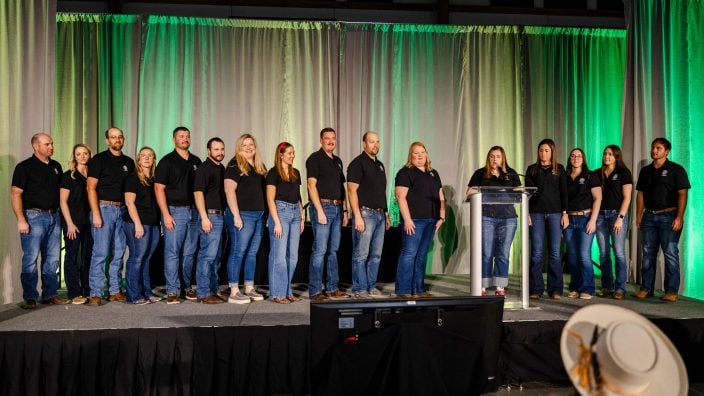
Members ages 18-34 who are interested in developing their leadership skills and enhancing programming for their peers should apply.
Read More

Senate Bill 328 is legislation designed to strengthen career-connected learning and better prepare students for Ohio’s workforce needs.
Read More

With the Family Forest Carbon Program, you can have a successful farm and get paid to grow healthy forests.
Read More
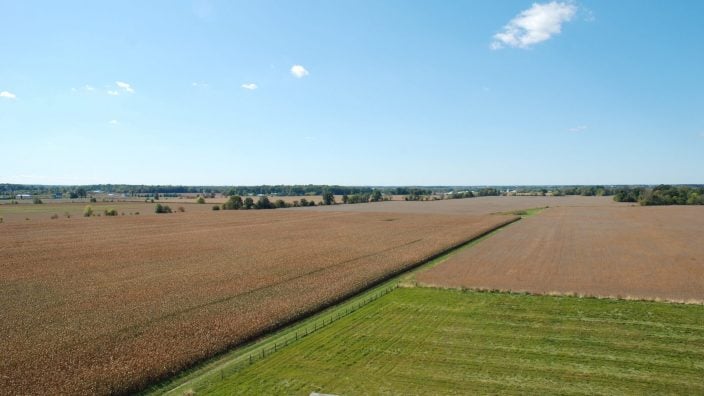
Ohio Farm Bureau recently sent a letter to Congress calling for the swift passage of the Farm, Food, and National Security Act of 2026 (HR 7567).
Read More
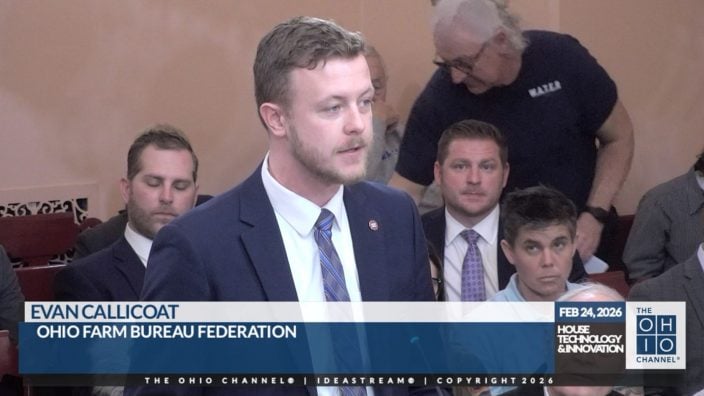
House Bill 646 would establish a Data Center Study Commission to examine the impact of rapid data center development across the state.
Read More
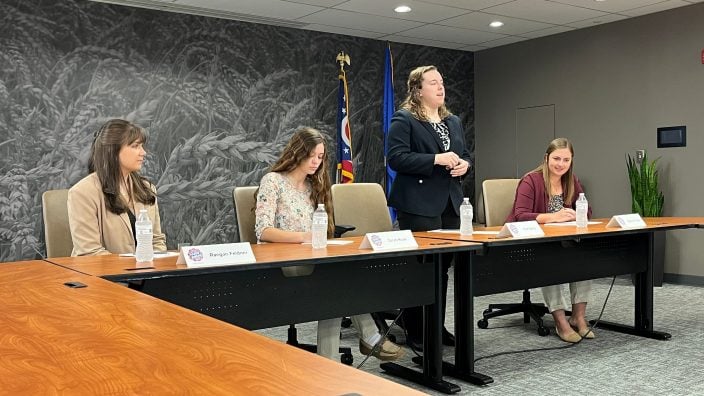
Collegiate Farm Bureau serves as a connection to current industry professionals and equips the next generation with the essential tools and resources needed to excel in their careers.
Read More

Ohio Farm Bureau members met one-on-one with state legislators and staff to discuss policy priorities impacting Ohio’s farms and rural communities.
Read More

Legacy nutrient deductions enable new farmland owners to claim deductions on the nutrients within the soil on which healthy crops depend.
Read More
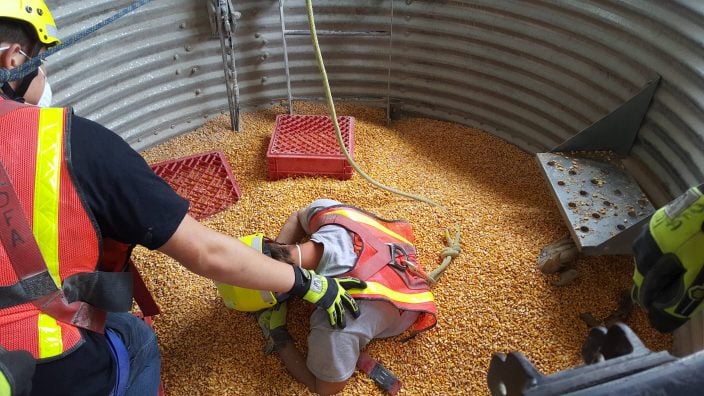
Farmers, agribusinesses and community members are encouraged to nominate their local fire departments for Nationwide’s Nominate Your Fire Department Contest through April 30.
Read More