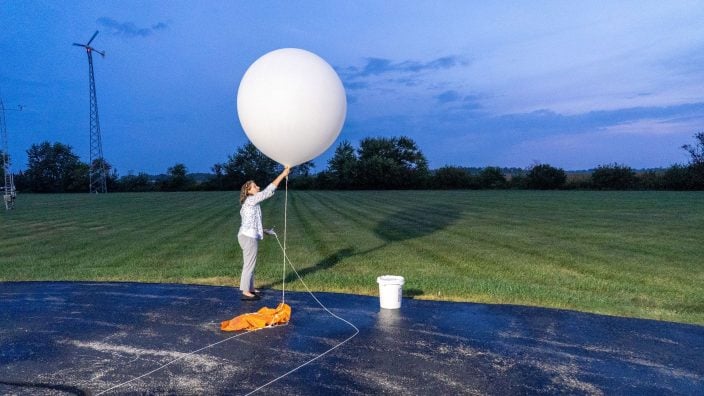

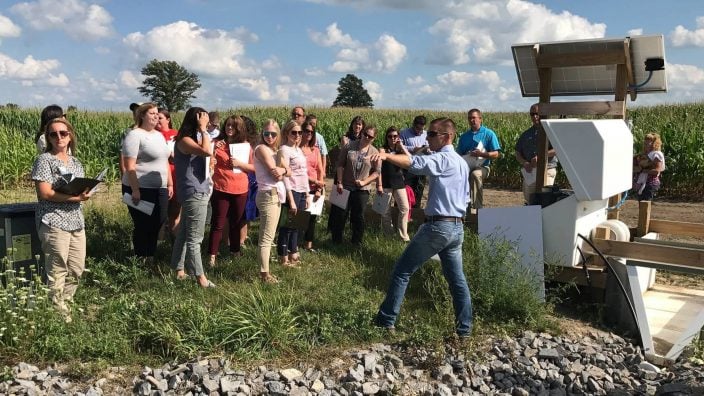
Weather balloon launch Wilmington Ohio

With all the technology available in weather forecasting, the deployment of a weather balloon seems like a quaint notion from a bygone era.

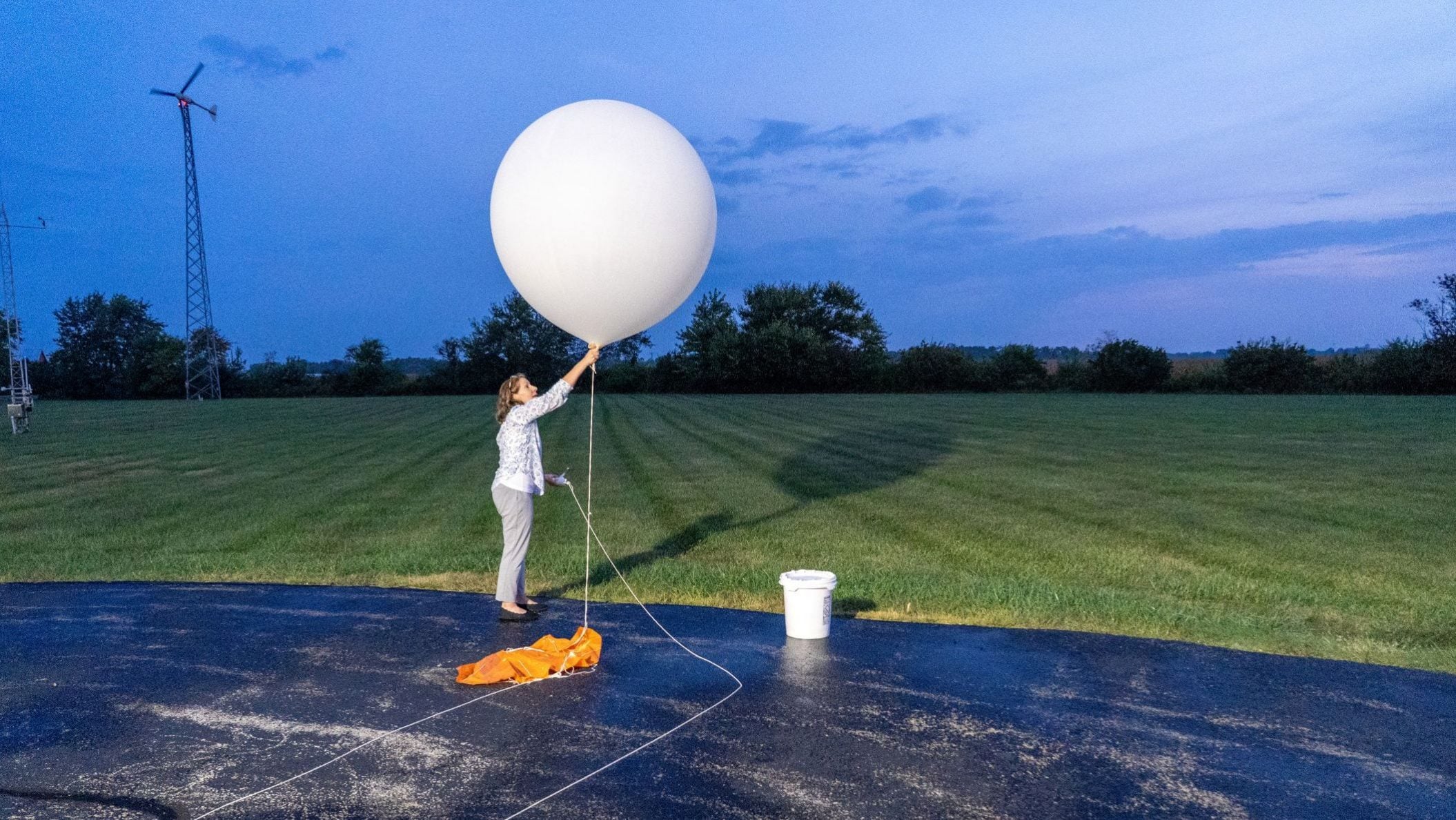
But all that technology has to attain its data somehow, and weather balloons still play a vital role in forecasting, according to meteorologist Julie Dian-Reed, who is the service hydrologist at the National Weather Service Forecast Office in Wilmington. Weather balloons are sent aloft from the Clinton County location at 7 a.m. and 7 p.m. every day. All weather balloons across the globe are launched at 11 Zulu (military) time, the world’s Coordinated Universal Time.

“Think of the atmosphere like an ocean, and we’re just at the surface of the ocean,” Dian-Reed said. “(The balloon) gives us what’s below the surface, or in this case, above the surface.”

According to the National Weather Service, weather stations began collecting data from balloons in 1909 to obtain information for winds aloft. This came on the heels of modifications made in the late 1800s. Winds aloft data could be obtained in near real-time, but the balloons could only be tracked to about 5 kilometers under good sky conditions.

Fast forward 100-plus years and the balloons are still used to help build robust data for meteorologists.

weather balloon
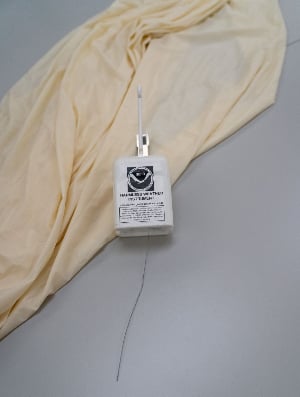
Each weather balloon, which will burst two hours after launch, contains a transmitter that includes the mailing address for where to send the balloon back to the National Weather Service.

The weather balloon takes in information regarding the temperature and dew point within the column of the atmosphere to give forecasters a “snapshot” of what the atmosphere looks like at a given time, Dian-Reed said.

“We’re tracking the balloon and it also gives us a measurement of temperature, dew point, pressure and wind,” she said. “Those are the main things that we need in order to kind of put together a snapshot.”

Those snapshots are included in all kinds of weather models used by meteorologists for both short- and long-range forecasts throughout the country and the world, she said.

Dian-Reed noted that a little less than half of National Weather Service stations launch balloons, but what they collect is still a valuable tool, and predicting the weather is something she and her colleagues take “very seriously.”

“Our mission is to issue warnings and forecasts for the protection of life and property. It’s that plain and simple,” she said. “We’re here 24/7, 365. We staff up more during times of severe weather. We take our job very seriously in terms of trying to get the most accurate forecasts and warnings out, whether they be tornado warnings, severe thunderstorm warnings, flood warnings. We also coordinate with the Ohio State climatologist on drought. There are various ways to become weather involved.”

You can play a part

One of those ways is to become a volunteer weather spotter, or to install a backyard weather station on personal property. NWS does review the data that comes from farmers who have small weather stations on their farms, she said, noting that she installed one on her property not too long ago.

“The most important thing if you’re going to have a backyard weather station is to make sure it’s sited properly,” she said. “You don’t want it right next to your house or under a tree or anything like that. You want to make sure you keep the obstructions to a minimum. We use any available data to monitor conditions, including backyard weather stations.”

And what should a farmer, or anyone, do if they find the NWS weather balloon has deflated in their field or on their property?

“You literally just pop it in the mail and it can be returned back to us,” she said. Each balloon, which will burst two hours after launch, contains a transmitter that includes the mailing address for where to send the balloon back to the National Weather Service.

Key Points

  • Data collected from the international, coordinated daily release of weather balloons is essential for short- and long-term forecast models across the world.
  • The National Weather Service exists to issue warnings and forecasts for the protection of life and property.

What’s Next?

Interested in becoming a volunteer weather spotter for the National Weather Service? Visit ofb.ag/weatherspotter.

Photos by Brooke Beam

To grow a network and gain perspective and knowledge in the industry through personal and professional development has been invaluable. Every day I learn and grow.
Ryanna Tietje's avatar
Ryanna Tietje

Henry County Farm Bureau

Farm Bureau connections
The issue of property taxation remains as one of the biggest challenges our members face today. Ensuring agricultural property is valued for its agricultural potential and not development is critical to the continued success of Ohio agriculture.
Matt Aultman's avatar
Matt Aultman

Darke County Farm Bureau

Giving farmers a voice
Farm Bureau is what really got the word out. It’s been one of their goals to get this done.
Bill and Charlotte Wachtman's avatar
Bill and Charlotte Wachtman

Henry County

10-year campaign for safer roads
I could not have done it without the resources I have found through Farm Bureau.
Gretchan Francis's avatar
Gretchan Francis

Trumbull County Farm Bureau

Bringing the farm back to life
Because we are younger farmers just starting out, Farm Bureau has a lot of good opportunities and resources to help us grow in the future.
Hannah Kiser's avatar
Hannah Kiser

Sandusky County Farm Bureau

Farm Bureau involvement
Through the Select Partner program, we became educated in farm insurance and weren't just selling policies. It became more and more clear why farmers need an advocate like Ohio Farm Bureau.
Chad Ruhl's avatar
Chad Ruhl

Farm manager, CSI Insurance

Select Partner Program
So many of the issues that OFBF and its members are advocating for are important to all Ohioans. I look at OFBF as an agricultural watchdog advocating for farmers and rural communities across Ohio.
Mary Smallsreed's avatar
Mary Smallsreed

Trumbull County Farm Bureau

Advocacy
Suggested Tags: