Railroad tracks

A recent case in North Carolina has reached the Federal Circuit appellate court, addressing property rights and the proper compensation for when former rail lines are “banked” and converted into public trails.

On this Legal with Leah, Ohio Farm Bureau Associate General Counsel Leah Curtis discusses “Rails to Trails” projects, potential impact on farmland when these conversions happen and Farm Bureau’s current litigation efforts on the case.


Ohio Farm Bureau · Legal with Leah: Rails to Trails and Eminent Domain

Listen to Legal with Leah, a podcast featuring Ohio Farm Bureau Associate General Counsel Leah Curtis discussing topics impacting farmers and landowners.

Transcript

Ryan Matthews: Ohio is a critical hub for rail, boasting as the fourth largest rail infrastructure in the nation. But sometimes our former railroads change tracks or change mission to public transportation. Here to talk about those transitions on this Legal with Leah is Leah Curtis, associate general counsel for Ohio Farm Bureau. Leah, thanks for being here.

Leah Curtis: Thank you.

Ryan Matthews: Now, Leah, can you start by just giving us some background on what Rails to Trails projects are?

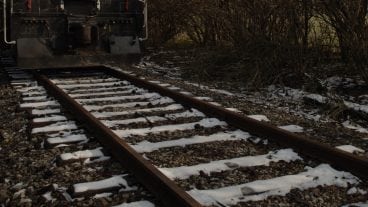
Leah Curtis: Sure, so generally in Ohio, we tend to refer to really any project where there was a former railroad bed that’s then converted into a public trail as a Rails to Trails project in general. However, there is legally a process under what’s called the Federal Trails Act, which allows a railroad to bank their railroad routes and allows them to be used for trail uses. So essentially what this means is the railroad says, “I don’t need this route for right now. I might want it in the future, but for right now it can be a public trail.” And this is a process through the surface transportation board. They have to approve these arrangements between sponsors and railroads. So these are not super common here, but we do see a lot of them across the country.

Ryan Matthews: So you mentioned that these projects may not be super common in Ohio. So could you talk about some of the different types of Rails to Trails that we see in the Buckeye State?

Leah Curtis: Sure, so as I said, not super common here, but of course it’s not to say that we wouldn’t have more in the future, too. Obviously, we do have a lot of rail transportation, both currently and previously, and so there’s certainly a lot of opportunity for that. Most of the trail projects we encounter here in Ohio with our members have been situations where a railroad has either sold an easement to a trail sponsor or they actually own the property where the railroad tracks were and they sell that property to that entity that has the trail. So those are different than this case that we’re gonna talk about, but this case does have a lot of implications for property rights, particularly around trails.

Ryan Matthews: As mentioned, there is a current case being decided and being talked about in North Carolina. Can you tell us a little bit more about this case? What is the issue? Maybe talk about the interested parties?

Leah Curtis: Sure, so this case comes out in North Carolina, but it is at the Federal Circuit, which is the court that hears most takings claims against the federal government. So this is a railroad easement and there was an eminent domain case that occurred. The landowner that was along and under the railroad easements alleged that taking, and sought compensation. The government actually agreed that there was a taking, but really at this point, they were arguing about how much was it taking and how much compensation the landowner would get. So the landowner argued that, “You know, I’ve lost rights to not only the easement, but some buildings and things that encroach or go over top of the easement that were previously fine with the railroad. They’re saying, you know, at any moment, this trail owner could come in and tell me, I can’t maintain these buildings or I have to remove these buildings.” And then in addition, there’s another right that’s always lost when this happens and that’s namely the right to exclude. So when you have a railroad easement, you expect the railroad, you expect railroad personnel and mechanics and that kind of thing, but not the general public. Now that it’s a trail, everyone can access your property. So the lower court did award significant compensation to the landowner, and now the government has appealed that stating that the compensation should be much less, arguing somewhat that there hasn’t been a lot of change here from that being a railroad easement.

Ryan Matthews And given that this is commercial real estate, can you talk about what Farm Bureau’s interest is in the case?

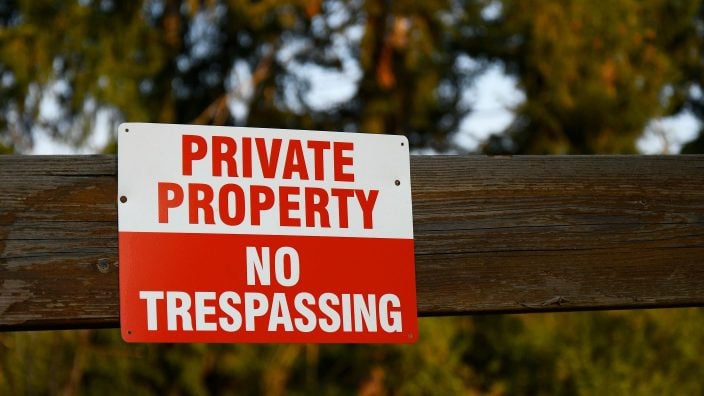
Leah Curtis: So of course we have a lot of interest in property rights in general. We work in a lot of eminent domain situations and cases. And even without having these specific types of trails in Ohio, we have seen farmers have a lot of issues with railroad easement to trail projects here. We joined a brief with other state Farm Bureaus in this case, and they also have had a lot more of these projects in their state. So they directly see these types of projects. But when you think about it, namely a farmer arranges their farm and their layout and all of that around the assumption that this is a railroad, and it’s the railroad that’s gonna use the property and not the public. So once it changes, there can be trespassing issues, there can be litter concerns, even concerns about animal health and safety of animals and people. So that’s a big issue. There’s also the issue that landowners can then be excluded from having the ability to cross these trails. They build fences and benches, other improvements along that which, they make sense for a trail, but they don’t necessarily make sense to drive a combine across or a tractor across. So that can limit access where in the past the railroad would have had a crossing available. And then there’s a concern that a trail sponsor could take legal action to remove buildings, remove things that are encroaching the easement, or even try to prevent that landowner from crossing the trail to access their farm.

Ryan Matthews This is a good example of how Farm Bureau engages in litigation. Can you talk a little bit about the thought process behind this type of advocacy?

Leah Curtis: Litigation advocacy for us here at Ohio Farm Bureau typically looks like this: we’re joining in cases as an amicus curiae, which is Latin for “friend of the court.” And we do that for a number of reasons, but typically we’re trying to ensure the court has a fuller context of the legal arguments than just those individual facts. We’re typically joining cases when they are at the appellate or the Supreme Court level. And that’s because once we get to that level in litigation, courts are typically looking more at the law itself. And not just the individual dispute that’s happening. So they’re thinking about how does this apply? How does this apply not just to these parties, but kind of broadly. So what this case is about is commercial real estate and Rails to Trails in North Carolina. But the decision in this case is going to be used to inform probably every federal Rails to Trails case going forward. It could inform a lot of other federal takings claims and even state takings claims. So it’s important that parties like us weigh in and provide that fuller context around the legal argument.

Ryan Matthews Leah Curtis, associate general counsel for Ohio Farm Bureau with this Legal with Leah. Thanks again for being here.

Leah Curtis Thank you.


To grow a network and gain perspective and knowledge in the industry through personal and professional development has been invaluable. Every day I learn and grow.
Ryanna Tietje's avatar
Ryanna Tietje

Henry County Farm Bureau

Farm Bureau connections
The issue of property taxation remains as one of the biggest challenges our members face today. Ensuring agricultural property is valued for its agricultural potential and not development is critical to the continued success of Ohio agriculture.
Matt Aultman's avatar
Matt Aultman

Darke County Farm Bureau

Giving farmers a voice
Farm Bureau is what really got the word out. It’s been one of their goals to get this done.
Bill and Charlotte Wachtman's avatar
Bill and Charlotte Wachtman

Henry County

10-year campaign for safer roads
I could not have done it without the resources I have found through Farm Bureau.
Gretchan Francis's avatar
Gretchan Francis

Trumbull County Farm Bureau

Bringing the farm back to life
Because we are younger farmers just starting out, Farm Bureau has a lot of good opportunities and resources to help us grow in the future.
Hannah Kiser's avatar
Hannah Kiser

Sandusky County Farm Bureau

Farm Bureau involvement
Through the Select Partner program, we became educated in farm insurance and weren't just selling policies. It became more and more clear why farmers need an advocate like Ohio Farm Bureau.
Chad Ruhl's avatar
Chad Ruhl

Farm manager, CSI Insurance

Select Partner Program
So many of the issues that OFBF and its members are advocating for are important to all Ohioans. I look at OFBF as an agricultural watchdog advocating for farmers and rural communities across Ohio.
Mary Smallsreed's avatar
Mary Smallsreed

Trumbull County Farm Bureau

Advocacy
Suggested Tags: