





Applications for Ohio Farm Bureau Health Plans now available
Members have three ways to apply: contacting a certified agent, calling 833-468-4280 or visiting ohiofarmbureauhealthplans.org.
Read MoreThe American Farm Bureau Federation, in cooperation with American Farm Bureau Insurance Services, has developed a new risk management insurance product for dairy farmers. Approved by the Agriculture Department’s Federal Crop Insurance Corporation, “Dairy Revenue Protection” insurance will provide dairy farmers the opportunity to manage risk by focusing on revenue from milk sales.
“We know that the level of risk protection available to dairy farmers was inadequate and we saw a clear opportunity to help by specifically addressing the impact of milk price volatility on a dairy farmer’s revenue,” said AFBF President Zippy Duvall. “This coverage will help shield dairy farmers from unexpected declines in milk prices as well as unexpected declines in milk production by addressing overall revenue. We are excited about teaming up with American Farm Bureau Insurance Services to offer this new risk management tool to dairy farmers.”
“As a dairy farmer I know firsthand the challenges our industry is facing,” said Frank Burkett III, president of Ohio Farm Bureau. “To be part of an organization that thinks outside the box and takes action to create constructive steps to help farmers who are struggling is one of the many reasons I’m proud to be a Farm Bureau member.”
As designed, Dairy Revenue Protection will provide several levels of insurance coverage based on the value of the farmer’s milk. One option will use manufacturing milk futures prices, and the other option would be based on the value of milk components, such as milkfat, protein and other milk solids. A majority of dairy farmers selling milk in the U.S. are paid based on the amount of milkfat and protein in their milk.
Other than those dairy pricing options, Dairy Revenue Protection coverage otherwise functions similarly to area-based crop revenue protection insurance policies. The coverage would offer revenue guarantees based on futures prices, expected production and market-implied risk. The premiums for coverage will be subsidized.
It is expected that Dairy Revenue Protection policies will be available in late summer 2018.
This is an edited version of a release from American Farm Bureau.
This is a news release for use by journalists. Questions should be directed to Joe Cornely, 614-246-8230.


Members have three ways to apply: contacting a certified agent, calling 833-468-4280 or visiting ohiofarmbureauhealthplans.org.
Read More
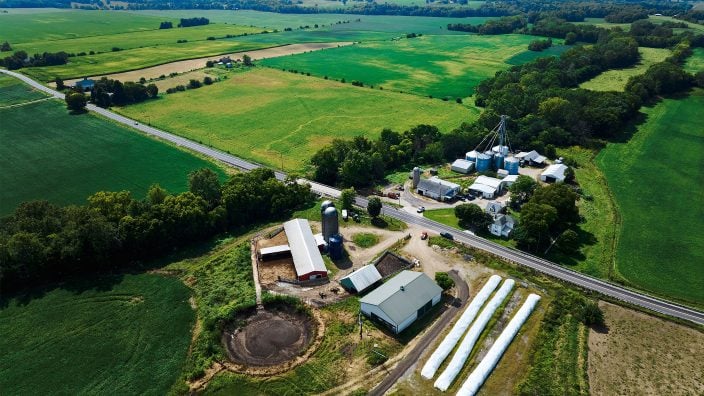
Ohio Farm Bureau Associate General Counsel Leah Curtis explains how the eminent domain process works in Ohio, what ‘quick take’ means and when it can be used.
Read More

As fuel prices skyrocket across the state, lawmakers are preparing to return to the Statehouse to vote on the temporary suspension of Ohio’s gas tax.
Read More

Since 1984, the Conservation Farm Family Awards program has recognized Ohio farm families for their exemplary efforts conserving soil, water, woodland, wildlife, and other natural resources.
Read More
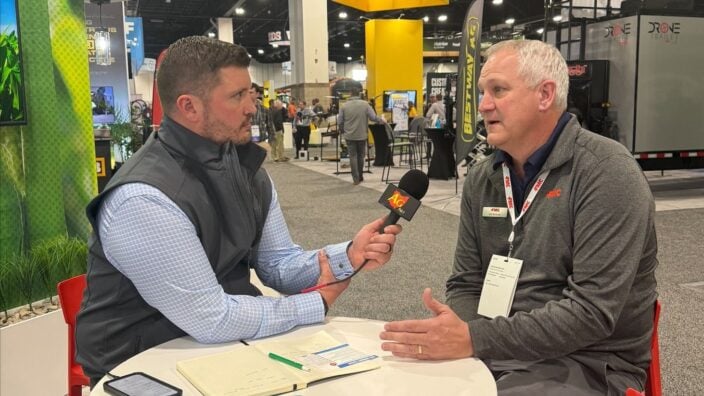
Meet Joe Everett, a Shelby County Farm Bureau Young Ag Professional who has dedicated his life to service, both in uniform and within his local community.
Read More

A year-end review provides an opportunity to evaluate your operation’s financial position, discuss future goals and develop strategies for the upcoming season.
Read More

Ohio Farm Bureau has created a new guide to help members better understand the laws, regulations and risk considerations that come with opening their farms to the public.
Read More
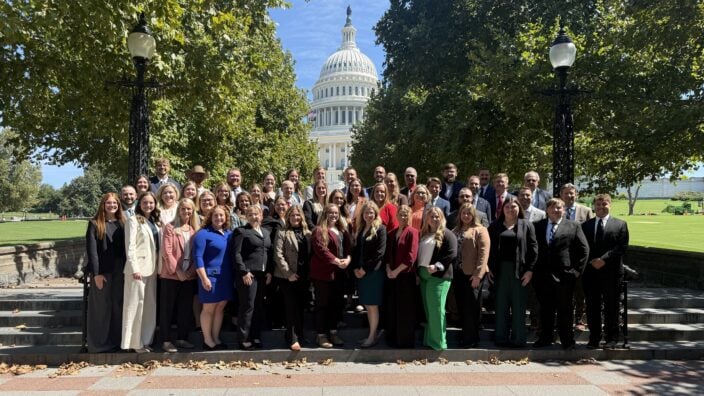
The groups received a firsthand look at agricultural policy, advocacy and leadership in the nation’s capital.
Read More

By prioritizing safety and health, you protect yourself and those around you, reduce downtime, and ensure your operation runs smoothly.
Read More
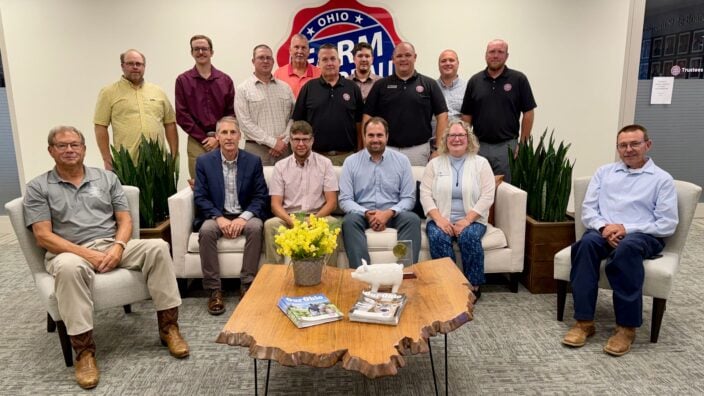
Twenty leaders have been named to the 2026 Ohio Farm Bureau Federation Policy Development Committee.
Read More