








Applications for Ohio Farm Bureau Health Plans now available
Members have three ways to apply: contacting a certified agent, calling 833-468-4280 or visiting ohiofarmbureauhealthplans.org.
Read MoreHope you enjoyed your July 4th and were able to have some down time with family and friends!
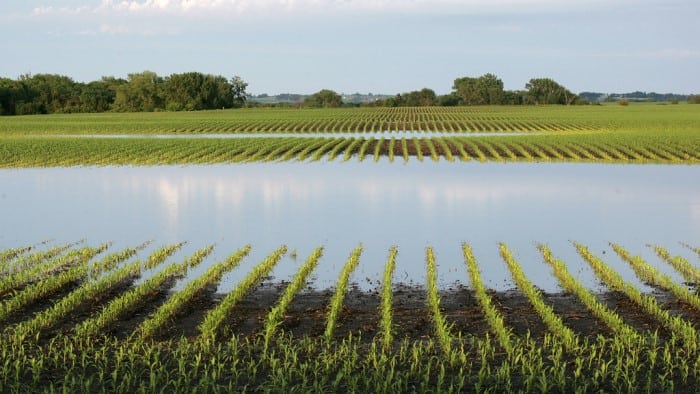
What a growing season we’ve had so far this year! An average June in Trumbull County will see about 4 inches of rain, but this year, we had just less than 7 inches here at the office. That’s almost double the amount of rain compared to a “normal year.”
If you drive around and see flooded fields – or your yard – it’s because our soils are saturated and are not able to hold much more water when we get a heavy rain. Not only did we get more than average rainfall, but the rains were also perfectly spaced so that by the time the soil was almost dry enough for tillage, planting, mowing or fertilizing, it would rain again. It’s been frustrating.
There is a lot of ground in Trumbull County that has not been touched this year, and many fields probably won’t get planted. Corn is a longer-season crop, so even if it was planted this late, it would not yield enough to cover the cost of planting. Soybeans, on the other hand, are a shorter-season crop and there may still be time to plant, depending on the maturity. But if the wet weather persists for another week, it will be too late for most soybeans, as well.
For those looking to get a crop in this year, another option would be to plant some late-season field peas. This comes with some risk as planting time perfectly coincides with most of the field pea disease cycles. With short windows of dry weather, some farmers had to plant under less than ideal conditions. A seed in wet ground still has a better chance of growing than in the bag.
Planting in wet soil is commonly referred to as “mudded in” and can result in poor stand emergence, stunted plants and nutrient deficiencies. When a planter creates a furrow for the seed, if the soil is too wet, it will smear the soil on the sides of the furrow. This smearing action can compact the soil preventing plant roots from penetrating this hard layer, which results in roots that can only grow laterally within the furrow. Plants in this situation can’t access nutrients outside the furrow and are anchored poorly in the soil. “Floppy corn” is a symptom of being mudded in as the plants will simply flop over one the plant is too big for the root system.
We all know the importance of water for growing plants, but too much water can actually drown plant roots and prevent nutrient uptake. Just like animals, plants need oxygen to survive and grow. When too much water is in the soil, it fills up the air pockets between soil particles that would normally provide oxygen for the roots. This shuts down much of the plant’s metabolism and results in less uptake of nutrients. You can see this nutrient deficiency in the plants when they turn yellow or a pale green. The nutrient deficiency doesn’t mean that your soil is lacking nutrient; it’s just that the plant can’t access them. Adding fertilizer to correct this won’t do much (if anything) to alleviate the symptoms.
Other than praying for better weather, the only thing that may help is managing water within fields (gardens, lawns, etc.) via drainage. Long-term options like drainage tile is a great option to help soils dry out faster, but you might want to reserve that investment for land that you own or for which you have long-term leases. Surface drainage with ditches is an easier and cheaper way to manage ponding water. Specialized ditchers are available that can create shallow ditches (18 inches or less) to direct water out of the field. These are not permanent and will need to be cut every year, and they can interfere with tractors and implements. (I have to admit, as much as I would like it to dry out, the rain is a nice relief from these high temps. Just don’t tell anyone I said that.)
For information about farming, gardening, the Master Gardener program or any other program, call The Ohio State University Trumbull County Extension office at 330.638.6783 or visit their website. Don’t forget to check out and “Like” OSU Extension Trumbull County’s Facebook page for current programs and up to date information.
Submitted by Lee Beers, who can be reached at [email protected].



Members have three ways to apply: contacting a certified agent, calling 833-468-4280 or visiting ohiofarmbureauhealthplans.org.
Read More
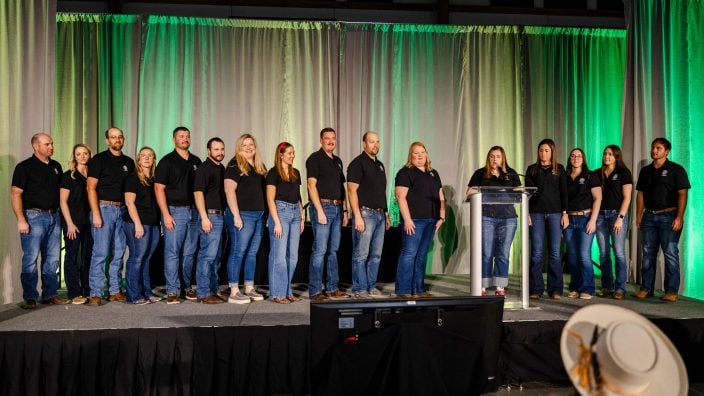
Members ages 18-34 who are interested in developing their leadership skills and enhancing programming for their peers should apply.
Read More

Senate Bill 328 is legislation designed to strengthen career-connected learning and better prepare students for Ohio’s workforce needs.
Read More

With the Family Forest Carbon Program, you can have a successful farm and get paid to grow healthy forests.
Read More
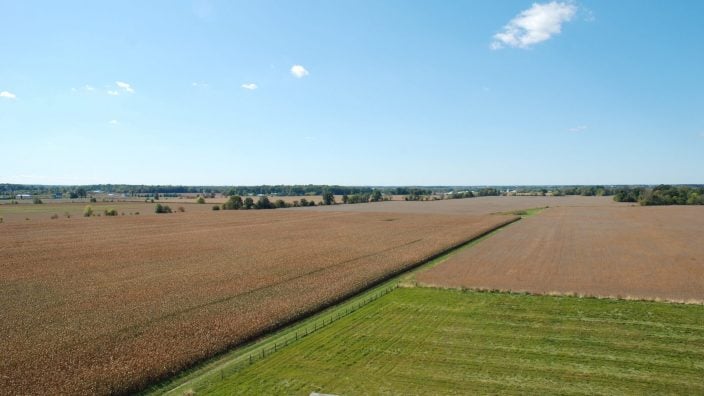
Ohio Farm Bureau recently sent a letter to Congress calling for the swift passage of the Farm, Food, and National Security Act of 2026 (HR 7567).
Read More

House Bill 646 would establish a Data Center Study Commission to examine the impact of rapid data center development across the state.
Read More

Collegiate Farm Bureau serves as a connection to current industry professionals and equips the next generation with the essential tools and resources needed to excel in their careers.
Read More

Ohio Farm Bureau members met one-on-one with state legislators and staff to discuss policy priorities impacting Ohio’s farms and rural communities.
Read More

Legacy nutrient deductions enable new farmland owners to claim deductions on the nutrients within the soil on which healthy crops depend.
Read More
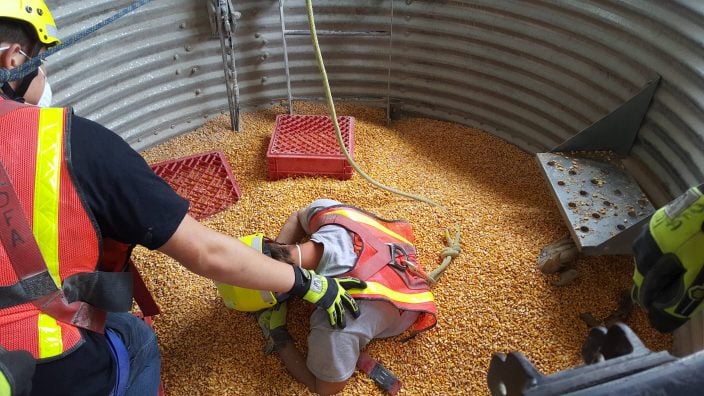
Farmers, agribusinesses and community members are encouraged to nominate their local fire departments for Nationwide’s Nominate Your Fire Department Contest through April 30.
Read More