





Applications for Ohio Farm Bureau Health Plans now available
Members have three ways to apply: contacting a certified agent, calling 833-468-4280 or visiting ohiofarmbureauhealthplans.org.
Read MoreI don’t know about you, but grocery shopping is one of those tasks I dread.
I’m that crazy lady you see in the store with a heaping grocery cart, picking up my groceries that are falling off the stack, while trying to figure out how to get a case of water to squeeze in, or on, or under. I do one big trip every few months, then pick up my essentials at the local convenience store down the road, because I hate taking the time out of my hectic schedule to make trips to the store.
It’s hard enough making lists of what you need (which ultimately I end up forgetting on my refrigerator or even in my vehicle in the parking lot), but going grocery shopping means needing a meal plan, or at least meal ideas right? Lordy, I’m lucky enough to have the energy and time to even cook a meal, let alone plan ahead for it.
Now think back to your most recent trip down the meat aisle of the grocery store or the case at your local butcher. How many different labeling terms did you encounter? How many of them do you really understand?
So today, I’m going to talk about labeling terms, and because there are so many terms, I’m going to address meat and poultry labeling terms specifically (information from USDA FSIS).
• First, my favorite and by favorite, I mean the labeling term that makes me lose my mind. No hormones or hormone free: First off, all meat and vegetables have hormones that occur naturally and well, there is no way to extract them. So that term should be “no hormones added or administered.” The term “no hormones administered” may be approved for use on the label of beef products if sufficient documentation is provided to the agency by the producer showing no hormones have been used in raising the animals.
Hormones are not allowed in raising hogs or poultry. Therefore, the claim “no hormones added” cannot be used on the labels of pork or poultry unless it is followed by a statement that says “Federal regulations prohibit the use of hormones.” Additionally, using hormones in poultry is basically impossible. Chicken houses contain thousands of birds, and due to their unique nature, hormones are unable to be ingested. Therefore each bird would have to be picked up and injected with the hormones at least daily, if not twice a day. That is an extremely labor intensive and expensive task. I think I’m speaking for us all when I say, we don’t want that job.
• No antibiotics (red meat and poultry): The term “no antibiotics added” may be used on labels for meat or poultry products if sufficient documentation is provided by the producer to the agency demonstrating that the animals were raised without antibiotics. There are federally mandated withdrawal periods to ensure all meat is free of antibiotic residue as defined by the USDA, and meat inspectors are there to make sure that is happening.
• Natural: A product containing no artificial ingredient or added color and is only minimally processed. Minimal processing means the product was processed in a manner that does not fundamentally alter the product. The label must include a statement explaining the meaning of the term natural (such as “no artificial ingredients; minimally processed”).
• Organic: “100 percent organic” can be used to label any product that contains 100 percent organic ingredients (excluding salt and water, which are considered natural).
“Organic” can be used to label any product that contains a minimum of 95 percent organic ingredients (excluding salt and water). Up to five percent of the ingredients may be nonorganic agricultural products that are not commercially available as organic and / or nonagricultural products that are on the national list.
“Made with Organic” can be used to label a product that contains at least 70 percent organically produced ingredients (excluding salt and water). There are a number of detailed constraints regarding the ingredients that comprise the nonorganic portion. With so much that goes into organic standards and labeling, I’ll save that for another day.
Free range or free roaming: Producers must demonstrate to the agency that the poultry has been allowed access to the outside.
• Fresh poultry: “Fresh” means whole poultry and cuts have never been below 26 degrees Farhrenheit (the temperature at which poultry freezes). This is consistent with consumer expectations of “fresh” poultry, i.e., not hard to the touch or frozen solid.
The temperature of individual packages of raw poultry products labeled “fresh” can vary as much as 1 degree F below 26 degrees F within inspected establishments or 2 degrees F below 26 degrees F in commerce. Fresh poultry should always bear a “keep refrigerated” statement.
• Frozen poultry: The temperature of raw, frozen poultry is 0 degrees F or below. Stay tuned for future articles on labeling. I hope this helped clear up a little confusion on meat and poultry labeling terms and the next trip down the meat aisle is a little easier to make.
Submitted by Mandy Orahood, an Ohio Farm Bureau organization director serving Ashtabula, Geauga, Lake, and Trumbull Counties. She can be reached by email.
OFBF Mission: Working together for Ohio farmers to advance agriculture and strengthen our communities.


Members have three ways to apply: contacting a certified agent, calling 833-468-4280 or visiting ohiofarmbureauhealthplans.org.
Read More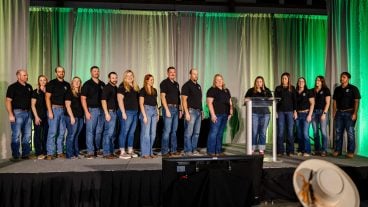
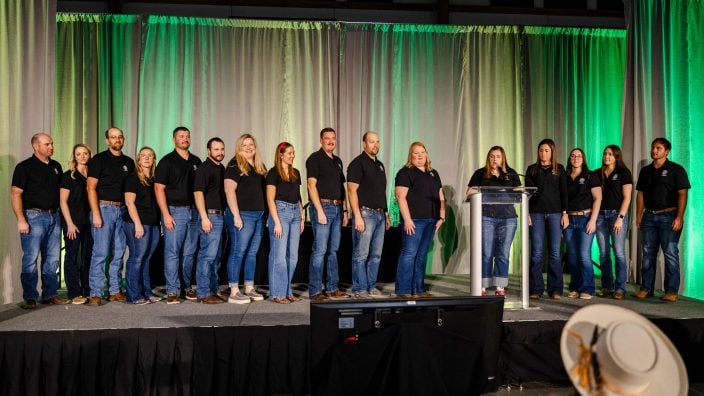
Members ages 18-34 who are interested in developing their leadership skills and enhancing programming for their peers should apply.
Read More

Senate Bill 328 is legislation designed to strengthen career-connected learning and better prepare students for Ohio’s workforce needs.
Read More

With the Family Forest Carbon Program, you can have a successful farm and get paid to grow healthy forests.
Read More

Ohio Farm Bureau recently sent a letter to Congress calling for the swift passage of the Farm, Food, and National Security Act of 2026 (HR 7567).
Read More
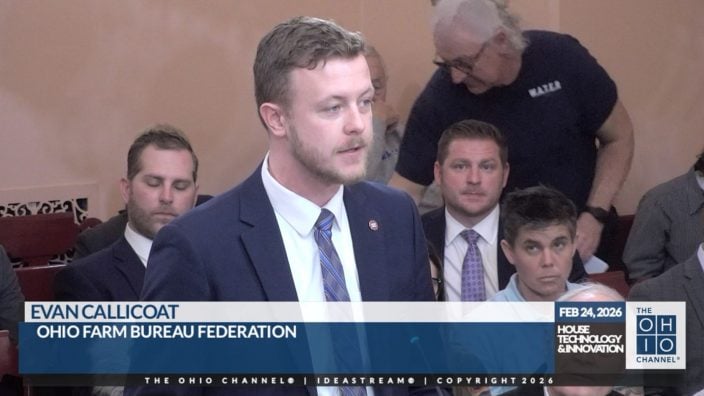
House Bill 646 would establish a Data Center Study Commission to examine the impact of rapid data center development across the state.
Read More
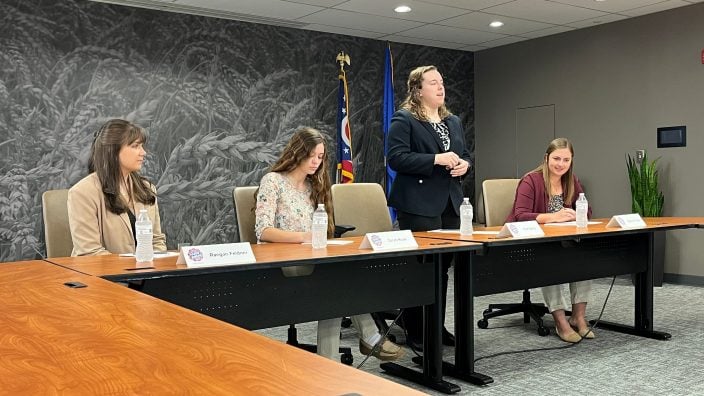
Collegiate Farm Bureau serves as a connection to current industry professionals and equips the next generation with the essential tools and resources needed to excel in their careers.
Read More

Ohio Farm Bureau members met one-on-one with state legislators and staff to discuss policy priorities impacting Ohio’s farms and rural communities.
Read More

Legacy nutrient deductions enable new farmland owners to claim deductions on the nutrients within the soil on which healthy crops depend.
Read More
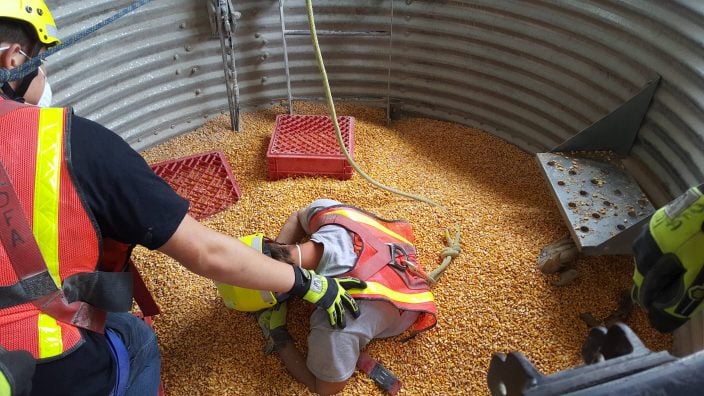
Farmers, agribusinesses and community members are encouraged to nominate their local fire departments for Nationwide’s Nominate Your Fire Department Contest through April 30.
Read More