



May/June 2025 Our Ohio
Future trends and issues for food and agriculture are examined in this issue of Our Ohio magazine.
Read MoreAs many Ohio farmers endure a third year of pressure on net farm income, a lack of market clarity and increased commodity competition globally, I am often asked what priority sustainability initiatives and programs should have in a farm’s business plan.
The answer lies in first understanding the macro trends shaping American agriculture, the operating environment farms will find themselves in and the innovation required to remain resilient and profitable into the future. As a Franklin County Farm Bureau member, I appreciate the work Farm Bureau does to help members prepare for the future. This article, I hope, will provide some perspective on the challenges and opportunities ahead.
We are in the midst of a truly revolutionary time in American agriculture. Historically, we have accepted at face value that there are economic cycles in our industry and that down cycles like the one we are experiencing will rebound over time. While cycles are a familiar feature of the farm economy, they do not adequately explain what we are experiencing now. I believe our industry is enduring the early impacts of permanent structural change. This change will result in the gradual loss of American competitiveness in the world’s most commoditized crops. Over time, this will require farmers nationally to adapt to a new construct entailing different food system inputs and diverse crop traits. In understanding these structural changes, we will find clarity on the future of sustainability programs as an on-farm priority.
It is certainly no secret that we are in turbulent times, both economically and geopolitically. “The Fourth Turning,” by William Strauss and Neil Howe, explains the cycles of human history and highlights that we are experiencing a “great unraveling” that will last until the 2030s. This unraveling takes many forms, including diminished trust in government, a lack of fidelity to historical alliances, a challenge to popular culture and significant geopolitical conflict. Turning on the news tonight will undoubtedly validate this observation. America has been uniquely blessed with the capacity to produce all the food, fuel and fiber we require, providing the foundation of our national security, civil society and an economically powerful nation. This capacity and subsequent stability is built on the backs of 1.8 million independently-run, mostly family-owned farming operations, often taken for granted by those outside the ag community. Farmers lack the backing of a proactive national agricultural strategy to support them beyond occasional, retroactive government payments in downturns. Moreover, this abundant agricultural capability is predicated economically on overproducing, which requires robust trade activity to maintain viability.
Unfortunately, several dynamics are colluding to challenge the foundation of agricultural prosperity within the system we built. First, global populations are peaking and, in some cases, already declining. Decreasing population and, therefore, consumption, combined with increasing global production of commodities like corn and soybeans, will result in lower export demand and, ultimately, market challenges for American farmers. This structural dynamic, coupled with a loss of basis advantage over Brazil due to our increasing crop input and labor costs, regulatory compliance and increasingly expensive capital, will expedite farm consolidation and put urgent emphasis on new market access, alternative uses and substantial advancements in farm efficiency and scale.
Overlaying this long-term structural dynamic on top of near-term trade wars, tariffs and shifting global alignments like the BRICS Alliance will require U.S. farmers to re-evaluate the opportunities ahead for their farming operations and consider the new frontiers opening domestically.
As nations prioritize on-shoring and friend-shoring manufacturing capabilities and natural resources, a new frontier of opportunity is opening in America. Through a litany of well-intended, problem-solving innovations that shaped American culture, habits and diets over the past century, we are struggling with the unintended consequences of degraded American health. As we pursued economic prosperity, a best-in-class health care system and a food system providing nearly unlimited, cheap calories to everyone, we lost sight of the compounding impacts of our obsession with convenience, reduced physical exertion and the gradual leeching of nutrition from our diets.
Today, Americans pay more for health care, deal with more chronic diseases and are generally unhealthier than almost every other developed nation on the planet. With 40% of the American population obese, two-thirds with a chronic condition, and a 13-year gap between how long we live and how long we live well, healthy eating and the reinvention of our food system is quickly becoming a national imperative. If you are sick, you are in the right place. Americans enjoy the best health care system in the world. However, if you want to avoid getting sick, this country is less successful than its peers, and much of the challenge is tied to what we eat.
The adoption of GLP-1s such as Wegovy and Ozempic and behavior-modifying drugs will end-around the food system for a time and reduce obesity and corresponding morbidities for a small part of the population. However, this dynamic will only intensify the call for a reformed food system, resulting in less overall consumption of calories and new interest in nutritionally dense foods. We see this dynamic already playing out in Canada and Europe, where they have had a regulatory head start. In Canada, approximately 10% of the population is on a GLP-1, resulting in significant decreases in grocery bills, eating out, alcohol consumption and snacking for those consumers. Imagine the impact to the food system if 20% of America’s 340 million people join the club. With hundreds of millions being spent on advertising the new drugs, we are only a couple of years away from finding out.
American farmers did exactly what was asked of them. We produce more calories, cheaper than ever before. Now, we have a new mission: producing more nutrition with greater efficiency than ever before. This represents the biggest opportunity for American agriculture in generations.
By any metric, the election of Donald Trump has brought more change, and perhaps more uncertainty, faster than at any time in modern American history. Within days of taking office, President Trump dismantled commitments, alliances, policies and initiatives that many believe kept America from realizing its fullest potential. These changes include a new transactional, rather than values-based approach to global relationships. It has meant upsetting some of America’s biggest agricultural trading partners and re-evaluating market dynamics, government spending and economic agreements once thought to predicate global peace and order. As I have regularly reminded agricultural leaders, these initiatives based on political ideology cut both ways for our industry. It may be wise to secure our borders and expel illegal immigrants; however, 75% of agricultural labor in this country is foreign, and nearly half of it is illegal. It may be wise to shut down foreign aid programs riddled with fraud and waste; however, foreign food programs represent a $4 billion market for U.S. farmers. It may be wise to put reciprocal tariffs on trading partners like Canada and China, however, we rely heavily on both for crop inputs and trade that make us competitive. It is unlikely that emerging trade wars will be fully sorted out soon, and agriculture could become collateral damage in the larger crusade to redefine global structures and alliances.

With all these seismic shifts impacting the farm economy, what is the future of sustainability programs? The Biden administration talked extensively about sustainability in agriculture and made billions of dollars available for farmers to invest in new practices. They spoke of carbon credits, water conservation, erosion mitigation and evolved farm practices while presiding over a time of broad corporate interest in reducing environmental impact. Today, however, the Trump administration is unlikely to support these programs or fund any initiative based on environmental impact. However, notwithstanding Biden administration priorities, much of the real change in on-farm practices was not the result of grants, policy, or regulatory intervention. Most real change was led by entrepreneurial farmers who believed they could differentiate their operation and gain a market advantage by transforming their practices. Sustainable practices are table-stakes for some farmers to maintain market access depending, of course, on their supply-chain relationships and commodities. Many farmers implement advanced on-farm practices to reduce environmental impact completely at their own risk and without market recognition or premiums. So, is it an advantage? Will those farmers leaning forward on sustainable practices win the day in a Trump era? I believe the answer is a clear yes when environmental sustainability is aligned with economic sustainability for the operation.
Corporations and, specifically, food companies and retailers will not be deterred from setting ambitious goals and working to advance claims about the sustainability and healthiness of their products and supply chain, especially in an RFK Jr. world.
While the emphasis may shift away from explicitly stated environmental, social and governance (ESG) initiatives in the near term, there will still be a concerted effort to connect with consumer values around doing things that are better for the environment, community and their quality of life. Inspired by health- and planet-conscious consumers and investors, supply chains will continue to transform in coming years to differentiate and compete for consumer share-of-wallet domestically and internationally, especially in the face of increased scrutiny from Make America Healthy Again (MAHA) advocates. Supply chains will seek to appeal to our newfound consciousness about health, its connection to the food system and the demand for altruistically and healthily grown food. It is also a license to charge more for those products, and evidence supports that consumers will ultimately step up to pay the bill.
While corporations and supply chains chase ambitious sustainability and health goals that empower them to make lofty consumer claims, there is only so much they can do without the participation of the American farmer.
Companies are beginning to realize that farmers are more than ingredient suppliers; they can be co-collaborators in innovation and help differentiate products through on-farm innovation, practices and production traits.
Corporate commitments are moving closer to the farm gate, and farmers who lean forward on differentiated and value-adding practices will gain a market advantage over time while their colleagues wrestle with intensifying profitability pressure on undifferentiated commodities. This does not mean commodity row crops are going away, but it does mean that an increasing percentage will be de-commoditized over the next decade. It also does not mean farmers will realize an immediate premium for their efforts; however, over time, I believe profitability will be more equitably distributed across the supply chain to include farmers who help differentiate supply chains through their data and value-adding practices. Market credit for sustainability and healthy initiatives may manifest as maintained margins, while margins shrink for others competing with undifferentiated commodities globally.
Of course, some will point out that soybeans and corn bound for biofuels do not require unique growing practices. Trump-era Renewable Fuel Standards could be under pressure, and the desire to increase domestic petroleum production in the face of tariffs could bring an uncertain economic impact on row crop producers. And then, of course, there is the impact of threatened tariffs on nations who provide raw materials for many crop inputs and the potential regulation of farm practices in an RFK Jr.-inspired food system overhaul. The bottom line is there will be short-term pain, followed by long-term pain, if farmers don’t take matters into their own hands and become intentional about innovation that gives them both a financial and market advantage in the future operating environment.
In the face of structural changes in the global agricultural economy, American farmers must work tirelessly to increase net operating income, diversify income streams and innovate. For as much turbulence as there will be in the future, there is even more opportunity for those willing to transform and adapt. We are in the first inning of the Fifth Agricultural Revolution, which will herald the reinvention of our food system and challenge our model predicated on yield with one predicated on nutrition. Modern farming practices that conserve resources, reduce environmental impact and use the latest technology and thinking are inherently more sustainable, profitable and aligned with the emerging demands of the supply chains. They are positioned for the future. The immediate challenge for Ohio farmers is to worry less about all the dynamics they can’t control and focus on what they can control: professionalizing their operation and finding new efficiencies and value-adding practices that unlock profits that can then be used to fuel innovation, diversification and transformation.
There is tremendous synergy between innovation and sustainability. Many farmers who have challenged conventional wisdom, reduced their environmental impact, diversified their operation, embraced new technologies and practices, harnessed their data to find efficiencies, elevated their market opportunities through value-added production and sought out unique supply-chain relationships are thriving in the face of uncertainties. Time is not on the side of the status quo, but opportunity abounds for those who embrace the challenges ahead.
Key points
About Brett Sciotto
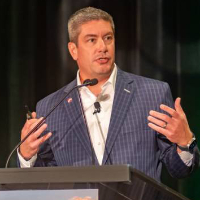
Brett Sciotto is the founder and CEO of Idealyst Innovation, a firm empowering American farmers and ranchers by solving on-farm challenges and unlocking new opportunities through innovation, delivered by their most trusted partners.
Before launching Idealyst, Sciotto founded and led Aimpoint Research, a global, strategic intelligence firm specializing in agri-food that was named to the 2021 Inc. 5000 list of fastest-growing companies in the U.S.
A graduate of the United States Military Academy at West Point and a former Army Intelligence Officer, Sciotto brings a practical, results-oriented approach to the civilian business world. His training in, and emphasis on, mission-critical information-gathering and targeted research methodologies make him unique in his approach to problem-solving in a corporate environment.
With over two decades of leadership and service to agriculture, Sciotto’s deep understanding of the dynamics facing our industry, clear view of the future, and relentless pursuit of solutions that strengthen American Food Power make him a trusted advisor to corporate leaders, government officials and state and national organizations at all levels.
About Idealyst Innovation
Idealyst Innovation empowers American farmers and ranchers by solving on-farm challenges and unlocking new opportunities through innovation, delivered by their most trusted partners. Their unique ecosystem foresees and understands risks, solves problems and engages solutions for farmers and ranchers to survive, thrive and endure.



Future trends and issues for food and agriculture are examined in this issue of Our Ohio magazine.
Read More
The answer lies in first understanding the macro trends shaping American agriculture, the operating environment farms will find themselves in and the innovation required to remain resilient and profitable into the future.
Read More

Farmers’ physical and mental health are often compromised by lack of health coverage. Farm Bureau seeks to establish Farm Bureau Health Plans.
Read More
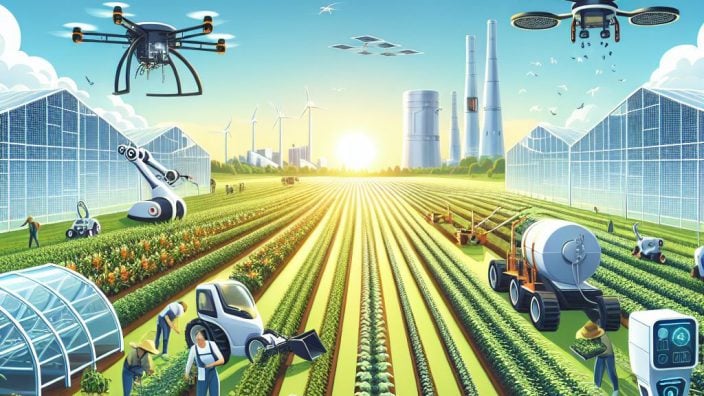
I encourage you to consider the big questions that Ohio Farm Bureau members should be thinking about and how we as an organization can equip ourselves for whatever changes are coming.
Read More
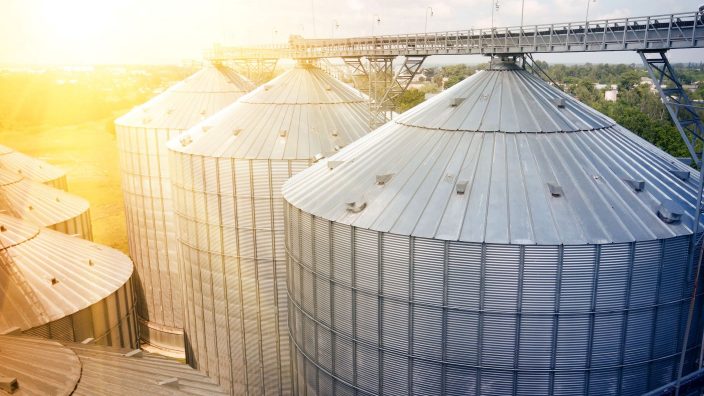
Embracing risk planning and working with experts like a Nationwide-appointed agent can help farmers better navigate uncertainties and secure their farm’s future.
Read More
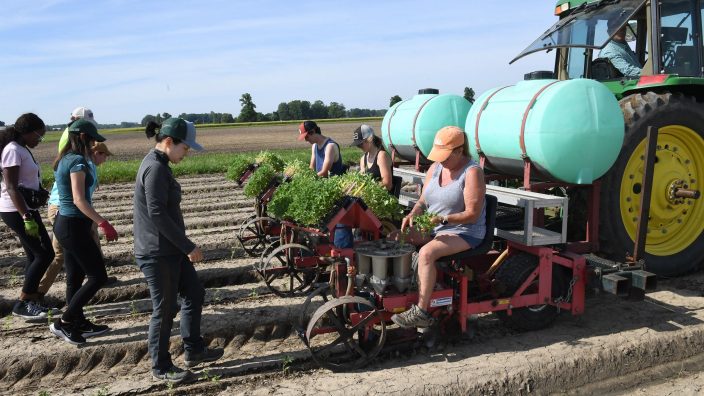
Ohio State is one of the few universities where a leading agricultural college, a top-tier medical school and a state-of-the-art hospital share the same campus.
Read More

Over 20% of all the production in the United States from agriculture gets exported to a different country.
Read More
Community engagement at the earliest stages of development is essential.
Read More

Collegiate chapters connect agriculture students with grassroots Farm Bureau efforts at county, state and national levels.
Read More
The grants aim to ensure that creative young farmers can access opportunities and use their skills to alleviate the difficulties facing agriculture today.
Read More