



Applications for Ohio Farm Bureau Health Plans now available
Members have three ways to apply: contacting a certified agent, calling 833-468-4280 or visiting ohiofarmbureauhealthplans.org.
Read MoreI hope you all had a safe, healthy and relaxing Thanksgiving and that you were able to get a few items on your table from local farmers.
Despite the roller-coaster ride that has been 2020, I hope you are able to reflect on the good things that happened this year.
Personally, I am very thankful that my family, friends and colleagues are all healthy.
I am also thankful for coming up on my five-year anniversary serving as the agriculture and natural resources educator for Trumbull County. I can’t believe how fast the time has gone, and I’m looking forward to the next five years.
In my position, I get to read and hear a lot of opinions and criticisms about agriculture, both locally and nationally. Among the most frequent criticisms that I hear is, “Why not plant something other than corn and soybeans?” Or, “Farmers should plant crop XYZ.”
The reasons behind these statements range from general concerns about diversification to the interest in growing local crops for local consumers, or simply they saw a unique crop in the grocery store.
Many times, a simple explanation will resolve the comments, such as the fact that pineapples won’t grow outdoors in northeast Ohio. Other explanations are more complex and not easily communicated. If I could explain and predict agricultural markets, I would be a rich, rich person.
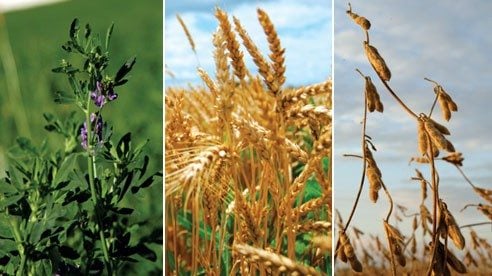
Generally, farmers would prefer to plant more than two crops. In addition to diversifying risk from a business standpoint, this also allows for greater crop rotation, which is better for the soil.
In the five years that I have been in this position, I have seen the downfall of miscanthus, the rise and fall of field peas and, most recently, the rise of hemp.
This interest in new crops is not new, and if you talk to anyone that farmed in the ’80s, they will tell you about the rise and fall of buckwheat and sunflowers. These are typically driven by market demands, and in the case of hemp, new legislation. Farmers are used to these cycles and they would prefer if the markets persisted, but frequently they are a passing fad.
Sometimes the reason a crop doesn’t stick around is simple. The dog food plant that was purchasing the peas changed ownership, and they chose to buy peas from the western states and Canada.
Other times it’s more complex. Miscanthus had market pressure from the paper and plastic industries as well as changing biofuel incentives. Hemp is just as complex as it had not been a legal crop in the U.S. since the 1940s and was legalized in the 2018 Farm Bill. Although there is considerable investment being made for the processing of hemp, the infrastructure to grow, sell and produce products from hemp is not there yet.
One of the biggest challenges to diversification of crops — especially more unique crops — is selling the crop once it is harvested. We have some of the most talented and intelligent farmers in Trumbull County and they can grow just about any crop (except pineapple).
I was once asked why farmers don’t grow quinoa, and the simple answer is that they couldn’t sell it. If a farmer puts in 10 acres of corn, beans or wheat, they would be able to drive less than 20 miles to sell it. That isn’t the case with quinoa, sunflowers, hemp, buckwheat or the other numerous potential crops. Without the local infrastructure to handle these crops, it is not feasible or profitable to grow these specialty crops.
Most of the processing plants for the specialty crops are located more than two or three states away (if you’re lucky) and the cost of trucking or shipping your crop to these plants is cost-prohibitive.
So if you can’t sell these unique crops, what do you grow so that you can be profitable? The answer for many of our farmers is you grow corn and soybeans, and if wheat prices are up, you put in a few acres. If the markets are there, I am certain our local farmers will be there to meet the demand.
As always, The Ohio State University Extension Trumbull County is still here to serve you during the pandemic. If you have questions about soil testing, plant disease, farm bill or generally anything about agriculture, give us a call. We are working remotely to answer your calls, but our office is open 8:30 a.m to 4:30 p.m. Monday and Thursday if you need to drop off samples, buy soil test kits or say hello.
We hope you all stay safe and healthy.
Submitted by Lee Beers, OSU Extension Educator, he can be reached by email or by phone at 330-638-6738.
OFBF Mission: Working together for Ohio farmers to advance agriculture and strengthen our communities.


Members have three ways to apply: contacting a certified agent, calling 833-468-4280 or visiting ohiofarmbureauhealthplans.org.
Read More
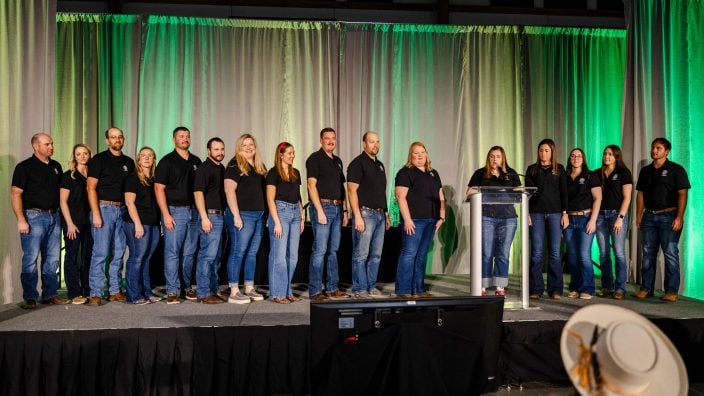
Members ages 18-34 who are interested in developing their leadership skills and enhancing programming for their peers should apply.
Read More

Senate Bill 328 is legislation designed to strengthen career-connected learning and better prepare students for Ohio’s workforce needs.
Read More
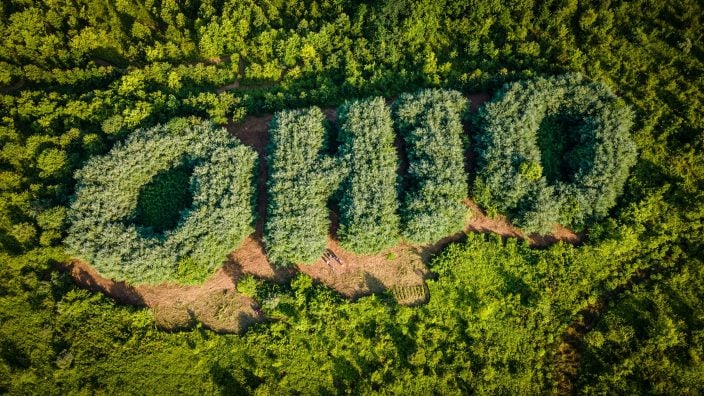
With the Family Forest Carbon Program, you can have a successful farm and get paid to grow healthy forests.
Read More
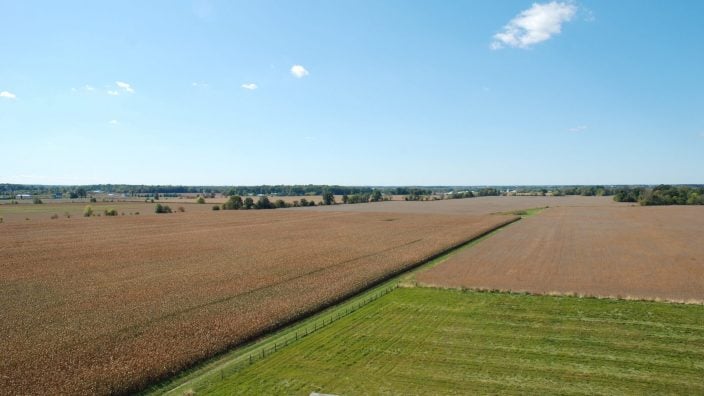
Ohio Farm Bureau recently sent a letter to Congress calling for the swift passage of the Farm, Food, and National Security Act of 2026 (HR 7567).
Read More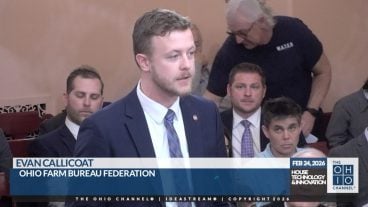
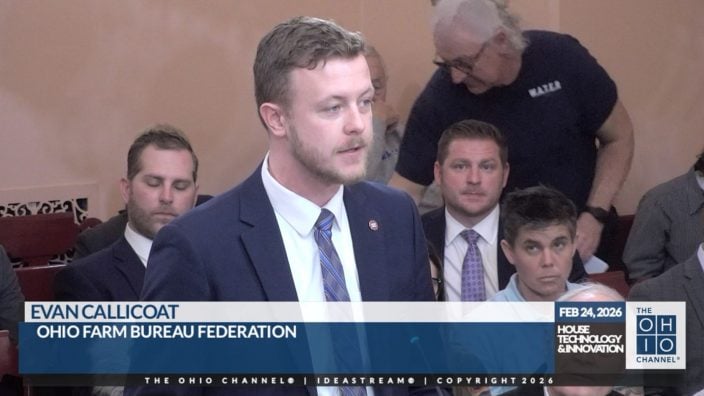
House Bill 646 would establish a Data Center Study Commission to examine the impact of rapid data center development across the state.
Read More
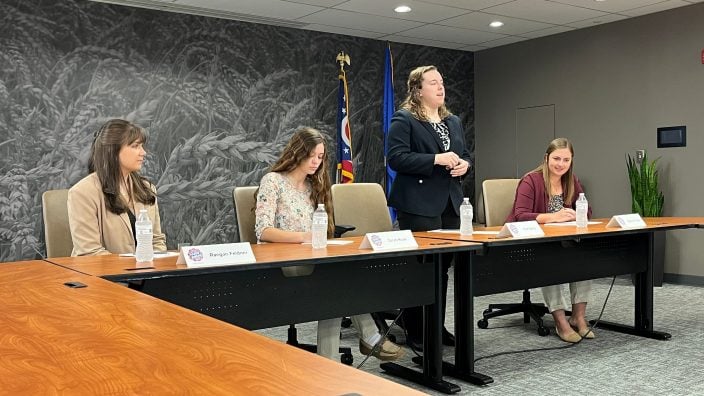
Collegiate Farm Bureau serves as a connection to current industry professionals and equips the next generation with the essential tools and resources needed to excel in their careers.
Read More

Ohio Farm Bureau members met one-on-one with state legislators and staff to discuss policy priorities impacting Ohio’s farms and rural communities.
Read More

Legacy nutrient deductions enable new farmland owners to claim deductions on the nutrients within the soil on which healthy crops depend.
Read More
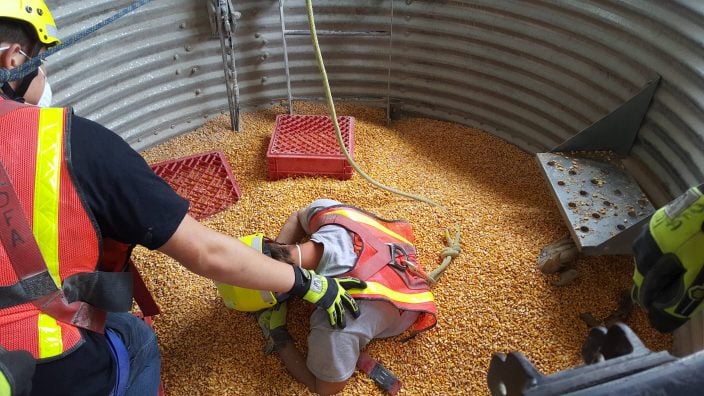
Farmers, agribusinesses and community members are encouraged to nominate their local fire departments for Nationwide’s Nominate Your Fire Department Contest through April 30.
Read More