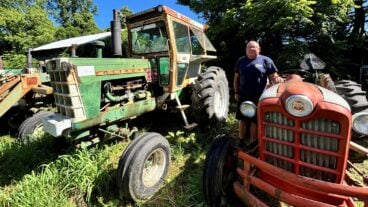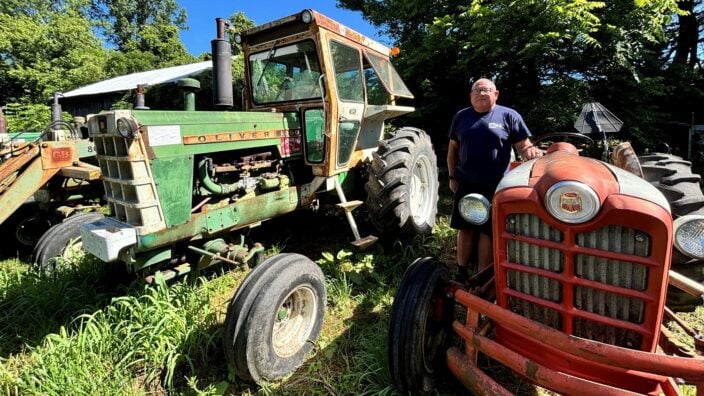
Jefferson Farm Fayette County

KEY POINTS

  • There are thousands of farms in Ohio with deep-rooted generational legacies, including the Jefferson Farm in Fayette County and the Bick Farm in Brown County, which have been designated Ohio Century and Bicentennial farms through the Ohio Department of Agriculture.
  • Both multigeneration family farms mirror the modernization of agriculture, from shifting from horses and tobacco to GPS technology to absorbing large-scale soybean and cattle operations to transportation volume increases.
  • Ohio Century Farms are committed to conservation and history, actively preserving their heritage and environment by securing historic registry placements, documenting family history and preserving the land.
Barbara Campbell, Mavis Farm
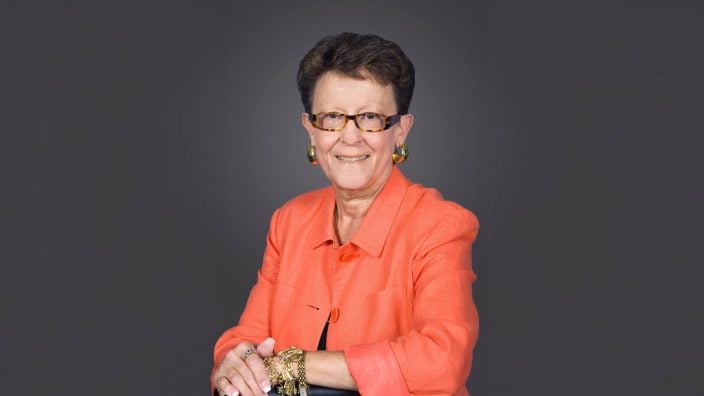
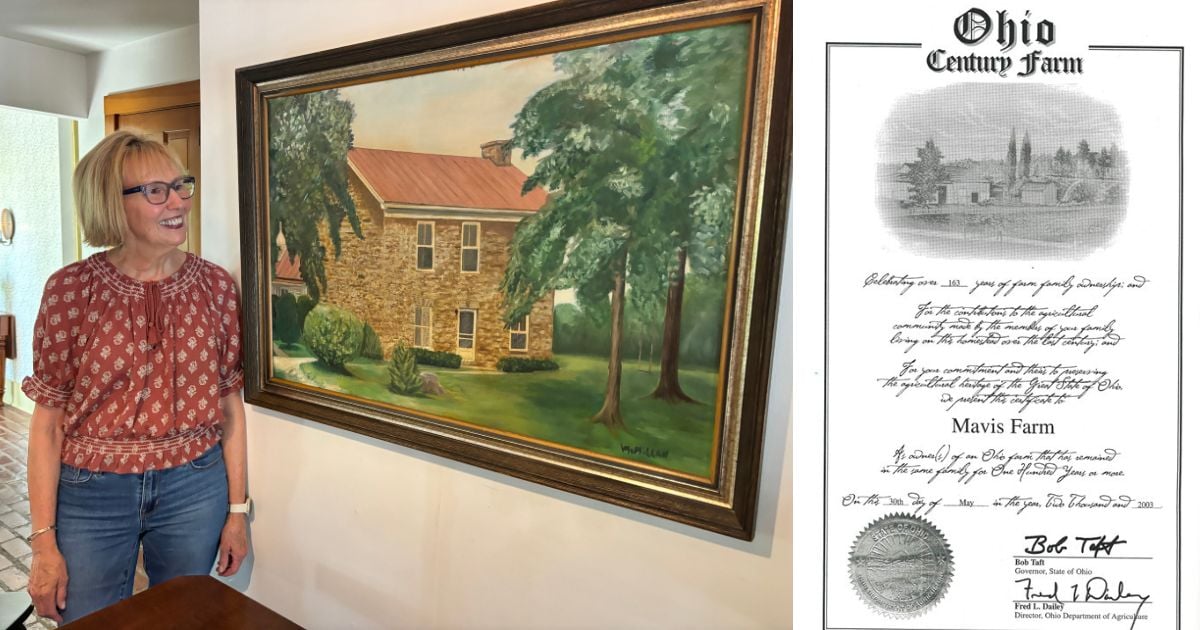
Barbara Campbell, left, with a painting of her family’s original homestead on Martin Lane at Ripley in Brown County. Her family’s farm is a Bicentennial Farm. At right is a Jefferson (Mavis) Ohio Century Farm designation certificate from 2003.
 
Rolling down the winding hills of southern Ohio can catapult you into another place in time.

You can almost feel centuries of history pass by as the sunlight peeks through a canopy of thick green leaves overhead. Then, stepping beyond the 24-inch-thick stone walls of Ray and Barbara Campbell’s more than 200-year-old family homestead in Ripley, suddenly you’re on a tobacco farm in 1798, just a few stone-throws from the banks of the Ohio River.

Homestead heritage

The Martin family has farmed this roughly 100 acres of land since Alexander Martin, an orphan, came to claim the hilly ground as his own in 1798. A Revolutionary War veteran with one leg, he and his wife, Jane, would have 13 living children, leaving behind a legacy that includes Barbara Campbell, a ninth-generation descendant of a working Ohio Bicentennial Farm.

“The legacy and history of this farm, I just appreciate it more and more every day,” Campbell said. “It was important to my parents and it is important to me.”

Campbell’s mother was Mary Martin Bick, the eighth generation and the family historian. Before she passed in 2024 at 95 years old, she wrote a book titled “Remembrances: One Woman’s Journey Through Life” with as much that could be found on Alexander and Jane Martin and all the ancestors who came after.

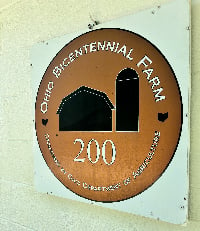
Bick and her husband, Joe, lived in Stonehurst on Martin Lane, the house Alexander built in 1812, and expanded it. It was their determination that got the house placed on the National Register of Historic Places by the U.S. Department of the Interior. Commemorative plaques, including the Bicentennial Farm Designation from Ohio Department of Agriculture, were also a result of Bick’s work.

Growing up, Campbell remembers spending a lot of time at Stonehurst with her grandparents, Bob and Clara Martin, who lived in the original farmhouse before her parents.

“It was great fun and there was always activity,” she said. “The land doesn’t change, but the activity has changed over time. We’ve gone from horses to GPS. What happens on the surface changes with the times, but the land stays the same.”

The main house is now an Airbnb, often rented out by folks who are visiting their families in the area. Tobacco gave way to soybeans and beef cattle many years ago, but Campbell, and her husband, Ray, still operate the roughly 100 acres of land that has long been her family’s legacy.

“To have a family hang onto it for nine generations, that’s pretty remarkable,” Ray said.

Humor and hard work

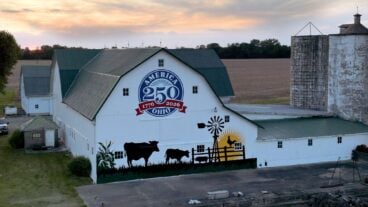
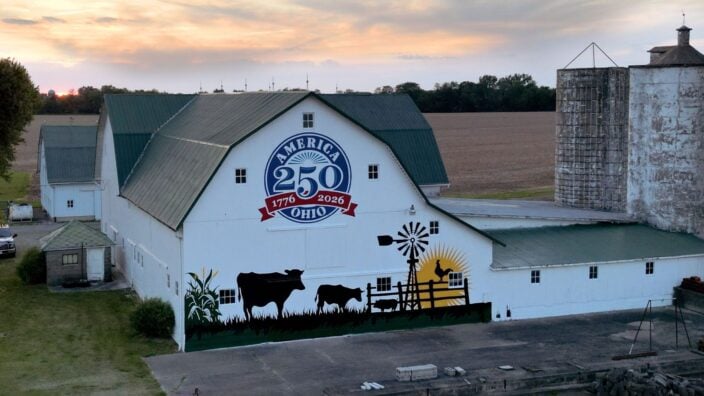
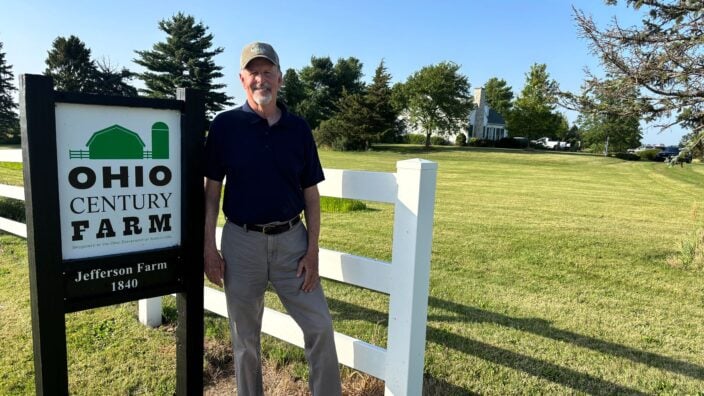
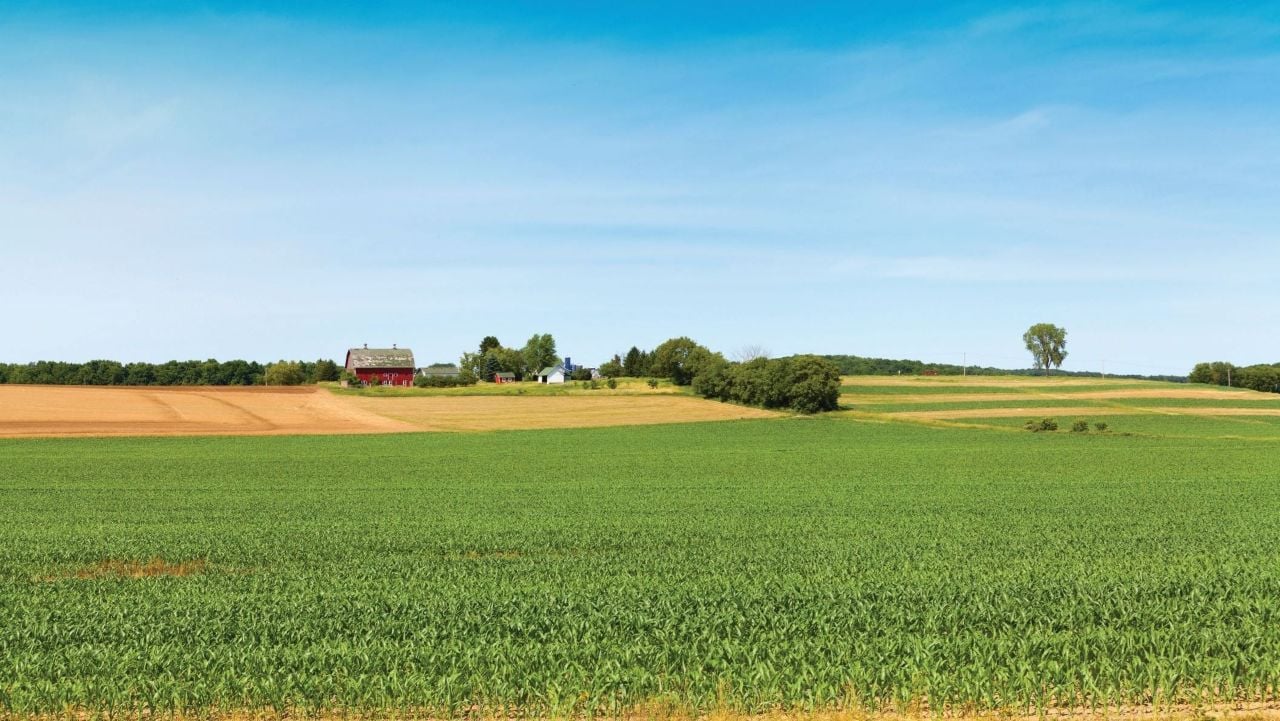
About 70 miles northeast of Ripley, off U.S. Route 62, sits Jefferson Farm in Fayette County, founded in 1840. A Century Farm with nearly another 100 years under its belt, the farm is almost just as it was 185 years ago, passed down gently from one generation to the next.

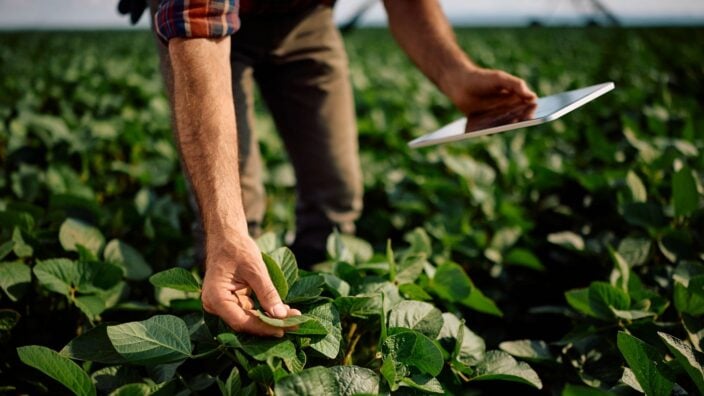
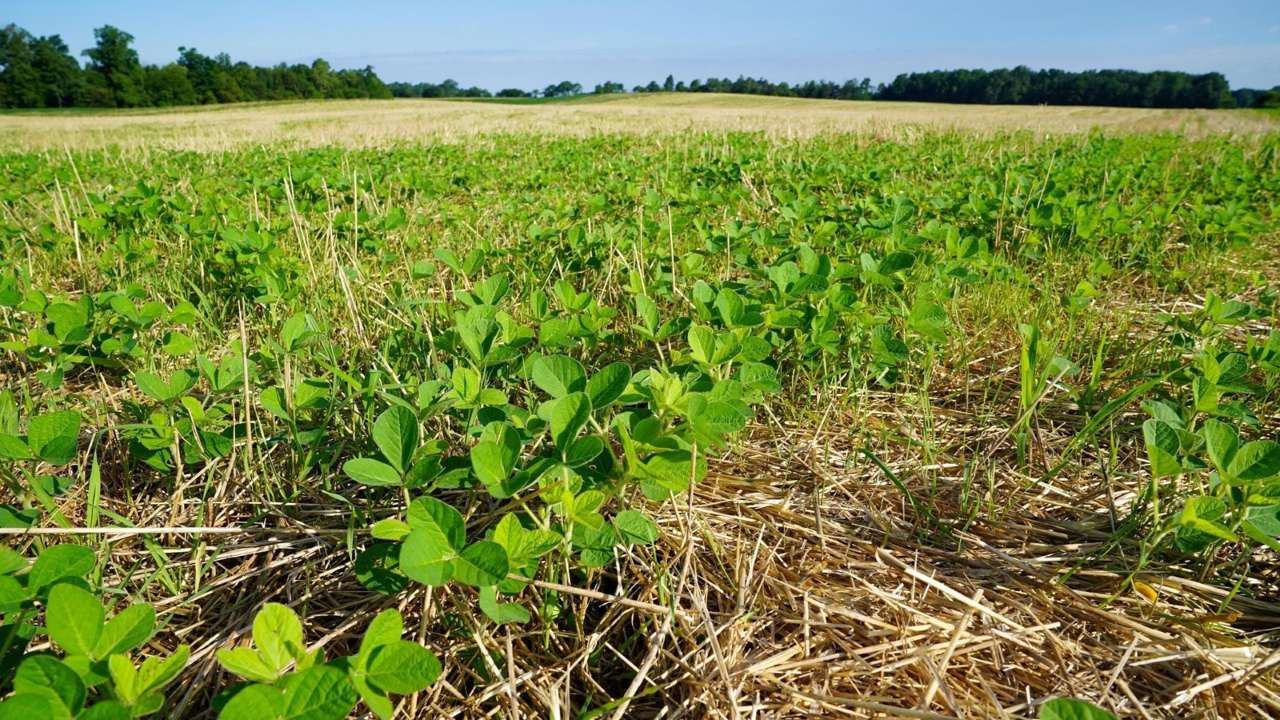
Geoff Mavis is the sixth generation to own and operate the family farm, which consists of 943 acres of soybeans this year with a rye cover crop. He started farming it in 1969, when his grandparents owned the business.

Mavis lives in the farmhouse that was once his grandparents. Even though he was the family heir, he was eager to learn all he could in his early 20s from two farmhands who had worked land during the Great Depression.

“They could have been cast in the ‘Grapes of Wrath,’” he said. “They had a humorous approach to life, but they were hard workers. It was a privilege to work with them.”

Mavis farmed with them until 1980. He can recall when taking the long way to move a tractor to another field was not a burden, because the pace of farming was not as harried as it can be today.

“There was a time when 80 bushels were normal to take to the elevator,” he said. “Now a semi won’t leave for the elevator with less than a thousand.”

In addition to row crops, Jefferson Farm has 75 acres of land in conservation practices through U.S. and Ohio Department of Agriculture programs, as well as local Soil and Water Conservation initiatives. Mavis himself is a nature enthusiast and has a great interest in native plants and wildlife, as well as local history of the area.

“We’ve planted about 4,000 trees over the years and created a wetland,” he said. “I believe in clean water and not killing off species that have been here for thousands of years.”

Mavis has established a business LLC with his son, James, who farms with him. He plans to pass the farm onto him. Mavis and his late wife, Sharon, also have a daughter, Rachael.

While the farm has changed over the years, the Mavis family hasn’t had to diversify much or branch into side hustles. The family is close, with several members attending Mavis’ presentation about the history of local farms and wildlife in the area at the Carnegie Public Library in Washington Court House this past summer.

“The people who have been born into it knew they had a good living,” he said. “We’ve believed in making what we have more productive and helpful to the environment, and in education and constantly learning. There is always something to learn about the crop (or weed!) you are growing.”

The succession plan is set for the next generation, and his grandson, Issac, loves to work on the farm, too. With generations seven and eight waiting in the wings, it seems the Bicentennial Farm designation is right around the corner.

Ohio’s Century, Sesquicentennial and Bicentennial farms

The Ohio Department of Agriculture recognizes the many social, economic and historic contributions made by Ohio’s founding farm families. Ohio’s Historic Family Farms program was developed as a way to honor these families for their enduring legacy to our state.

Ohio Bicentennial Farm Designation“Ohio’s historic family farms are the foundation of our state’s agricultural heritage,” said Ohio Department of Agriculture Director Brian Baldridge. “For generations, these families have cared for the land, strengthened their communities, and helped shape Ohio into the thriving agricultural leader it is today. Preserving this legacy through our Historic Family Farms program isn’t just about honoring the past – it’s about ensuring a strong, sustainable future for Ohio agriculture.”

Qualified registrants receive an heirloom certificate signed by the Governor of Ohio and the Director of the Ohio Department of Agriculture. Those qualifications include, but are not limited to:

  • The same family must have ownership (title of the land or proof of land contract) for a minimum of 100 consecutive years. Leasing or sharecropping does not qualify as ownership. Note: Land in the process of being sold or transferred to a nonrelative is not eligible.
  • Upon registering in the Ohio Historic Family Farms program: in order to keep the historic designation, the family must continue ownership of the farm, and the farm must continue to be engaged in agricultural activities.
My first recommendation in your journey is to start out with a local farming friend or mentor along with joining an organization like Ohio Farm Bureau.
Greg McGlinch's avatar
Greg McGlinch

Darke County Farm Bureau

We’re just so thankful for the Farm Bureau and the foundation for helping put this together. And of course, the Boyert family for the vision they had with this grant. It’s jumping us forward 10 years. It’s unbelievable.
Nathan and Jill Parriman's avatar
Nathan and Jill Parriman

Clermont County Farm Bureau

I could not have done it without the resources I have found through Farm Bureau.
Gretchan Francis's avatar
Gretchan Francis

Trumbull County Farm Bureau

It wasn’t until I joined the Wilmington College Collegiate Farm Bureau that I truly saw how my passion could translate into leadership, advocacy and a career.
Wyatt Morrow's avatar
Wyatt Morrow

Clinton County Farm Bureau

The issue of property taxation remains as one of the biggest challenges our members face today. Ensuring agricultural property is valued for its agricultural potential and not development is critical to the continued success of Ohio agriculture.
Matt Aultman's avatar
Matt Aultman

Darke County Farm Bureau

Through the Select Partner program, we became educated in farm insurance and weren't just selling policies. It became more and more clear why farmers need an advocate like Ohio Farm Bureau.
Chad Ruhl's avatar
Chad Ruhl

Farm manager, CSI Insurance

So many of the issues that OFBF and its members are advocating for are important to all Ohioans. I look at OFBF as an agricultural watchdog advocating for farmers and rural communities across Ohio.
Mary Smallsreed's avatar
Mary Smallsreed

Trumbull County Farm Bureau

Suggested Tags: