





Applications for Ohio Farm Bureau Health Plans now available
Members have three ways to apply: contacting a certified agent, calling 833-468-4280 or visiting ohiofarmbureauhealthplans.org.
Read MoreOne of the components of recently approved Senate Bill 2, signed into law by Gov. John Kasich in July, helps streamline work being done to help protect the water quality of Lake Erie by giving more oversight to the Lake Erie Commission.
“It will give the commission more authority to coordinate some state programs to make sure agencies aren’t duplicating efforts,” said Tony Seegers, OFBF director of state policy. “The commission will have the ability to be a clearinghouse of information and data. It will be helpful to have a lead agency coordinate efforts.”
Helping in the effort to improve the water quality of Lake Erie is a priority issue for Ohio Farm Bureau. Seegers noted Farm Bureau’s involvement in both Senate Bill 1, which prohibits nutrient applications on frozen, snow-covered and saturated fields in the Western Lake Erie Basin, and Senate Bill 150, the state’s fertilizer applicator certification program in efforts to reduce phosphorus in Lake Erie’s western basin 40 percent by 2025. The work being done on edge-of-field research through the Blanchard River Demonstration Farms Network in the Western Lake Erie Basin is another example, he said.
“Farm Bureau and the ag community have been at the forefront of reducing nutrient runoff,” he said. “We have a part to play in this issue. Everyone wants clean water.”
National Oceanic and Atmospheric Administration and its research partners predicted western Lake Erie would experience a significant harmful algal bloom this summer, though not as large as the record bloom in 2015.
Heavy downpours this spring and summer have made preventing nutrient runoff even more challenging; however, Ohio’s farm community continues to take aggressive action to protect Lake Erie and all of Ohio’s waterways from nutrient runoff that contributes to harmful algal blooms. The agricultural community has made great progress since the Lake Erie crisis in 2014.
A recent study found agricultural soil phosphorus levels held steady or trended downward in at least 80 percent of Ohio counties from 1993 through 2015. The study by Ohio State University researchers looked at more than 2 million phosphorus soil tests. In 2015 the median soil phosphorus level was within the appropriate agronomic range in 87 of 88 Ohio counties.


Members have three ways to apply: contacting a certified agent, calling 833-468-4280 or visiting ohiofarmbureauhealthplans.org.
Read More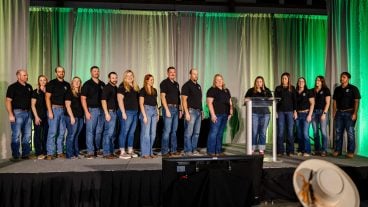
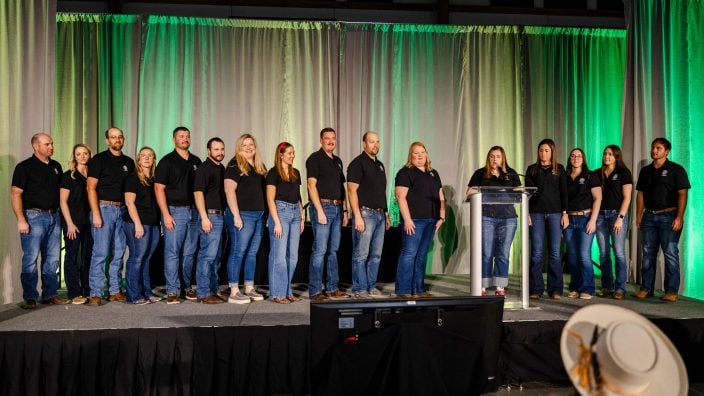
Members ages 18-34 who are interested in developing their leadership skills and enhancing programming for their peers should apply.
Read More

Senate Bill 328 is legislation designed to strengthen career-connected learning and better prepare students for Ohio’s workforce needs.
Read More

With the Family Forest Carbon Program, you can have a successful farm and get paid to grow healthy forests.
Read More
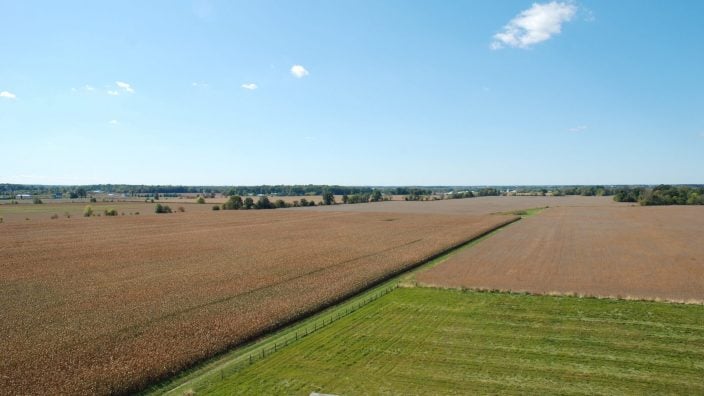
Ohio Farm Bureau recently sent a letter to Congress calling for the swift passage of the Farm, Food, and National Security Act of 2026 (HR 7567).
Read More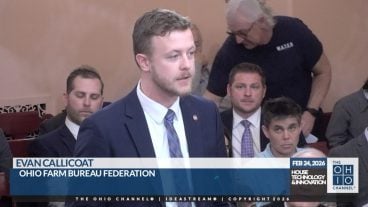
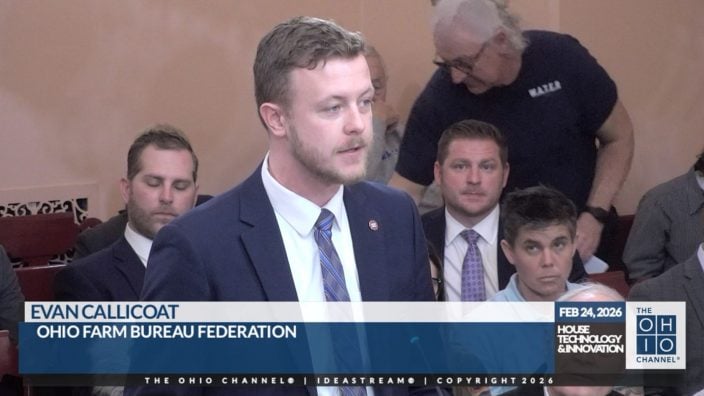
House Bill 646 would establish a Data Center Study Commission to examine the impact of rapid data center development across the state.
Read More
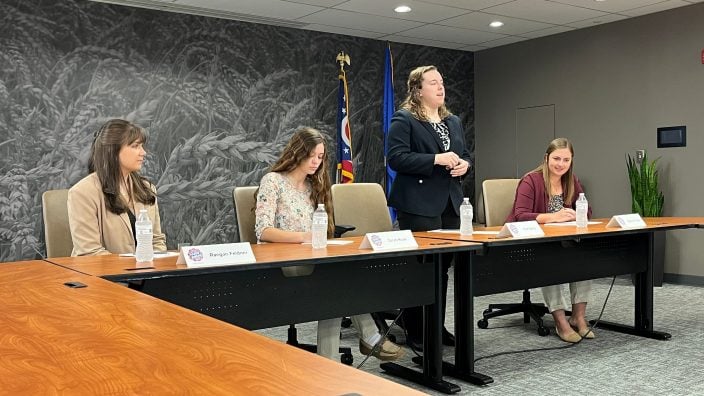
Collegiate Farm Bureau serves as a connection to current industry professionals and equips the next generation with the essential tools and resources needed to excel in their careers.
Read More

Ohio Farm Bureau members met one-on-one with state legislators and staff to discuss policy priorities impacting Ohio’s farms and rural communities.
Read More

Legacy nutrient deductions enable new farmland owners to claim deductions on the nutrients within the soil on which healthy crops depend.
Read More
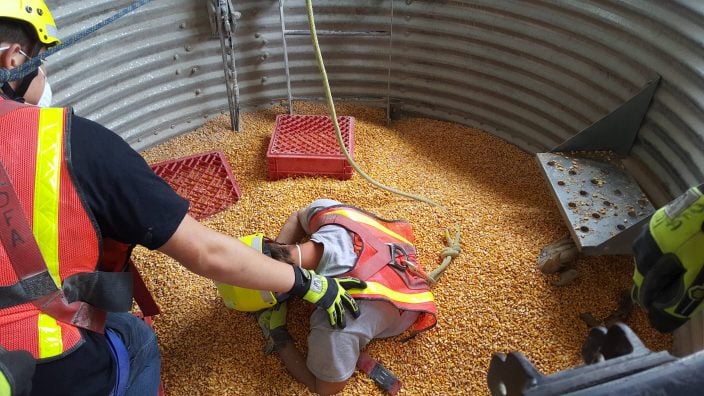
Farmers, agribusinesses and community members are encouraged to nominate their local fire departments for Nationwide’s Nominate Your Fire Department Contest through April 30.
Read More