




Applications for Ohio Farm Bureau Health Plans now available
Members have three ways to apply: contacting a certified agent, calling 833-468-4280 or visiting ohiofarmbureauhealthplans.org.
Read MoreOhio State University Extension Agricultural and Resource Law Program has compiled a publication that explains the proposed Lake Erie Bill of Rights, which is shared on the program’s Ag Law Blog. This new “In the Weeds” in-depth resource answers questions about the ballot proposal and was written by Peggy Kirk Hall, Ellen Essman, and Evin Bachelor.
LEBOR is a proposed amendment to the Toledo City Charter. The “Toledoans for Safe Water” initiated the LEBOR petition to amend Toledo’s city charter. A “charter” is like a “constitution” in that it outlines a city’s powers and how the city will function. The Ohio Constitution allows city residents to propose charter amendments through a petition process that requires signatures by 10 percent or more of the electors in order to place a proposal on the ballot.
A look at the LEBOR petition. The LEBOR petition attempts to create a new way for Toledo citizens to protect the Lake Erie resource by granting new legal rights for Lake Erie, its ecosystem and allowing Toledo and its residents to enforce those legal rights against any government or corporation that violates them. This document goes into detail on the three primary parts of the petition.
Who has rights in Lake Erie? The State of Ohio owns the Ohio portion of Lake Erie in trust for the people of Ohio and a city cannot usurp the State’s sovereign rights in Lake Erie without the State’s express permission. The State of Ohio’s rights in Lake Erie stem from its inherent powers as a sovereign signatory to the United States Constitution. That is a high status for the State of Ohio, but cities lack sovereign status because cities are creatures of the state according to federal constitutional law. In exercising its power as a sovereign over portions of Lake Erie, Ohio designated the Ohio Department of Natural Resources as the state’s only designee “in any matter pertaining to the care, protection, and enforcement of the state’s rights” in Lake Erie. LEBOR attempts to claim rights from the State of Ohio and transfer them to Toledo and its residents, but there is no legal authority for doing so. Much like Ohio, the State of Michigan also holds its portion in trust for its people, and the Canadian Province of Ontario governs the portion of Lake Erie north of the international boundary.
LEBOR and the rights of corporations. LEBOR states that a government or corporation, defined as any business entity, may not violate the rights of Lake Erie and also declares that corporations “shall not possess any other legal rights that would interfere with LEBOR, including the right to assert state or federal preemptive laws.” While controversial, courts have adhered to a long line of decisions that grant “personhood” and certain constitutional rights to corporations. Specifically, courts have determined that the U.S. Constitution’s Equal Protection Clause, which requires that the law treat all individuals in the same manner as others, applies to corporations because corporations exist to protect the interests of their owners and therefore must be able to assert those interests in litigation. LEBOR’s focus on enforcement against corporations but not individuals and its removal of legal rights for corporations appears to directly conflict with such legal precedent.
What does it all mean? The LEBOR initiative is similar to many other community rights proposals that seek to establish rights of nature that community members can protect through legal action. Such efforts have a bad track record in courts nationwide. Courts have consistently determined that the provisions conflict with longstanding constitutional principles that address the relationship between federal, state and local governments; state and local governments cannot eliminate federal rights and local governments cannot deny rights granted by the state. Community rights initiatives also conflict with legal precedent established by the U.S. Supreme Court that guarantees corporate entities constitutional rights. Finally, the State of Ohio holds rights in Lake Erie that Toledo and its residents do not have legal authority to claim. Based upon these legal precedents, it is likely that an Ohio court would not enforce or uphold a LEBOR action.
Peggy Kirk Hall is an Associate Professor of Agricultural & Resource Law for OSU
Ellen Essman is a Sr. Research Associate for OSU’s Agricultural & Resource Law Program
Evin Bachelor is the Law Fellow for OSU’s Agricultural & Resource Law Program


Members have three ways to apply: contacting a certified agent, calling 833-468-4280 or visiting ohiofarmbureauhealthplans.org.
Read More

The administration recently issued an executive order easing restrictions on the use of tax-exempt dyed diesel fuel for on-road agricultural transportation.
Read More

Ohio Farm Bureau Associate General Counsel Leah Curtis explains how the eminent domain process works in Ohio, what ‘quick take’ means and when it can be used.
Read More

As fuel prices skyrocket across the state, lawmakers are preparing to return to the Statehouse to vote on the temporary suspension of Ohio’s gas tax.
Read More
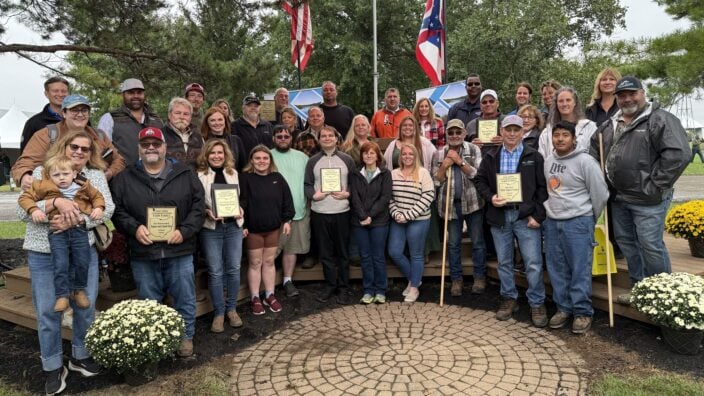
Since 1984, the Conservation Farm Family Awards program has recognized Ohio farm families for their exemplary efforts conserving soil, water, woodland, wildlife, and other natural resources.
Read More
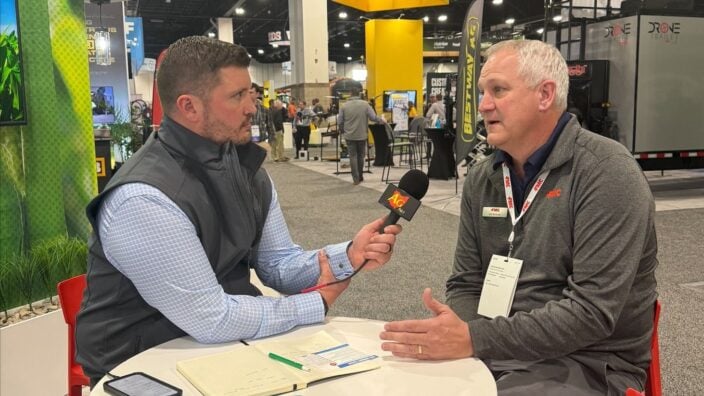
Meet Joe Everett, a Shelby County Farm Bureau Young Ag Professional who has dedicated his life to service, both in uniform and within his local community.
Read More

A year-end review provides an opportunity to evaluate your operation’s financial position, discuss future goals and develop strategies for the upcoming season.
Read More

Ohio Farm Bureau has created a new guide to help members better understand the laws, regulations and risk considerations that come with opening their farms to the public.
Read More
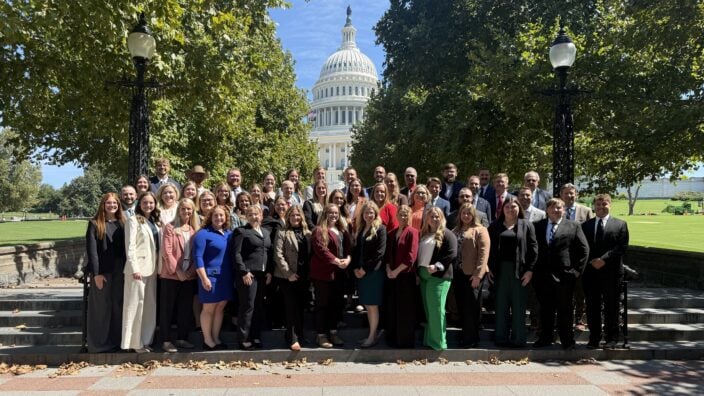
The groups received a firsthand look at agricultural policy, advocacy and leadership in the nation’s capital.
Read More

By prioritizing safety and health, you protect yourself and those around you, reduce downtime, and ensure your operation runs smoothly.
Read More