







Legal with Leah: Understanding Ohio’s 2026 CAUV Update
The 2026 Current Agricultural Use Value update brings lower values in many reappraisal counties and a significant policy win on permanent pasture.
Read MoreNote: This story was updated in 2017.
Farmers who are enrolled in the Current Agricultural Use Valuation (CAUV) program have been seeing sharp increases in the taxable value of their land. While no less frustrating to landowners, these increases can be explained by looking at how the formula works.
CAUV was established after Ohio Farm Bureau campaigned for a constitutional amendment to have farmland taxed for its agricultural value, rather than its fair market value. The agricultural value of farmland is determined by the following equation:(Income from agricultural production – Non-land production costs)/ Capitalization rate = Current Agricultural Use Value
1. Start with gross farm income: The projected farm income for all land enrolled in CAUV is based on the soil type and data from three crops: corn, soybeans and wheat.Yield information for each of these crops starts with Farm Service Agency production data and is adjusted by the 10-year average of actual statewide yields.Prices for each crop are based on a survey of Ohio grain elevators.*
2. Subtract non-land production costs*: These costs are based on Ohio State University data and include typical farm input costs for corn, soybeans and wheat.
3. Divide by the Capitalization Rate*: This rate is based on the mortgage interest rate for a 15-year fixed rate mortgage from Farm Credit Services with 40% equity and 60% debt and is adjusted for taxes.
*When determining crop prices, production costs and the capitalization rate, the last seven years of values are used, with the highest and lowest values removed and the remaining five years averaged.
Corn:
Soybeans:
Wheat:
Factoring in Cropping Patterns:
Final Per Acre Income for Miami Silt Loam:
Current Agricultural Use Value:
So, why did CAUV values increase?
From 2008-2014, the CAUV values resulting from the CAUV calculation saw large increases. This was due to two main factors:
(1) Crop prices had increased substantially through 2012, and those higher crop prices were added into the formula, drawing up the average crop price used in the calculations. This resulted in a higher net income in the calculation as crop prices outpaced increases in production costs.
(2) At the same time, the capitalization rate used in the formula decreased substantially. The capitalization rates dropped from around 8% in the mid-2000s to a low of 6.2% in 2014. This was a result of interest rates being held at or near zero by the Federal Reserve which also held the interest rates used in the calculation at historic lows.
Simply put: A higher net income divided by a lower capitalization rate equals an increase in CAUV land values.
What’s changed since 2014?
Since 2014, Ohio Farm Bureau has lobbied the tax department and the Ohio legislature to make important changes to the CAUV calculation. In 2015, OFBF was successful in gaining data updates to the CAUV formula from the Ohio Department Taxation. These changes prevented bigger increases and ensured that the most up-to-date data available was being used in the CAUV calculation. In 2017, OFBF was successful in lobbying the General Assembly to include CAUV reform language in the biennial budget bill. Those changes ensured the most accurate data was being used to calculate the capitalization rate and allowed conservation lands to be valued at the minimum value, phasing in over a six year period to allow communities to adjust to more accurate valuations. The capitalization rate changes alone created an average 30% decrease in CAUV cropland values for those counties on the 2017 reassessment cycle. Counties on the 2018 and 2019 reassessments will see the impacts of CAUV reform as they reach their next reassessment.
The rate of increase in CAUV land values does not necessarily translate to the same rate of increase in taxes owed by the landowner due to tax credits and other factors. CAUV values remain substantially lower than the fair market value, making the program essential to farmers.




The 2026 Current Agricultural Use Value update brings lower values in many reappraisal counties and a significant policy win on permanent pasture.
Read More
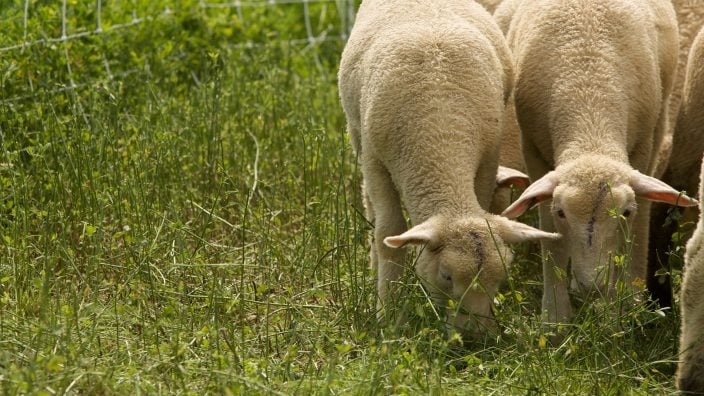
CAUV updates include a slight decline in values for counties undergoing reappraisals and a long-sought change to the valuation of permanent pastureland.
Read More
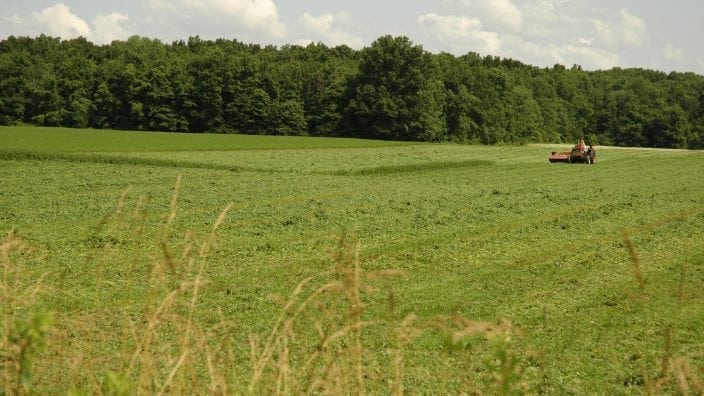
Staff from the county auditor’s office met with several Wayne County Farm Bureau board trustees earlier this spring to give an update on the state-mandated 2026 reappraisal.
Read More

Four property tax reform bills were signed into Ohio law at the end of 2025. Ohio Farm Bureau Associate General Counsel Leah Curtis breaks down the bills and what the changes mean for Ohioans.
Read More
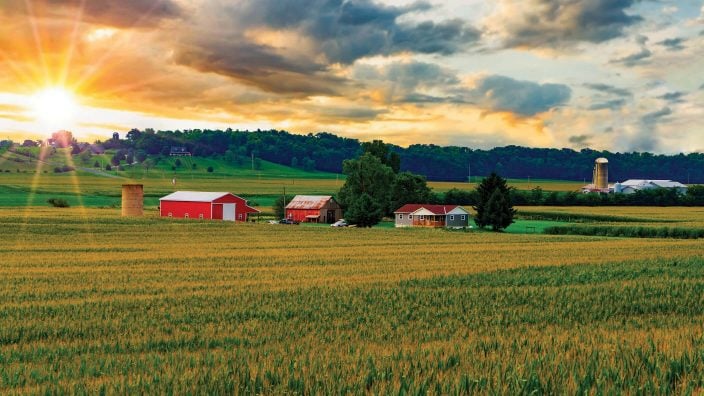
OFBF annual meeting delegates will discuss how or if current Farm Bureau policy should be modified in light of various property tax proposals.
Read More
In 2025, about 21 counties are going through a reappraisal or update, and because Ohioans pay taxes one year behind, they will see new property tax bills in January 2026.
Read More

Overall, proper care, maintenance and communication are all essential parts of the process when it comes to trees.
Read More
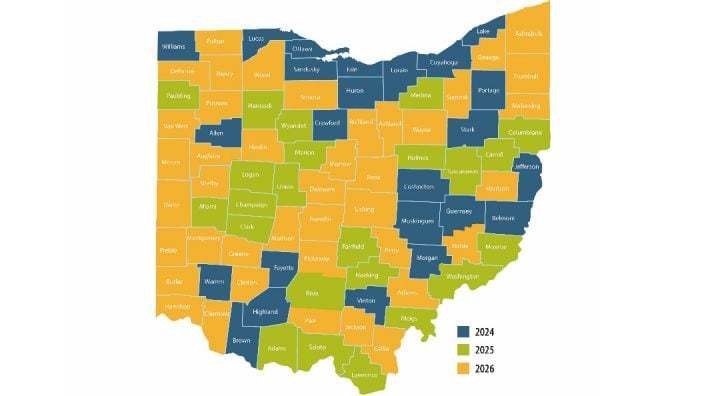
This will apply to the 23 counties on the revaluation cycle in 2025, who will see updated values and tax bills in January 2026.
Read More
‘We never stop pushing to ensure farmland taxation is fair and reflects the realities of agriculture.’ ~ Mandy Orahood
Read More

In this recording, learn about the recent increases in Ohio CAUV values, gather information to help you understand the property tax system, and get an update on legislative action.
Read More