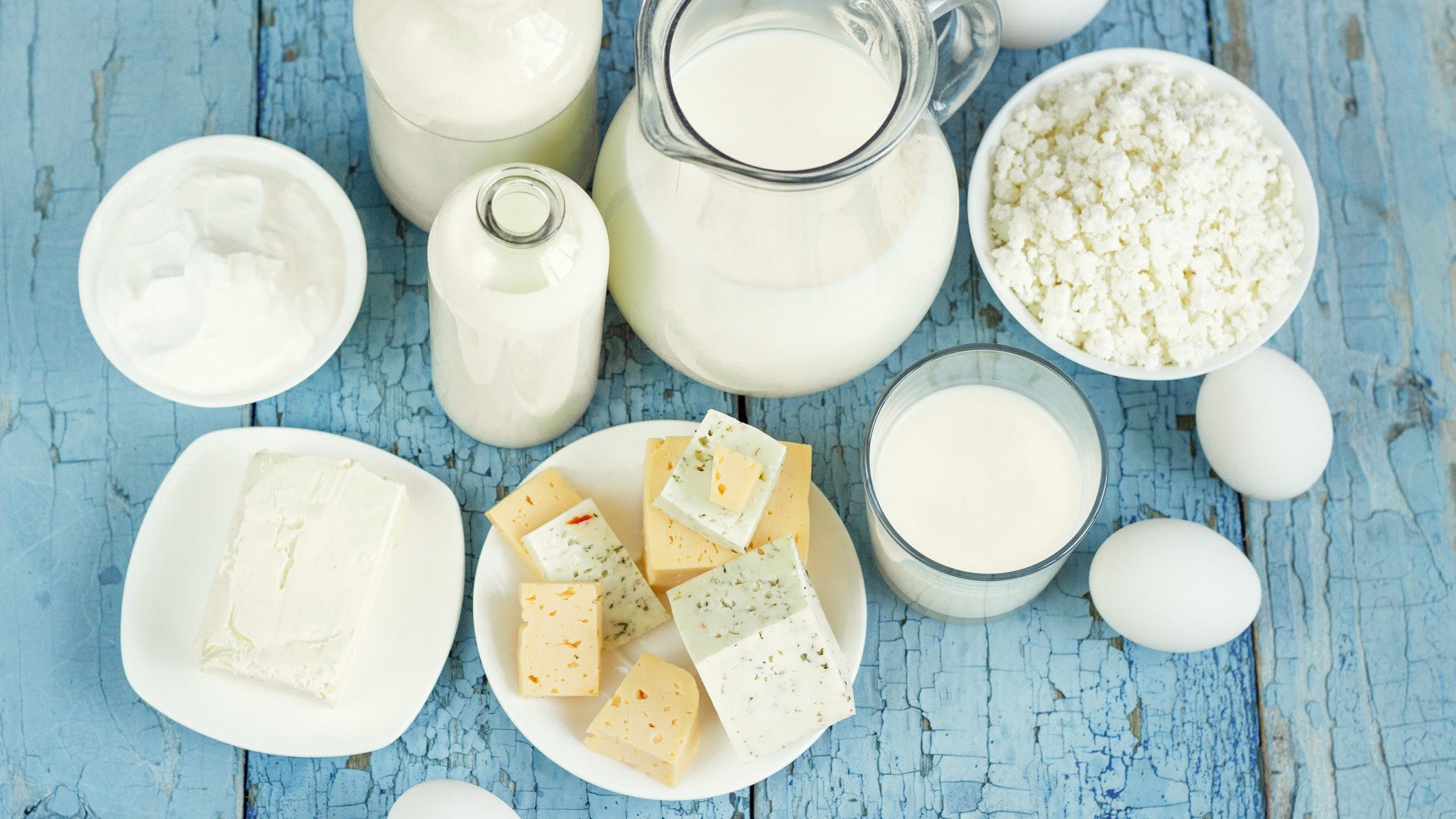


dairy products

I love dairy cows. Most readers of this column know this. I think I have probably conveyed the fact that dairy cows are as complex as the dairy industry itself.

Today, I would like to share with you some interesting dairy trivia.

  • Dairy cows first arrived in America with the Jamestown settlers in 1611. Up until the 1850s, nearly every family had a cow. The most common breed of dairy cow in the United States is the Holstein, but Jersey cows produce milk with the highest butterfat content.
  • Dairy cows give more than 7 gallons of milk each day. That’s 400 glasses of milk!
  • Tank trucks for transporting fluid milk were first introduced in 1914.
  • A cow has one stomach, but it has four distinct compartments.
  • The average dairy cow weighs 1,400 pounds and consumes about 50 to 55 pounds of dry matter (such has hay, grass, silage, grain) each day. She also drinks about 35 gallons of water each day — about a bathtub’s worth. She will drink more when it’s hot outside.
  • Cows have 32 teeth, all of them on bottom, with a dental pad on top. They spend about six hours eating every day.
  • A cow chews her cud (regurgitated, partially digested food) for up to eight hours each day. That’s almost 30,000 chews daily.
  • Cows have an acute sense of smell and can smell something up to six miles away.
  • Cheese, please: Americans eat, on average, 40.4 pounds of cheese a year. This average has grown by five pounds over the last 10 years. The most common cheeses are mozzarella and cheddar. Seems like a lot of cheese, but the U.S. doesn’t even make the top 15 cheese-consuming countries. Denmark is the top consumer with nearly 62 pounds per capita, followed by Iceland, Finland and France, each consuming 60 to 61 pounds per capita.
  • The tradition of making Swiss cheese in 200-pound wheels began in the Middle Ages when the Swiss government taxed cheesemakers on the number of pieces they produced rather than according to the total weight of the cheese they made.
  • Cheddar cheese was first developed in the town of Cheddar Gorge, England, more than 400 years ago.
  • Plastic milk bottles were first introduced in the U.S. in 1967 (a very good year).
  • Milk’s essential nutrients can be difficult to replace in a healthy dietary pattern. You would need to eat 36.5 cups of raw kale to get the same amount of calcium provided in three eight-ounce cups of milk. To get the same amount of protein, you would have to eat four hard boiled eggs, and three bananas to match the potassium available in three eight-ounce glasses of milk.
  • Why does milk work better than water cooling your mouth after eating something spicy? The protein in milk called casein cleanses the taste buds, similar to how soap washes away grease.
  • A rather sad fact to share is that fluid milk consumption in the United States has dropped 40% or more since 1975.

The dairy farmers across America send many thanks to consumers for buying milk, cheese and other dairy products.

Merry Christmas! 

Submitted by Mary Smallsreed, a member of the Trumbull County Farm Bureau and Who grew up on a family dairy farm in northeast Ohio.


OFBF Mission: Working together for Ohio farmers to advance agriculture and strengthen our communities.

Photo credit: istockphoto.com

To grow a network and gain perspective and knowledge in the industry through personal and professional development has been invaluable. Every day I learn and grow.
Ryanna Tietje's avatar
Ryanna Tietje

Henry County Farm Bureau

Farm Bureau connections
The issue of property taxation remains as one of the biggest challenges our members face today. Ensuring agricultural property is valued for its agricultural potential and not development is critical to the continued success of Ohio agriculture.
Matt Aultman's avatar
Matt Aultman

Darke County Farm Bureau

Giving farmers a voice
Farm Bureau is what really got the word out. It’s been one of their goals to get this done.
Bill and Charlotte Wachtman's avatar
Bill and Charlotte Wachtman

Henry County

10-year campaign for safer roads
I could not have done it without the resources I have found through Farm Bureau.
Gretchan Francis's avatar
Gretchan Francis

Trumbull County Farm Bureau

Bringing the farm back to life
Because we are younger farmers just starting out, Farm Bureau has a lot of good opportunities and resources to help us grow in the future.
Hannah Kiser's avatar
Hannah Kiser

Sandusky County Farm Bureau

Farm Bureau involvement
Through the Select Partner program, we became educated in farm insurance and weren't just selling policies. It became more and more clear why farmers need an advocate like Ohio Farm Bureau.
Chad Ruhl's avatar
Chad Ruhl

Farm manager, CSI Insurance

Select Partner Program
So many of the issues that OFBF and its members are advocating for are important to all Ohioans. I look at OFBF as an agricultural watchdog advocating for farmers and rural communities across Ohio.
Mary Smallsreed's avatar
Mary Smallsreed

Trumbull County Farm Bureau

Advocacy
Suggested Tags: