








Applications for Ohio Farm Bureau Health Plans now available
Members have three ways to apply: contacting a certified agent, calling 833-468-4280 or visiting ohiofarmbureauhealthplans.org.
Read MoreAmerican Farm Bureau Federation is asking farmers and ranchers to urge their lawmakers to support House and Senate legislation to eliminate the estate tax.
The current but temporary estate tax exemption of $11 million per person has allowed farmers and ranchers to expand their businesses, upgrade buildings and purchase needed equipment and livestock, rather than spend their money
on life insurance and estate planning. More importantly, when a family member dies, the family can keep a future in farming, without having to sell land, livestock or equipment to pay the tax. The exemption is indexed for inflation while continuing stepped-up basis and portability between spouses.
“In spite of this much-appreciated relief, estate taxes still hang heavy over many family farm businesses. Farm and ranch assets are usually tied to illiquid assets such as land, buildings and equipment. When estate taxes on an agricultural business exceed cash and other liquid assets, surviving family members have few options other than to sell off farm and ranch assets, placing their business at risk,” AFBF President Zippy Duvall said in a letter to Capitol Hill lawmakers.
Duvall also noted that in 2026, the estate tax exemption reverts to $5.5. million per person, which will force many farmers and ranchers to divert resources from their agricultural business for estate tax planning – unless Congress extends the higher estate tax exemption rate.
“The American Farm Bureau believes that tax laws should protect, not harm the family farms that grow America’s food and fiber, and give sons and daughters the ability to follow the agricultural legacy of their parents,” he wrote.
The Farm Bureau-backed Death Tax Repeal Act of 2021 (H.R. 1712, S. 617) was introduced in the House and Senate earlier this month, and Farm Bureau members are encouraged to contact their members of Congress in support of the bills. According to AFBF analysis, not repealing the estate tax threatens more than 74,000 family farms across the country and nearly half of all farmland.


Members have three ways to apply: contacting a certified agent, calling 833-468-4280 or visiting ohiofarmbureauhealthplans.org.
Read More

Ohio Farm Bureau Associate General Counsel Leah Curtis explains how the eminent domain process works in Ohio, what ‘quick take’ means and when it can be used.
Read More

As fuel prices skyrocket across the state, lawmakers are preparing to return to the Statehouse to vote on the temporary suspension of Ohio’s gas tax.
Read More

Since 1984, the Conservation Farm Family Awards program has recognized Ohio farm families for their exemplary efforts conserving soil, water, woodland, wildlife, and other natural resources.
Read More

Meet Joe Everett, a Shelby County Farm Bureau Young Ag Professional who has dedicated his life to service, both in uniform and within his local community.
Read More

A year-end review provides an opportunity to evaluate your operation’s financial position, discuss future goals and develop strategies for the upcoming season.
Read More

Ohio Farm Bureau has created a new guide to help members better understand the laws, regulations and risk considerations that come with opening their farms to the public.
Read More
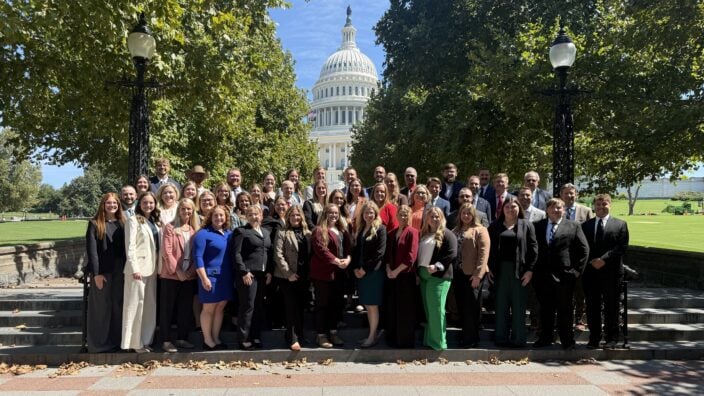
The groups received a firsthand look at agricultural policy, advocacy and leadership in the nation’s capital.
Read More

By prioritizing safety and health, you protect yourself and those around you, reduce downtime, and ensure your operation runs smoothly.
Read More
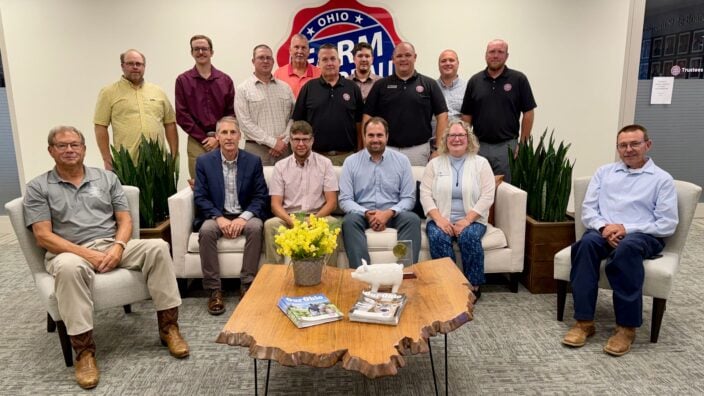
Twenty leaders have been named to the 2026 Ohio Farm Bureau Federation Policy Development Committee.
Read More