









Don’t raise a stink over insect’s emergence
Stink bugs also known as the Brown Marmorated Stink Bug (BMSB in the entomology world) are one of the earliest signs of spring to me here in Ohio.
Read MoreDairy milk’s natural combination of carbohydrates and protein makes it ideal for stabilizing blood sugar and ultimately stabilizing energy throughout the day.
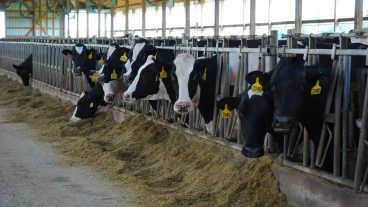
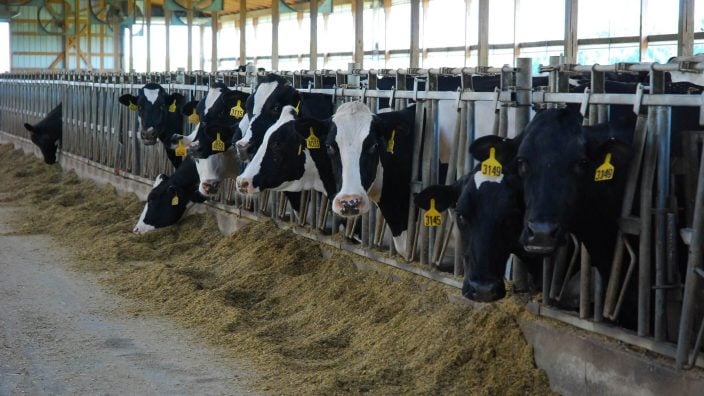
June is dairy month, but I can talk about dairy all the time… and sometimes I do and I am going to.
Why limit talking about the importance of dairy milk to one month out of the year, especially when there is so much media that leans toward the contrary? I follow a couple pages on a social media platform that focus on keto diets. I follow these mainly for the recipes and the encouragement to eat healthy and limit my carbohydrate intake.
One of the big no-nos on these sites is dairy milk because it is “loaded with sugar.” I am not giving up real milk.
Yes, milk contains 12 grams of sugar per cup — no matter if it is whole milk, 2% milk, 1% milk or skim milk.
No, milk processors do not add sugar to fluid milk to enhance taste like some of the plant-based beverages do. The natural sugar in milk is lactose, a disaccharide containing glucose and galactose units.
As Everyday Health reports, “One of the unfortunate side effects of the widespread campaign against added sugar has been the misplaced concern over the natural sugar found in milk.” Through much research, we are learning that all sugars are not the same.
Drinking milk with its 12 grams of sugar is not the same as drinking another beverage with 12 grams of added sugar. While drinking large amounts of added sugar beverages can lead to a blood sugar spike and then crash, the same is not true with milk. Milk does the opposite. Dairy milk’s natural combination of carbohydrates and protein makes it ideal for stabilizing blood sugar and ultimately stabilizing energy throughout the day.
Maybe you recall when the lead nutritionists were telling us that full fat dairy products were bad for your overall health. Now they tell us that good, healthy fats are what we need to prevent chronic diseases. Research done poorly can skew results and conclusions.
So, take it for what it’s worth — a 22-year study examining fats in our diets, but especially the unique fatty-acid composition found in whole milk and the foods made from it like cheese and yogurt, have made many scientists and the National Institute of Health change its recommendations.
As this research continues to grow, more and more evidence exists linking these dairy products, regardless of the fat level, with lower risk of some chronic diseases, like type 2 diabetes, cardiovascular disease, hypertension and stroke.
The Australian Heart Foundation and The Canadian Heart and Stroke Foundation are concluding similar findings.
A big key is to incorporate whole milk and regular cheese into a calorie-balanced overall healthy eating plan. Milk does add calories to my diet, but it is worth it due to the nutritional and health benefits it provides. The social media pages have helped me find a lot of low-carb alternatives for the high-carb foods that I still enjoy in moderation on occasion, but I draw the line at the nut juice. Drink milk! It does the body good!
Submitted by Mary Smallsreed, a member of the Trumbull County Farm Bureau who grew up on a family dairy farm in northeast Ohio.
OFBF Mission: Working together for Ohio farmers to advance agriculture and strengthen our communities.
Stink bugs also known as the Brown Marmorated Stink Bug (BMSB in the entomology world) are one of the earliest signs of spring to me here in Ohio.
Read More
Through all of life’s changes, Trumbull County has become not just a place we work, but the place we call home.
Read More
Most livestock animals are well adapted to cold weather, but farmers take extra measures when extreme temperatures come.
Read More
We often talk about the moments that shape us — big decisions, career paths and life milestones. But more often than not, it’s not the moments that define us. It’s the people.
Read More
The purpose of this $1,500 grant is to help offset farm operation costs. This can include but is not limited to: fuel costs, fertilizer costs, equipment costs, land rent, etc.
Read More
I’m going to give you a list of things that you can do that will get you outside and actually enjoy the snow.
Read More
As kids, we are often told to try new things, whether it be a new food, a new activity or…
Read More
Learn more about ag districts from noon to 4:45 p.m. Jan. 28 at the OSU Extension Office, 520 W. Main Street in Cortland.
Read More
We aren’t just reacting to change — we’re shaping the future of agriculture, one conversation and one decision at a time, together.
Read More
Today, there are close to 15,000 farms growing Christmas trees in the U.S., and over 100,000 people are employed full- or part-time in the industry.
Read More