







Applications for Ohio Farm Bureau Health Plans now available
Members have three ways to apply: contacting a certified agent, calling 833-468-4280 or visiting ohiofarmbureauhealthplans.org.
Read MoreAdding an extra boost are specialty catalogs showcasing out-of-the-ordinary offerings rarely stocked at garden centers and nurseries. Need vintage varieties of tulips appropriate for your early Victorian house? There’s a catalog for that. The same goes for English roses, hardy waterlilies and Italian vegetables.
However, armchair shoppers must take care. This harmless indulgence may become costly. Some seed packets cost a few dollars each and plants several times that. These marketing tools may tempt shoppers into ordering more than their gardens can accommodate — or their families eat.
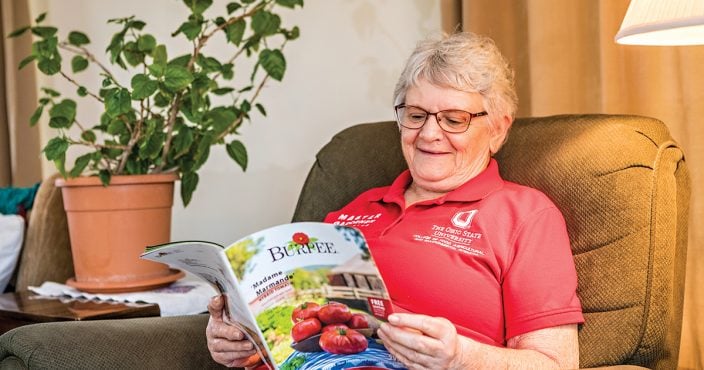
To avoid mistakes and over ordering, several master gardeners were consulted for suggestions. Master gardeners are home gardening veterans with years of horticulture experience. They serve as specially trained volunteers for Ohio State University Extension’s educational programs.
“All the pictures look beautiful. All the descriptions are mouthwatering,” said Paul Hang, Pickaway County’s volunteer master gardener coordinator. “You really don’t have any way of knowing; it’s only after some sad experience.” He had a sad experience last summer with a new variety of cucumber. While flavorful and productive, the fruits were “the ugliest, misshapen things.”
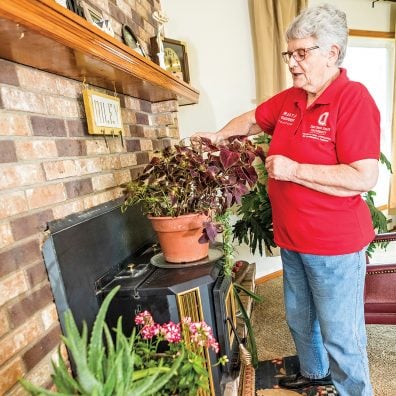
“Everybody has something new, and they try to sell you,” warned Peggy Riley, a Madison County Farm Bureau member and Pickaway County master gardener. “I sit in my recliner, and I checkmark possibilities,” she said. Before ordering, she spreads the catalogs across her dining room table to compare descriptions and prices. That’s something she can’t do with the websites.
“I think the biggest way to keep from buying too much is to have a plan and stick to it,” said former Kingwood Center gardener Mona Knuess. She now serves as a Richland County master gardener and the teaching garden coordinator at the North End Community Improvement Collaborative in Mansfield.
For Riley, a plan is a must for her two raised vegetable beds, each 4 feet by 16 feet. She sows periodically from spring through fall. Besides facing obvious space limits, she keeps track of crop rotations necessary to lessen disease and insect problems.
Some gardeners split an order for savings and more varieties. That’s what Connie Smith and Debbie Wren did with blackberries. Neither wanted the minimum of six plants. But three apiece worked for Smith, OSU Extension’s Fairfield County program assistant and master gardener coordinator, and Wren, Fairfield County master gardener.
Sometimes less is best. Smith recommended following the design principle of massing several of one type of plant for greater visual impact. Instead of ordering one of this and that, opt for three of one type of perennial. Plant them closely. Use the same approach with flowering bulbs.
Don’t forget timing. Besides weeding and watering, you need to harvest vegetables at peak ripeness. If this is the year for a lot of travel, a big vegetable garden probably isn’t a good idea, Smith said.
All rules are meant to be broken. If you can’t live without that makes-your-heart-race plant — order it. That’s what the experts do.
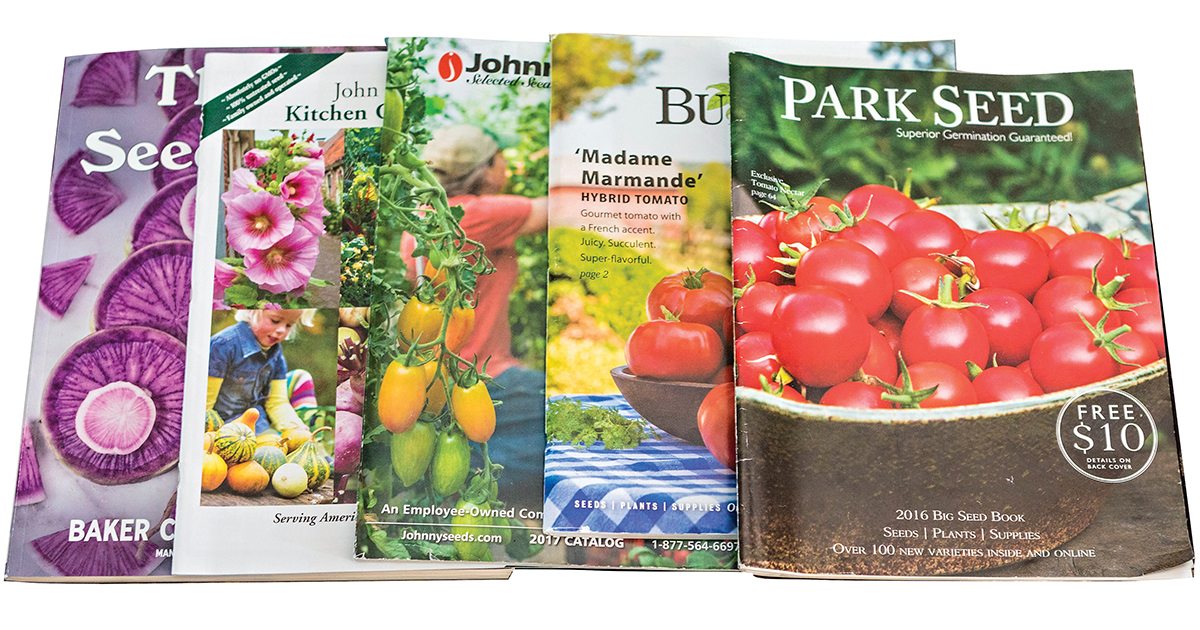 Master gardeners have several catalog shopping suggestions:
Need catalogs? – Members of the Direct Gardening Association include a range of nurseries that grow everything from perennials to heirloom seeds. Call 706-298-0022 or visit the Direct Gardening Association website for list of members to access websites.
 It’s one thing to plan your garden during dark winter but quite another to plant it. So, resist the urge to sow tomato seeds indoors in February. Wait until about income tax time in April. Tomatoes and other tropical plants, such as peppers and squash, need the warm soil of late May to flourish.
However, some vegetables can be started indoors around mid- to late-February for transplanting outside in late March or April. Broccoli, cabbage, cauliflower and lettuce, for instance, handle frost but not deep-freeze conditions. Generally gardeners in southern Ohio can transplant two to three weeks sooner than those in the north. Weather conditions affect transplant timing, giving another reason for patience.
If planning to grow only a few plants, a sunny, south-facing windowsill can work, but fluorescent lights are a better choice for producing sturdy seedlings.




Members have three ways to apply: contacting a certified agent, calling 833-468-4280 or visiting ohiofarmbureauhealthplans.org.
Read More

Ohio Farm Bureau has created a new guide to help members better understand the laws, regulations and risk considerations that come with opening their farms to the public.
Read More

The groups received a firsthand look at agricultural policy, advocacy and leadership in the nation’s capital.
Read More

By prioritizing safety and health, you protect yourself and those around you, reduce downtime, and ensure your operation runs smoothly.
Read More
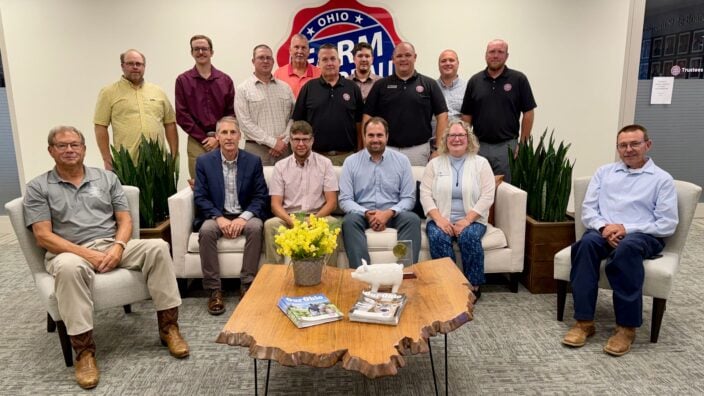
Twenty leaders have been named to the 2026 Ohio Farm Bureau Federation Policy Development Committee.
Read More
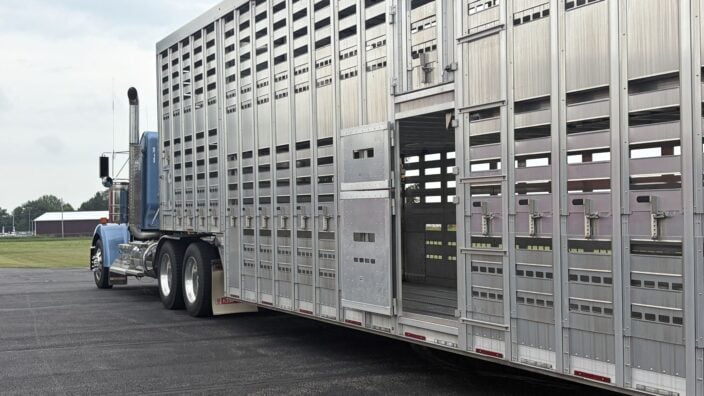
Two specialized, hands-on training sessions will address high-risk agricultural emergencies: manure pit rescues in confined spaces and roadside livestock transportation accidents.
Read More

The 75,000 square foot ImAGine Ag exhibit made its debut at the 2026 Ohio State Fair in the new Ohio Agriculture Center, giving thousands of visitors a hands-on, interactive learning experience.
Read More

Early-bird pricing for the conference will end Dec. 15, 2026, with a final registration deadline of Jan. 5, 2027. Event details, session updates and registration are available at ofb.ag/WLE.
Read More

More than 50 K-5 educators took part in professional development events at the 2026 Ohio State Fair, centered around agricultural education and the organization’s new imAGine Ag exhibit.
Read More

Founded by farmers in 1926, Nationwide has grown into a trusted partner for the agricultural community while staying true to its roots.
Read More