

Applications for Ohio Farm Bureau Health Plans now available
Members have three ways to apply: contacting a certified agent, calling 833-468-4280 or visiting ohiofarmbureauhealthplans.org.
Read MoreOne of the state’s bills that is most important to agriculture is House Bill 49, Ohio’s two-year operating budget. When the bill was first released, Ohio Farm Bureau’s policy department went through it, line by line, making note of items impacting agriculture and the state’s business climate. Staff members testified at hearings, had one-on-one meetings with lawmakers and talked with university, business and various agricultural groups on how the proposals would affect them. As of press time, the budget bill had not been passed. By law a balanced budget must be passed by June 30 every two years.
Here is a look at some of the issues, besides CAUV, Ohio Farm Bureau worked on in the budget bill:
Farm Bureau supported adequate funding of several programs that help provide needed research and technical assistance in the area of water quality. Those include Ohio State University’s Ohio Agricultural Research and Development Center, Extension, Agricultural Technical Institute and Sea Grant program. OFBF also supported greater funding for Soil and Water Conservation Districts.
OFBF was successful in securing an amendment to the budget in the House that would protect the relationship between the Ohio FFA Association and the Ohio Department of Education. Currently Ohio FFA operates within the education department, and Farm Bureau wanted to ensure that continues by outlining the relationship in statute.
OFBF also supported allowing school districts to integrate content from one state-approved course to another – specifically career-tech courses – so students could receive credit for both subject areas (for example, credit for both science and agriculture).
OFBF supported the removal of a provision that teachers complete an on-site work experience with a local business or chamber of commerce to renew their teaching license.
OFBF supported an exemption for apple syrup and apple butter producers from food processing standards if they directly harvest at least 75 percent of the apples used to produce those items. This change is directly reflective of OFBF policy.
The budget sets up a Medication assisted treatment drug court program in several Ohio counties to provide addiction treatment to persons who are dependent on opioids, alcohol, or both and requires community addiction service providers to provide specified treatment to the participants in the program based on the individual needs of each participant.
In addition, $300,000 was earmarked to establish local court-appointed special advocate programs in areas of the state with high numbers of heroin users and overdoses. At press time, the budget contained $176 million for addiction treatment.


Members have three ways to apply: contacting a certified agent, calling 833-468-4280 or visiting ohiofarmbureauhealthplans.org.
Read More
The executive order waives state penalties and suspends discretionary enforcement related to the use of dyed diesel on public highways through Dec. 31, 2026.
Read More

Maggie Preston, Lincoln Deitrick and Denver Davis describe their role in agriculture, their Farm Bureau involvement and what it means to win their respective state awards.
Read More
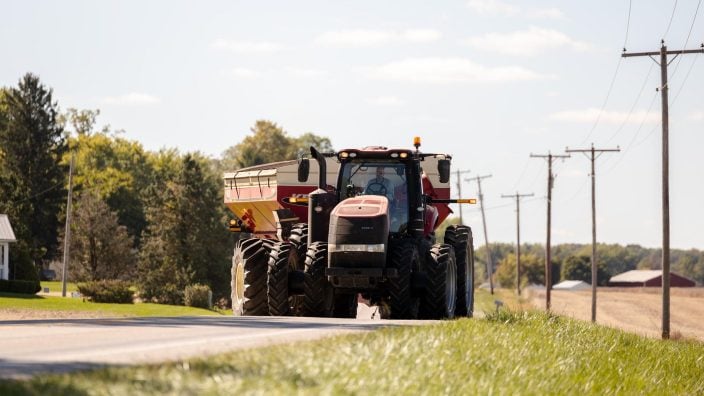
Associate General Counsel Leah Curtis breaks down the changes to Ohio’s fuel tax, recent guidance on dyed diesel and what farm families need to know.
Read More

Gripp is launching a 60-day cohort in mid-January for Ohio Farm Bureau members, offering discounted access to its asset-tracking app.
Read More
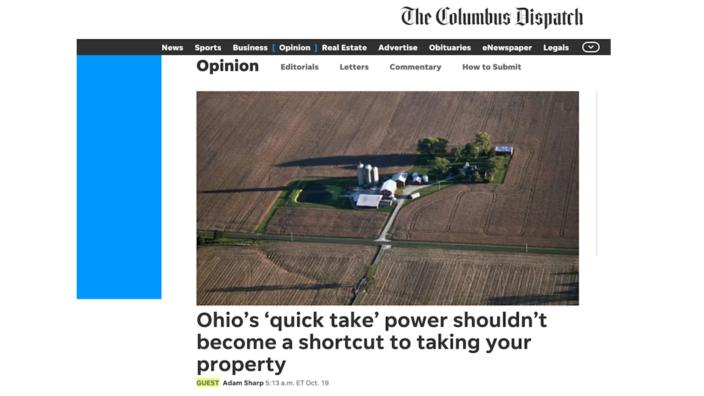
Ohio Farm Bureau recently published an op-ed in The Columbus Dispatch highlighting the importance of protecting private property rights as discussions continue around expanding eminent domain powers in Ohio.
Read More