


Field Day Podcast with Jordan Hoewischer: Ep. 46 Jay Martin
Jay Martin discusses his Pilot Watershed Project in the Western Lake Erie Basin. He is a professor of Ecological Engineering at The Ohio State University.
Read MoreThe 2025 algal bloom for the Western Lake Erie Basin is expected to have a severity index of 3, according to the final forecast from the National Oceanic and Atmospheric Administration. This forecast, based on a 1 to 10 scale, uses an ensemble of different models, which consider phosphorus loading into Lake Erie during the spring and early summer.
This forecast will once again put Ohio farmers and their nutrient management practices in the spotlight. Thanks to H2Ohio and other conservation programs being used by thousands of farmers on millions of acres in the Western Lake Erie Watershed, positive results are being realized.
If this year’s forecast holds true, it will continue a trend of mild to moderate blooms. According to the National Oceanic and Atmospheric Administration, outbreaks have been less severe between 2020 and 2024 than those of 10 to 15 years ago.
“We have been focused on helping farmers identify solutions to the water quality challenges in our state for decades,” said Jordan Hoewischer, director of water quality and research for Ohio Farm Bureau. “OFBF, along with the rest of the agricultural community, has gone above and beyond to help solve the water quality challenges of our state and has committed millions of dollars to water quality and nutrient management research, as well as providing strong support of Governor DeWine’s H2Ohio program, and those efforts at the farm level are making a difference downstream.”
According to a research summary by The Ohio State University, over the past 30 years farmers have reduced their fertilizer usage by 33%, while 65% of Ohio counties have decreasing trends in mean soil test phosphorus. Heidelberg University studies show that the dissolved reactive phosphorus (DRP) going into Lake Erie has seen a downward trend over the past five years.
“The combined factors of increased yield, reduced fertilizer application, and better manure utilization led to a net removal of 8 pounds of phosphorus per acre across all Ohio agricultural lands from 2003 to 2022,” Hoewischer said. “In other words, more phosphorus is coming out of the soil and captured in the harvested crops through crop production than the nutrients that farmers apply to their fields every year.”
NOAA will release the final algal bloom statistics for 2025 in September.
This is a news release for use by journalists. Questions should be directed to Ty Higgins, 614-246-8231 or [email protected].



Jay Martin discusses his Pilot Watershed Project in the Western Lake Erie Basin. He is a professor of Ecological Engineering at The Ohio State University.
Read More
Chris Winslow from Ohio Sea Grant and Stone Laboratory discusses the status of Lake Erie, legacy phosphorus and other topics as well.
Read More
Aaron Wilson from Ohio State University and the Byrd Polar and Climate Research Center talks about short and long-term weather and climate trends and how the super El Niño will affect our region.
Read More
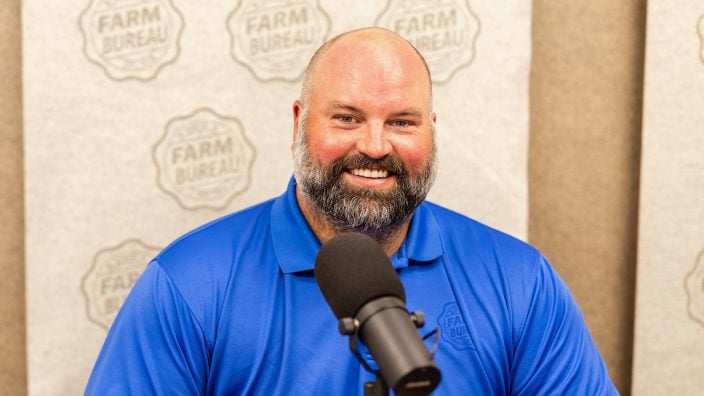
Jordan Howeischer, Ohio Farm Bureau director of water quality and research, provides some history on water quality in Ohio and what the industry has accomplished since the 2014 Toledo Water shutdown.
Read More

In response to an editorial published in Toledo Blade, Ohio Farm Bureau sent a letter sharing the decades-long commitment to conservation by Ohio farmers.
Read More
The report provides insight into measurable progress in conservation practices and Ohio farmers’ continued commitment to water quality.
Read More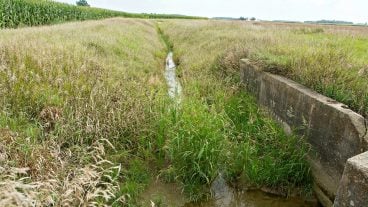
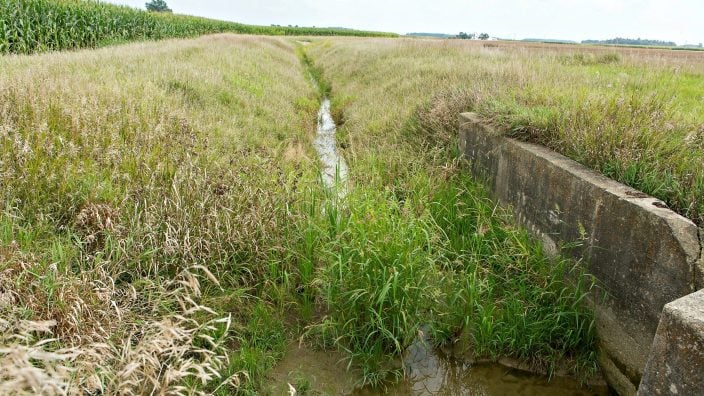
The report provides a data-driven look at conservation practices across the Western Lake Erie Basin and emphasizes farmers are doing their part in water quality.
Read More
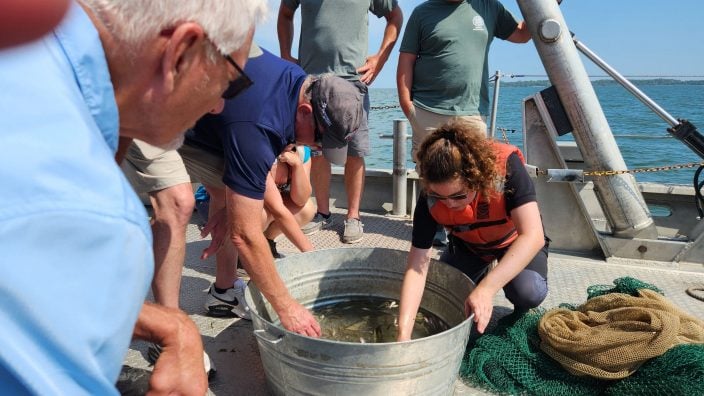
Jay Martin of Ohio State and Jordan Hoewischer join the podcast to break down the recent research and advocacy efforts helping drive that progress.
Read More
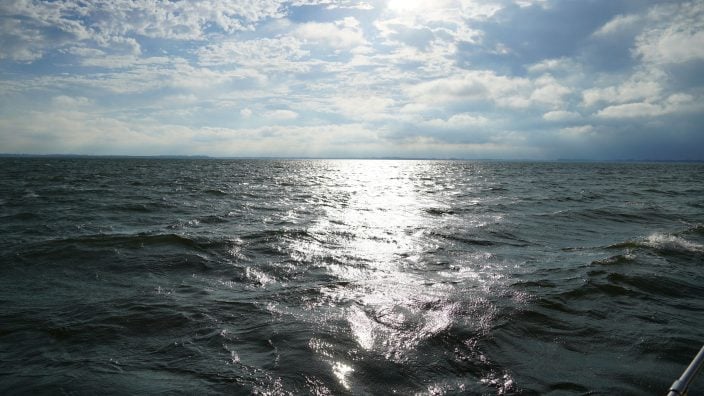
Ohio EPA has recently proposed allowing data centers to obtain ‘general’ National Pollutant Discharge Elimination System (NPDES) permits for their stormwater/wastewater discharges.
Read More
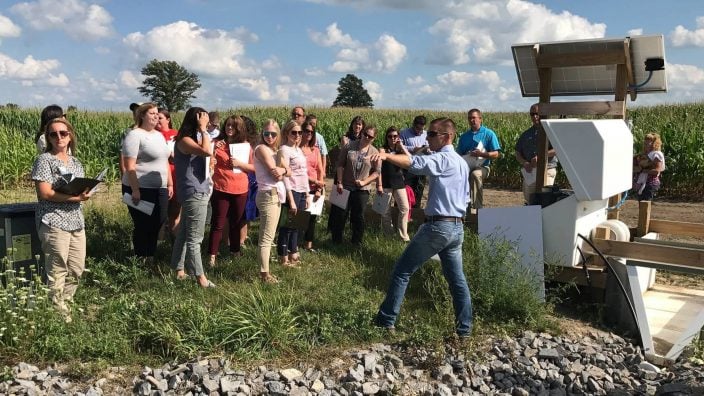
The network was established in fall 2015 on farms in Hardin and Hancock counties. Nearly 200 different tours and events took place on the three farms totaling nearly 4,000 visitors in its 10-year span.
Read More