




Ohio lavender farms

KEY POINTS

  • Ohio is experiencing a surge in lavender operations, now boasting more than a dozen farms, many of which are less than a decade old. Farms like White Barn & Blooms outside Cincinnati and Lavender Trails in Orrville are leading the way in making Ohio a recognized name in the lavender world.
  • The increase in Ohio reflects a broader national rise. According to the USDA’s Census of Horticultural Specialties, U.S. lavender operations grew from 1,317 to 1,547 over a five-year period leading up to 2024, with the Pacific Northwest historically leading the market.
  • Beyond its traditional calming scent, current demand is being driven by lavender’s extensive use in skincare products, oils, and specialized culinary items like lavender honey, chocolate and ice cream.

_________________________________________________________________________

From one corner of the state to the other, the scent of lavender is enriching Ohio farms.

Ohio is home to more than a dozen lavender operations, many of them less than a decade old. While lavender has long been found among other crops in herb or flower farms, it is increasingly taking center stage, often with a community touch.

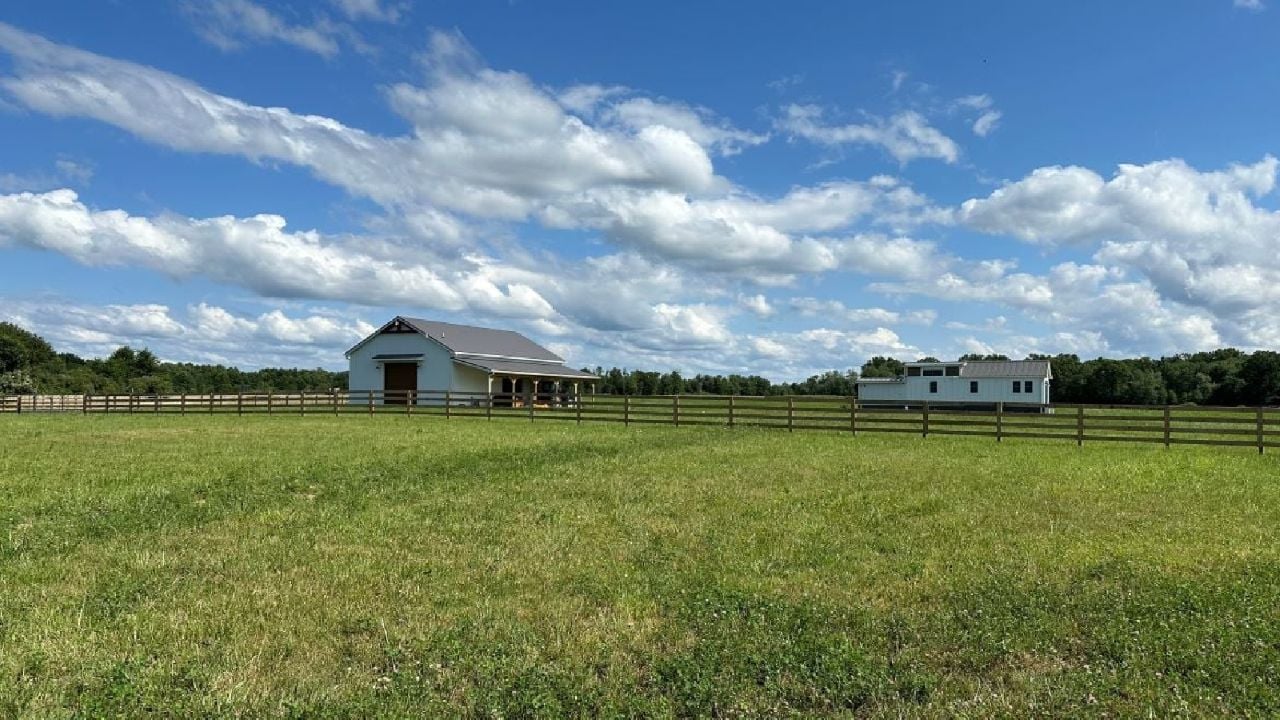
“We want Ohio to be it in the lavender world,” said Hamilton County Farm Bureau member Glenda Couch, who with her husband, Jamie, opened White Barn & Blooms in July outside Cincinnati, the largest lavender operation in the state.

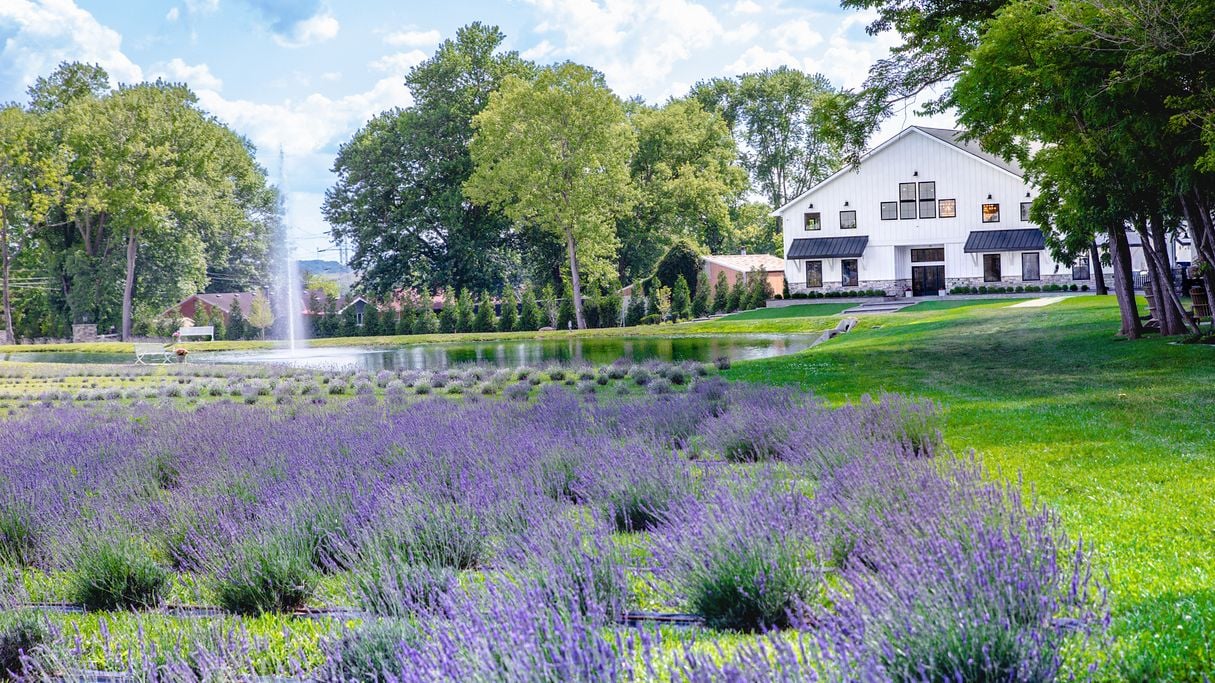
White Barn and Blooms Lavender Farm & Venue

The rise in Ohio lavender fields reflects a national rise. The USDA’s Census of Horticultural Specialities reported that the U.S. was home to 1,547 lavender operations in 2024, up from 1,317 five years earlier. Long a popular crop in Europe, lavender has taken off throughout the country, led by the Pacific Northwest.

Lavender’s calming perfume scent has been prized for centuries, but its use in skincare products, oils and even food has helped drive current demand. Hundreds of lavender products now line store shelves, from lavender honey to lavender neck pillows, lavender candles to lavender tissues, and lavender chocolate to lavender ice cream.

“It’s definitely trending now,” said Amy Duxbury, who opened Lavender Trails in Orrville with her husband, Jim, in 2020. “But lavender is an ancient herb that’s been part of so many civilizations. It’s the Swiss Army knife of herbs.”

The Wayne County Farm Bureau members were high school teachers starting to think about retirement when they visited a lavender farm near Geneva, Ohio, several years ago. It struck just the right scent.

“We were looking for something to do in retirement, something that combined education, environment and community,” Jim said. “I thought, ‘Who the heck plants lavender?’ But lavender is a low-resource crop, great for the environment and it just makes people happy.”

Lavender had another advantage for the couple: Since it’s largely a summer enterprise, they were able to get started while still teaching. In 2018, they found an unlikely place for their venture: the site of a former concrete plant in an Orrville industrial park.

“The biggest question we get asked is the location,” said Amy. “Everyone says ‘I didn’t realize you were in an industrial park.’”

The following year, they planted 2,000 lavender plants, offering eight varieties of the herb including the two main ones, French and English. A year later, a few months after the start of COVID, they opened Lavender Trails, turning a brownfield purple.

In keeping with the Duxburys’ educational background, the couple hosts tours and workshops and have partnered with researchers to better understand lavender’s potential in Ohio.

Despite the COVID launch, the couple, who retired from teaching this year, said their decision to focus on U-pick and agritourism has been the right one.

“Traffic has definitely been increasing,” said Amy. “There’s money to be made and it’s a lot of fun. But it’s also a lot of work; there’s always weeding.”

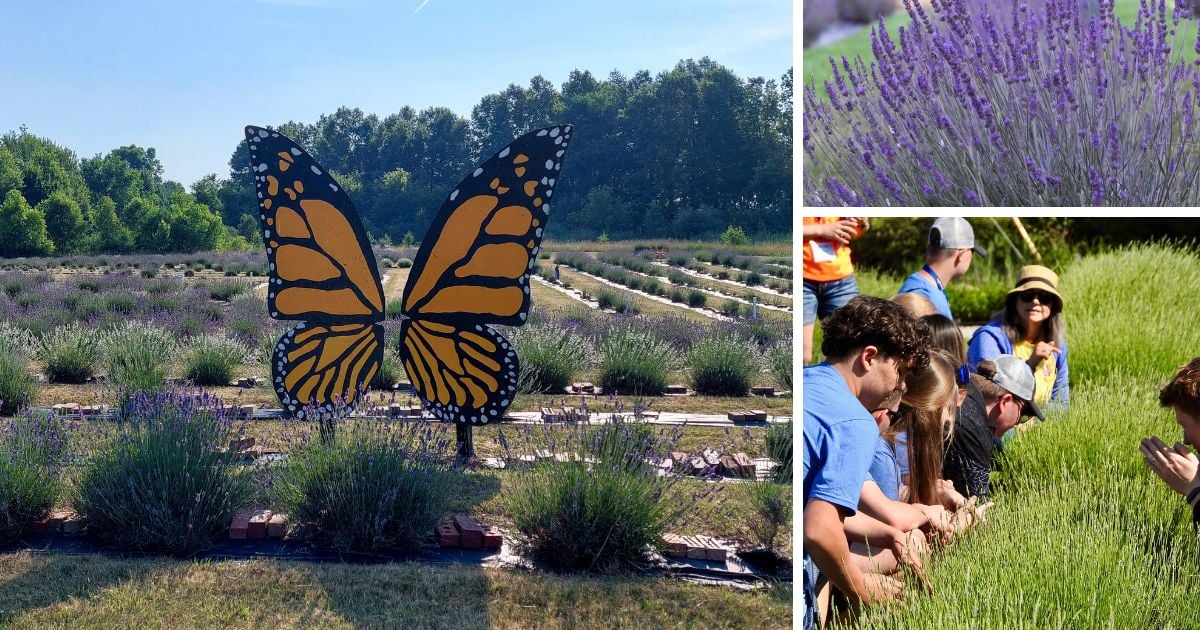
Lavender farms in Ohio
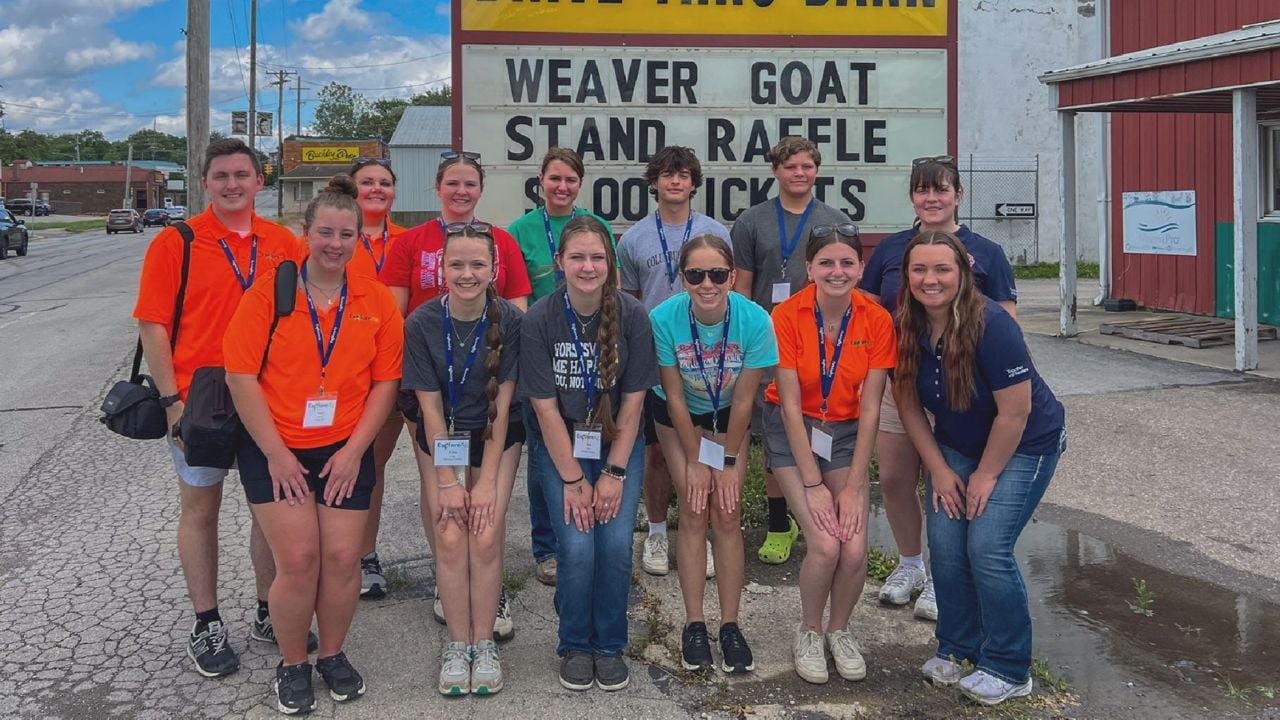
Lavender Trails in Wayne County (above) and White Barn and Blooms in Hamilton County (feature photo) are two of several lavender farms in the state in a growing industry. Lavender Trails hosted Ohio Farm Bureau’s ExploreAg campers earlier this year.

In the opposite corner of the state, the Couches are launching a lavender operation on a far different scale. The couple have teamed with the industry veteran Victor Gonzalez to open White Barn and Blooms in Ross.

The partners have planted 20,000 lavender plants with the goal of eventually reaching 100,000. Already, the farm is the largest in Ohio and one of the largest in the eastern U.S.

White Barn and Blooms, which features a 180-person event center, a garden and pavilion and a boutique store, lavishly caters to consumers but also sells lavender plants to other lavender farms, extending Gonzalez’s reach.

“I’m in Washington state, on the Olympic Peninsula, thousands of miles from Ohio,” explained Gonzalez, who started Victor’s Lavender farm in Sequim, Washington, in 2004 and travels internationally to speak on lavender horticulture. “My main clients are on the East Coast, so I struggle with how to transplant my products and live plants that far.”

Gonzalez is moving across the road from White Barn to more directly manage the growth of the operation, which is one of the few in Ohio large enough to produce lavender oil, the essential ingredient in lavender products. The 65-acre farm produces its own lavender soaps, lotions, lip balms, sprays, sachets, creams and (with partners) wine and honey.

Not without challenges

Ohio lavender farmers are bullish on the future of the plant, but as Gonzalez and others can testify, growing lavender in the Buckeye State comes with challenges. The herb fares best in dry and temperate climates and in porous soil. Ohio lavender farmers don’t worry about irrigating. They worry about the opposite: excess water.

The Duxburys were fortunate in choosing a former concrete plant for their operation. The concrete debris had left the soil calcareous, and well-drained. But even so, they learned early on to mound and cover the plants to enhance drainage.

“Water is the cryptonite of lavender, it will encourage harmful bacteria and root rot,” said Jim. “Ohio has enough water for lavender, too much really.”

Heavy rains, cold and the unpredictable climate have tempered the crop’s expansion in the Midwest, said Sherri Wood, president of the United States Lavender Growers Association.

“Lavender farming continues to attract new growers, but we also see farms leave the industry,” said Wood. “This past year has been particularly difficult for many growers in the Midwest. Excess rainfall has been one of the biggest challenges. Lavender thrives in well-drained soils and generally does not tolerate prolonged wet conditions around its roots.”

White Barn and Blooms lost about 40% of its first plantings. Gonzalez and the Couches are continuing to tweak the soil, plant varieties and conditions to find the right mix for Ohio.

“Without Victor, I would never have attempted this,” said Jamie Couch. “I know with him, it will work. But you have to figure out what works and what’s not working. It’s a learning curve.”

Gonzalez is confident that White Barn will help lead the herb’s rise in Ohio. He and the Couches plan to host workshops and speakers for lavender growers and share what they learn. For them, the future smells of lavender.

“There’s no stopping point for the lavender industry,” said Gonzalez. “People use lavender for everything and everywhere, in kitchens, bathrooms. Lavender makes people feel good and look good. The potential is huge.”


My first recommendation in your journey is to start out with a local farming friend or mentor along with joining an organization like Ohio Farm Bureau.
Greg McGlinch's avatar
Greg McGlinch

Darke County Farm Bureau

We’re just so thankful for the Farm Bureau and the foundation for helping put this together. And of course, the Boyert family for the vision they had with this grant. It’s jumping us forward 10 years. It’s unbelievable.
Nathan and Jill Parriman's avatar
Nathan and Jill Parriman

Clermont County Farm Bureau

I could not have done it without the resources I have found through Farm Bureau.
Gretchan Francis's avatar
Gretchan Francis

Trumbull County Farm Bureau

It wasn’t until I joined the Wilmington College Collegiate Farm Bureau that I truly saw how my passion could translate into leadership, advocacy and a career.
Wyatt Morrow's avatar
Wyatt Morrow

Clinton County Farm Bureau

The issue of property taxation remains as one of the biggest challenges our members face today. Ensuring agricultural property is valued for its agricultural potential and not development is critical to the continued success of Ohio agriculture.
Matt Aultman's avatar
Matt Aultman

Darke County Farm Bureau

Through the Select Partner program, we became educated in farm insurance and weren't just selling policies. It became more and more clear why farmers need an advocate like Ohio Farm Bureau.
Chad Ruhl's avatar
Chad Ruhl

Farm manager, CSI Insurance

So many of the issues that OFBF and its members are advocating for are important to all Ohioans. I look at OFBF as an agricultural watchdog advocating for farmers and rural communities across Ohio.
Mary Smallsreed's avatar
Mary Smallsreed

Trumbull County Farm Bureau

Suggested Tags: