OFBF Logo
    • Current Location
    • Adams
    • Allen
    • Ashland
    • Ashtabula
    • Athens
    • Auglaize
    • Belmont
    • Brown
    • Butler
    • Carroll
    • Champaign
    • Clark
    • Clermont
    • Clinton
    • Columbiana
    • Coshocton
    • Crawford
    • Cuyahoga
    • Darke
    • Defiance
    • Delaware
    • Erie
    • Fairfield
    • Fayette
    • Franklin
    • Fulton
    • Gallia
    • Geauga
    • Greene
    • Guernsey
    • Hamilton
    • Hancock
    • Hardin
    • Harrison
    • Henry
    • Highland
    • Hocking
    • Holmes
    • Huron
    • Jackson
    • Jefferson
    • Knox
    • Lake
    • Lawrence
    • Licking
    • Logan
    • Lorain
    • Lucas
    • Madison
    • Mahoning
    • Marion
    • Medina
    • Meigs
    • Mercer
    • Miami
    • Monroe
    • Montgomery
    • Morgan
    • Morrow
    • Muskingum
    • Noble
    • Ottawa
    • Paulding
    • Perry
    • Pickaway
    • Pike
    • Portage
    • Preble
    • Putnam
    • Richland
    • Ross
    • Sandusky
    • Scioto
    • Seneca
    • Shelby
    • Stark
    • Summit
    • Trumbull
    • Tuscarawas
    • Union
    • Van Wert
    • Vinton
    • Warren
    • Washington
    • Wayne
    • Williams
    • Wood
    • Wyandot
  • Join
  • Renew
  • Login
  • OFBF Calendar Icon
  • OFBF Search Icon
  • About Us
    • What is Ohio Farm Bureau?
    • News Room
    • Podcasts
    • Job Postings
    • Farm to Table
    • Nationwide Insurance
    • All Ohio Agriculture
  • Membership
    • Membership Overview
    • Ohio Farm Bureau Membership
    • Benefits
    • Business Solutions
    • Ag Intelligence Service
    • Membership Auto-Renew
    • Group Membership
    • Tools and Resources
    • FAQ
  • Advocacy
    • Advocacy Overview
    • 2026 Priority Issues
    • 2026 Elections
    • Ask Our Experts
    • All Advocacy
  • Community
    • Community Overview
    • County Farm Bureaus
    • Event Calendar
    • Young Ag Professionals
    • Youth in Agriculture
    • Grants
    • All Community
  • Foundation
    • Foundation Overview
    • Scholarships
    • Scholarships Criteria
    • Make a Gift
    • Legacy Giving
    • Meet our Board
  • Shop
  • OFBF Calendar Icon
  • OFBF Hamburger Icon
    • About Us
      • What is Ohio Farm Bureau?
      • News Room
      • Podcasts
      • Job Postings
      • Farm to Table
      • Nationwide Insurance
      • All Ohio Agriculture
    • Membership
      • Membership Overview
      • Ohio Farm Bureau Membership
      • Benefits
      • Business Solutions
      • Ag Intelligence Service
      • Membership Auto-Renew
      • Group Membership
      • Tools and Resources
      • FAQ
    • Advocacy
      • Advocacy Overview
      • 2026 Priority Issues
      • 2026 Elections
      • Ask Our Experts
      • All Advocacy
    • Community
      • Community Overview
      • County Farm Bureaus
      • Event Calendar
      • Young Ag Professionals
      • Youth in Agriculture
      • Grants
      • All Community
    • Foundation
      • Foundation Overview
      • Scholarships
      • Scholarships Criteria
      • Make a Gift
      • Legacy Giving
      • Meet our Board
    • Shop

    Email Successfully Sent

  • Home
  • All Articles
  • Legal with Leah: Changes to Fuel Taxes and Dyed Diesel Regulation
  • Article

    Legal with Leah: Changes to Fuel Taxes and Dyed Diesel Regulation

    Ryan Matthews | Posted on

    October 21, 2026


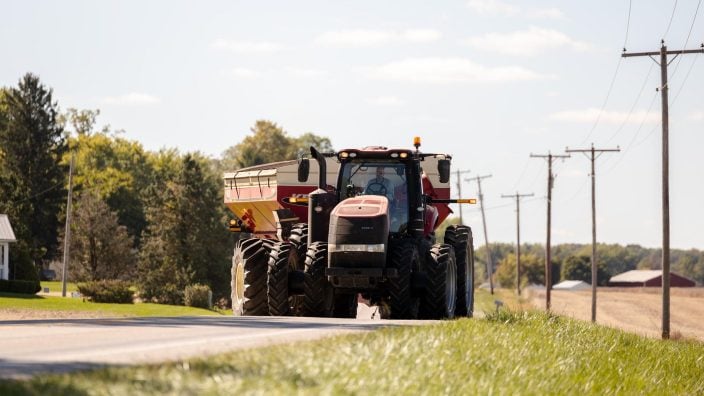
    machinery on road

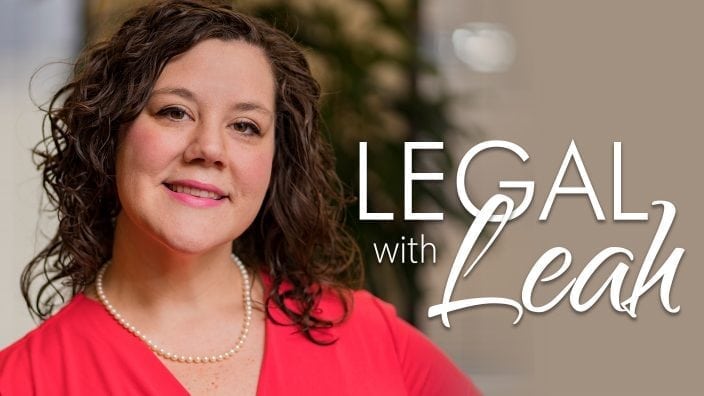
    Recent state and federal actions aimed at providing relief from high fuel costs have raised questions for Ohio farmers. On this Legal with Leah, Ohio Farm Bureau Associate General Counsel Leah Curtis breaks down changes to Ohio’s fuel tax, recent federal guidance on dyed diesel and what farmers need to know about the rules still in place.

    Ohio Farm Bureau · Legal with Leah: Changes to fuel taxes and dyed diesel regulation
    Listen to Legal with Leah, a podcast featuring Ohio Farm Bureau’s Associate General Counsel Leah Curtis discussing topics impacting farmers and landowners.
    Transcript

    Ryan Matthews: Fuel costs continue to be a major concern for Ohio farmers, especially during harvest. Recent actions at both the state and federal levels have brought some relief, but they’ve also raised questions about what folks can and cannot do. Leah Curtis, associate general counsel for Ohio Farm Bureau joins this Legal with Leah to explain these policies, where things currently stand, and what farmers need to know.

    Ryan Matthews: Good to see you, Leah!

    Leah Curtis: Good to see you, Ryan.

    Ryan Matthews: Leah, let’s start with the state level. Back in September, we saw Governor DeWine sign a 90-day state fuel tax waiver. Can you tell us what that means and then how does that affect our farm families?

    Leah Curtis: So the Legislature passed and Governor DeWine signed a waiver of a collection of the majority of the state excise taxes on both gas and diesel. There is still a slight collection of, I think it’s about a one one hundredth of a cent. That’s to help with administration because of course there are a lot of technical changes that have to happen to kind of allow for all this to work correctly through the systems of the tax department. But what that meant was the state tax that we typically pay on our gas and diesel are removed for on-road products. For a farm impact, the diesel and the fuel that you are buying in order to take things to markets, the livestock barn to the elevator, et cetera, that fuel no longer has a state tax on it during the time of this 90-day waiver.

    Ryan Matthews: Now, I know some drivers may have noticed that prices at the pump haven’t dropped the same at every single gas station. So can you explain how fuel tax is collected and why we might be seeing some of those differences at different pumps?

    Leah Curtis: Sure. So fuel tax is actually paid by what we call the rack seller or the retailer. So essentially, your gas station is paying for that tax. And then they’re passing it on to us as consumers within the price. And that’s why you always see, unlike sales tax, gas tax is baked into the actual price that you see on the pump. So gas stations would have had gas on hand when this was signed. They typically get gassed about maybe once a week. So they’d already paid the tax on that. And so there was some variability of, of how this got kind of implemented and the bill was written to kind of allow for that and knowing that that would happen. Keep in mind, you know, gas is, and diesel are still just market commodities; their prices still fluctuate even without the tax, you know, just as always that price fluctuates. And in addition, there is still federal excise tax on our fuels. So there is an 18.4 cent tax federally for gasoline and 24.4 cents for diesel federally.

    Ryan Matthews: I think it’s just been some good insight to see how many factors actually play into that price that we see at the gas station and just understand that it’s also one of those markets that just have a lot of volatility. Now another big topic that has come out of this is dyed diesel. Can you explain to us the difference between regular diesel and dyed diesel and why are restrictions on when and where it can be used.

    Leah Curtis: Regular diesel we’re going to use to refer to taxable diesel, that’s diesel that we pay taxes on, we buy it at typical pumps at our typical gas stations. Dyed diesel has both a dye added to it, a red dye, and then it has some chemical additives as well that can identify it as non-tax diesel. So if there was a situation where a vehicle had it, their tank could be tested, you’d able to tell if that was regular diesel or dyed diesel. The dye in the chemical residue can sometimes remain in the tank even after the fuel has been used and so the major difference is, of course, that you pay tax on diesel and you don’t pay tax in dyed diesel. We have seen a lot of major fuel retailers warning some of their members or asking to use caution as far as putting dyed diesel into regular diesel pumps. Because again, there is a concern that that dye or chemical residue could remain. It’s not clear if it would or wouldn’t, but there is some concerns around that.

    Ryan Matthews: Can you tell us, what could happen if a farmer used diesel in an on-road vehicle without meeting those legal requirements and are there any penalties or other concerns they should be aware of?

    Leah Curtis : So again, dyed diesel is permitted only for off-road applications, and we mainly hear that referred to as things like farm equipment and construction machinery in particular. Remember that the gas tax under Ohio law and for the most part in federal law is used for road maintenance and transportation. So the gas taxes attacks where you pay for the fuel that puts you on the road, and then that tax pays for the roads. It’s kind of a direct tax payment, right? So this is part of why dyed diesel is not taxed. It’s intended for vehicles that are not on the roadway. They’re not causing wear and tear on the roadways because they’re not being used on the roadways. There are both state and federal laws that prohibit the use of dyed diesel on roadways and in both cases, the penalty is generally $10 per gallon or $1,000, whichever is greater. So it’s a fine, you could be, as an individual, subject to penalties at both the state and federal level for the same occurrence because they are separate taxes and they’re separate laws. And there are also penalties for sellers who sell dyed diesel knowing that it will be used in a taxable manner. So it is kind of at both levels, both seller and user level, that it could be a concern.

    Ryan Matthews: I’m going to double tap on both of those levels. So the administration recently took action to provide some flexibility on dyed diesel through an executive order. And now we’ve seen some additional guidance from the IRS. Can you talk about what has exactly changed on the federal level?

    Leah Curtis: So at the federal level, the executive order allowed for kind of three things, so deferral of the excise tax, that’s the federal gas tax, potentially the use of dyed diesel for road use, and then potential forgiveness. They’re kind of the three highlights. So number one, deferral of the tax means that people do not have to pay the tax immediately or at their regular, you know, like quarterly deadline. So they will have more time to pay taxes on diesel or gas. And the IRS also will not be charging any interest or penalties for any late payments of federal excise taxes. Typically, to remove a tax, there has to be a legislative act. So Congress would have to kind of say like we’re exempting the tax or whatever. That’s why we’re seeing this referred to as a deferral. That’s what’s within the order, the power of the executive to do. It also directed the IRS to issue a waiver for dyed diesel prohibitions. The IRS did issue an order last week, and it announced that it would not be testing or enforcing for off-road dyed diesel use during the time that the order was in effect. So essentially that staff has been redirected to other situations and issues, and they’re not going to be largely doing any enforcement relative to dyed diesel. The EO did also ask for Treasury to explore tax forgiveness options for the excise tax, including whether legislation might be possibly needed and it has set this time period for all of these provisions to be Oct. 5 through Dec. 31. That’s kind of the situation at the federal level, but keep in mind, we do still have state issues to deal with as well.

    Ryan Matthews: And I want to talk about that. As you mentioned, Ohio has its own laws surrounding dyed diesel. So how does that federal action affect what farmers can legally do here in the state? And can you talk about those state laws as well?

    Leah Curtis:  Sure. So as we already talked about, the state has its own prohibition against the use of dyed diesel on roadways, and the state had not taken any action relative to its own laws or enforcement. The federal action does not affect what states do, and that’s why you’re seeing lots of different states do lots of things relative to gas and diesel at this time. So we do not have any change from the state as it goes to our dyed or prohibitions, and the other thing I just wanna highlight is we have had some questions that have come in about some kind of other issues that could arise, particularly around warranties. We do not have anything relative to whether a warranty for a vehicle might be affected by the use. Typically diesel and dyed diesel burn the same way. They’re technically the same fuel, but it is something we would, you know, ask people to think about: look at your warranty, see what it says. There can sometimes be issues with the quality of dyed diesel, if it’s been stored properly, et cetera, and it’s just another thing from a state perspective, we wanna make sure farmers and members are aware of. Take a look at your warranty and at least be informed about how that might affect things.

    Ryan Matthews:  Now, Ohio Farm Bureau and other agricultural organizations have asked the governor for additional flexibility on dyed diesel. So where do things stand with that request specifically? And what would be your advice for farmers as they start to navigate these changes?

    Leah Curtis: So we did send a letter with our other commodity and ag organizations asking for that flexibility. We have not received response yet to that letter, but we’ll be continuing to work on that and looking for ways to address the issue of the impact of fuel prices for our members. As I said, the warranty issue is one which I would have people to be considered of. Again, remember, as I said at the top, that the residues can remain in some tanks. So keep that in mind if you’re using it in a vehicle that will later be used in a taxable manner. You want to be careful about that. It could impact in the future enforcement if those residues do continue to be present. But I think also be careful, keep in mind that these are a huge impact and we know that. We also want people to be careful and you know take good thought behind their actions when they’re moving forward with these things.

    Ryan Matthews: Fuel is just one of those input costs that farmers can’t get around, right? Especially during harvest, they need a lot of diesel fuel, whether it’s the tractors or the combines or the trucks going from field to field, it’s a very important tool. So while this is great that we have some relief, as you mentioned, there’s still a lot of questions and still some steps need to be taken. So appreciate you being here and talking through that with all of us.

    Leah Curtis: Yeah, and as we always say, we’ll be continuing to work on this and, stay tuned to our website and our communications and we’ll be sure to communicate any changes that we do have happen as soon as they are available.

    Ryan Matthews: Leah Curtis, associate general counsel for Ohio Farm Bureau. Leah, thanks again for being here.

    Leah Curtis: Thank you.

    Online extras

    Ohio Farm Bureau supports expanded use of dyed diesel

    Ohio Farm Bureau statement on gas tax holiday

    New and beginning farmers
    My first recommendation in your journey is to start out with a local farming friend or mentor along with joining an organization like Ohio Farm Bureau.
    Greg McGlinch's avatar
    Greg McGlinch

    Darke County Farm Bureau

    Growing Tomorrow Grant
    We’re just so thankful for the Farm Bureau and the foundation for helping put this together. And of course, the Boyert family for the vision they had with this grant. It’s jumping us forward 10 years. It’s unbelievable.
    Nathan and Jill Parriman's avatar
    Nathan and Jill Parriman

    Clermont County Farm Bureau

    Bringing the farm back to life
    I could not have done it without the resources I have found through Farm Bureau.
    Gretchan Francis's avatar
    Gretchan Francis

    Trumbull County Farm Bureau

    Youth pathways in Farm Bureau
    It wasn’t until I joined the Wilmington College Collegiate Farm Bureau that I truly saw how my passion could translate into leadership, advocacy and a career.
    Wyatt Morrow's avatar
    Wyatt Morrow

    Clinton County Farm Bureau

    Giving farmers a voice
    The issue of property taxation remains as one of the biggest challenges our members face today. Ensuring agricultural property is valued for its agricultural potential and not development is critical to the continued success of Ohio agriculture.
    Matt Aultman's avatar
    Matt Aultman

    Darke County Farm Bureau

    Select Partner Program
    Through the Select Partner program, we became educated in farm insurance and weren't just selling policies. It became more and more clear why farmers need an advocate like Ohio Farm Bureau.
    Chad Ruhl's avatar
    Chad Ruhl

    Farm manager, CSI Insurance

    Advocacy
    So many of the issues that OFBF and its members are advocating for are important to all Ohioans. I look at OFBF as an agricultural watchdog advocating for farmers and rural communities across Ohio.
    Mary Smallsreed's avatar
    Mary Smallsreed

    Trumbull County Farm Bureau

    Suggested Tags:
    Ask Our ExpertsBusiness ClimateFarm EconomyLegal with LeahPodcast
    View All

    Featured Articles

    Legal with Leah: Changes to Fuel Taxes and Dyed Diesel Regulation

    Associate General Counsel Leah Curtis breaks down changes to Ohio’s fuel tax, recent federal guidance on dyed diesel and what farmers need to know about the rules still in place.

    Read More
    Legal with Leah: Eminent Domain and Quick Take

    Ohio Farm Bureau Associate General Counsel Leah Curtis explains how the eminent domain process works in Ohio, what ‘quick take’ means and when it can be used.

    Read More
    Legal with Leah: Understanding Ohio’s 2026 CAUV Update

    The 2026 Current Agricultural Use Value update brings lower values in many reappraisal counties and a significant policy win on permanent pasture.

    Read More
    Legal with Leah: Meteorites and Trespassing

    A recent meteorite in northeast Ohio has sparked fascination and a few legal questions. Leah Curtis joins to discuss what this rare event means for landowners.

    Read More
    Legal with Leah: Rails to Trails and Eminent Domain

    Leah Curtis discusses Rails to Trails projects, potential impact on farmland when these conversions happen and Farm Bureau’s role in a North Carolina case.

    Read More
    Legal with Leah: The questions around data centers

    Leah Curtis joins this Legal with Leah to talk about what data centers mean for local communities and how to stay engaged in the development process

    Read More
    Legal with Leah: Understanding the Change to Ohio’s Pesticide Law

    Ohio Farm Bureau advocated for a change in the law to allow family members and employees to handle pesticides while under the supervision of a licensed applicator. The rules around HB 10 are being finalized.

    Read More
    Legal with Leah: Insight on Recent Property Tax Legislation

    Four property tax reform bills were signed into Ohio law at the end of 2025. Ohio Farm Bureau Associate General Counsel Leah Curtis breaks down the bills and what the changes mean for Ohioans.

    Read More
    Legal with Leah: A Drone Policy Update

    Learn what the requirements are to legally fly a drone in Ohio as well as steps the Ohio Legislature has taken in terms of security concerns.

    Read More
    Legal with Leah – CAUV Increases Continue

    In 2025, about 21 counties are going through a reappraisal or update, and because Ohioans pay taxes one year behind, they will see new property tax bills in January 2026.

    Read More
    View All
    OFBF Logo
    Navigate
    • About Us
    • Membership
    • Advocacy
    • Community
    • Foundation
    • Shop
    Resources
    • Contact Us
    • Staff and Board Directory
    • Job Postings
    • Privacy Policy & Terms Of Use
    • Advertise With Us
    • County Farm Bureaus
    Membership
    • Join
    • Login
    Get In Touch

    Got questions or feedback?
    We'd love to hear from you.

    • Facebook Icon
    • X Icon
    • Linkedin Icon
    • Instagram Icon
    • Youtube Icon
    • TikTok Icon

    Ohio Farm Bureau Federation is a member of American Farm Bureau Federation®, a national organization of farmers and ranchers including Farm Bureau® organizations in 49 other states and Puerto Rico, and is responsible for Farm Bureau membership and programs within the State of Ohio. Ohio Farm Bureau Federation programs and services are available only to Farm Bureau members within Ohio. The political views expressed in these pages represent Ohio Farm Bureau Federation's positions on various issues as they relate to Ohio. The positions of the national Farm Bureau organization collectively are expressed through American Farm Bureau Federation. Any opinions, statements or views expressed through comments or by outside contributors are the express views of those individuals and do not necessarily represent the views of the Ohio Farm Bureau Federation.

    OFBF Logo
    • Facebook Icon
    • X Icon
    • Linkedin Icon
    • Instagram Icon
    • Youtube Icon
    • TikTok Icon
    Navigate
    • About Us
    • Membership
    • Advocacy
    • Community
    • Foundation
    • Shop
    Resources
    • Contact Us
    • Staff and Board Directory
    • Job Postings
    • Privacy Policy & Terms Of Use
    • Advertise With Us
    • County Farm Bureaus
    Get In Touch

    Got questions or feedback?
    We'd love to hear from you.

    Ohio Farm Bureau Federation is a member of American Farm Bureau Federation®, a national organization of farmers and ranchers including Farm Bureau® organizations in 49 other states and Puerto Rico, and is responsible for Farm Bureau membership and programs within the State of Ohio. Ohio Farm Bureau Federation programs and services are available only to Farm Bureau members within Ohio. The political views expressed in these pages represent Ohio Farm Bureau Federation's positions on various issues as they relate to Ohio. The positions of the national Farm Bureau organization collectively are expressed through American Farm Bureau Federation. Any opinions, statements or views expressed through comments or by outside contributors are the express views of those individuals and do not necessarily represent the views of the Ohio Farm Bureau Federation.

    County

    Join

    Account

    Search