









Applications for Ohio Farm Bureau Health Plans now available
Members have three ways to apply: contacting a certified agent, calling 833-468-4280 or visiting ohiofarmbureauhealthplans.org.
Read MoreTilling good earth or tending to animals may seem like an ideal way of life to many young farmers.
But when commodity prices plunge, or if treacherous weather wipes out a field of crops, where do you turn when your livelihood is threatened?
There are a handful of resources in Ohio that offer assistance to farmers who run into debt problems. But many experts in the field say debt avoidance can be the best remedy, and it begins with good financial planning.
“Avoiding or managing debt consists of building a budget, tracking expenses, avoiding unnecessary household spending and making sure your loan matches the purpose and need of your operation,” said Jonathan Carter, assistant vice president with the agricultural lending cooperative Farm Credit Mid-America.
Carter works within the lender’s Growing Forward program, which provides loans and education to young, beginning and small farmers. He says some common sense tips can help farmers avoid debt. For example, farmers should not use a one-year operating line to purchase equipment, or permit excess family living expenses to add up.
Academic research does point to some potential pitfalls for farmers in the coming years.
Professors from the College of Food, Agricultural and Environmental Sciences at Ohio State University say that while the rate of bankruptcy for farmers is low, it’s likely to increase in the future as farm income and land values decline.
Ani Katchova and Robert Dinterman studied the effects of the economy on farmers and found that net farm income is expected to decline by 8.7 percent this year to $62.3 billion. That could squeeze some small farmers who aren’t prepared.
“Currently, only a limited number of farmers are experiencing financial distress, but if we see another two to three years of flat or declining income levels, it will be much harder for farmers to service debts,” Katchova said. “It puts them in a more vulnerable position.”
Last-ditch efforts such as filing for bankruptcy shouldn’t surface if young farmers properly plan, said Dave Drake, Ohio farm loan chief with the U.S. Department of Agriculture. Drake said he’s seen many transfers of farmland over the past 10-15 years as the baby boomer generation ages.
The department offers a program that helps farmers who can’t get credit through conventional channels, or if they’ve experienced weather- or disaster-related problems. It has a separate real estate program in which it purchases farms.
USDA has about $1.3 billion outstanding loans in Ohio, with a majority going to young and beginning farmers. Terms vary and are typically lower than the market. They can be a source of capital for struggling owners, and USDA will work with borrowers to restructure debt if needed.
“Most farmers have some kind of rudiments of a business plan,” Drake said. “You’ve got to convince a loan officer that the risk the lender is going to take on you is going to pan out for both parties.”
Marty Clark, agribusiness, compliance and workforce development coordinator for The Career Center in Washington County, recommends that his clients invest in a good recordkeeping system. The goal is to use the records to see where the farm’s strengths and weaknesses lie.
Each year Clark helps farmers measure and analyze the cost of production on each of their enterprises – milk, cattle, hogs, for instance. Then, he’ll compare that to the farmer’s income.
“In agriculture we have very little control over what we get for our products,” Clark said. “It’s market-driven supply and demand. The biggest challenge we’ve got is we’ve got to control our costs. You have to know what your costs are when you’re trying to make a profit.”
Farm lenders and consultants recommend that all farmers separate their business budget from their family budget in order to be successful. They should track expenses for both budgets using computer software or applications.
Here are several other tips to avoid and manage debt, and a basic guideline for a family budget.
Avoiding debt:
Managing debt:
Budget breakouts:
Sources: Farm Credit Mid-America, Ohio State University, The Career Center



Members have three ways to apply: contacting a certified agent, calling 833-468-4280 or visiting ohiofarmbureauhealthplans.org.
Read More

Talk to your Nationwide Farm Certified agent today to see if you’re ready to make the switch and explore what it means to your farm’s risk management strategy.
Read More

USDA is providing $60 million in support and funding opportunities for small and mid-sized meat processors across the country. Apply by Aug. 7.
Read More
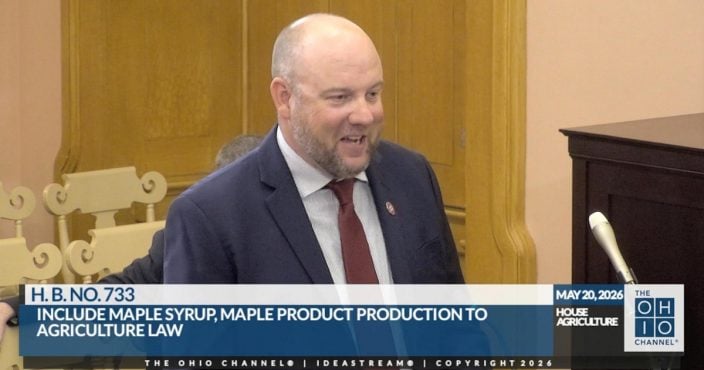
Introduced by Rep. Sarah Fowler Arthur (R-Ashtabula) and Rep. David Thomas (R-Jefferson), the bill would add trees cultivated for maple syrup production to Ohio’s statutory definition of agriculture.
Read More

Ohio Farm Bureau members receive exclusive access and discounted rates to digital tools specifically designed to maximize day-to-day productivity, simplify equipment maintenance and enhance asset protection.
Read More
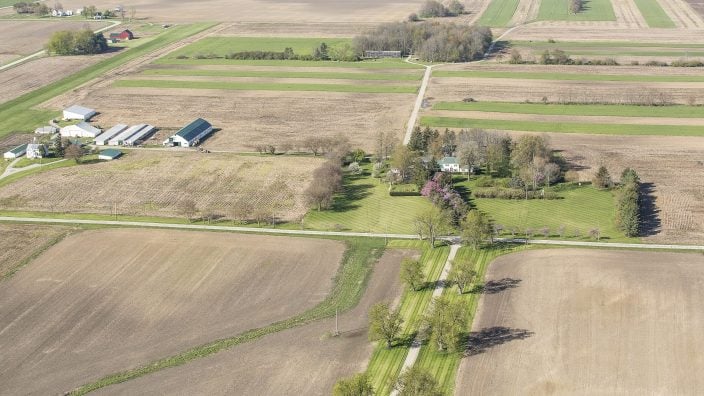
Ohio Farm Bureau shared members’ concerns about the rapid growth of data centers across the state and the long-term impacts on agriculture and rural communities.
Read More

The online application period is open now, until June 30, for those who would like to apply to be featured on the America 250-Ohio Agritourism Trail.
Read More

Ohio Farm Bureau testified in support of House Bill 773, legislation that would allow Ohio Turnpike travel plazas to offer E15.
Read More
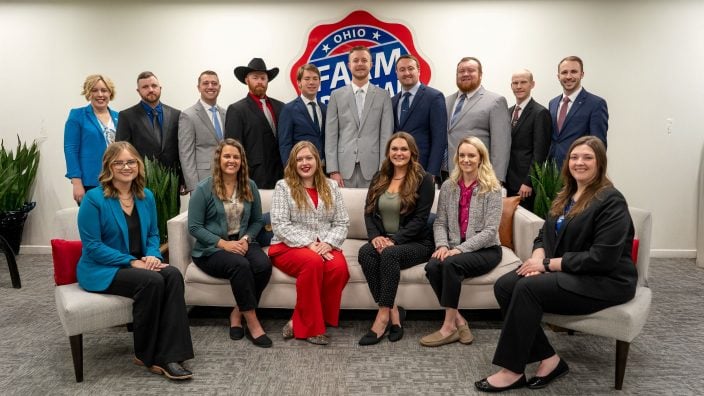
Ohio Farm Bureau is accepting applications for AgriPOWER Class XVII, its leadership and advocacy development program. Application deadline is Aug. 1, 2026.
Read More
Annually, the foundation recognizes Ohio students for their academic effort, community engagement and career interests that link agriculture to community service, education or scientific research.
Read More