



What the One Big Beautiful Bill means for Ohio agriculture
Overall, $65.6 billion from this aid package is projected to increase agriculture-focused spending over the next decade.
Read MoreAmerican Farm Bureau President Zippy Duvall made the following statement Oct. 20 regarding comments from President Donald J. Trump that suggested importing Argentinian beef as a solution to lower beef prices:
“We know America’s families face challenges when food prices rise, but it’s important for President Trump to remember that farmers are facing an economic storm as well, and a vibrant U.S. cattle herd is at stake. Many of America’s beef farmers have operated in the red for several years. Adverse weather and low prices drove cattle herds down to levels not seen in decades. Weakened cattle prices are the last thing needed in farm country, where farmers are being paid historically low prices for crops across the board while expenses remain high.”
“We urge the administration to carefully consider the damage importing more beef and cattle from other countries will have as cattle farmers decide whether to invest in rebuilding America’s herds. Just the mention of beef imports created more instability and uncertainty for America’s farmers. Flooding markets with foreign-grown beef could affect our nation’s ability to be food independent in the long-term. We look forward to learning more about the president’s plan, and we stand ready to work with him to ensure farmers and ranchers can survive this economic storm.”
This proposal from the Trump administration is on top of the government shutdown and ongoing economic pressures facing agriculture.
On Oct. 10, American Farm Bureau Federation sent letters to President Donald Trump and congressional leaders to re-emphasize the severe, ongoing economic pressures facing America’s farmers and ranchers.
Falling crop prices, skyrocketing expenses and trade disputes are creating conditions that are too much for farm families to bear.
“Across the country, farms are disappearing as families close the gates on the farms tended by their parents, grandparents and generations before them,” wrote AFBF President Zippy Duvall. “Every farm lost takes with it generations of knowledge, community leadership and the heartbeat of local economies: fewer kids in schools, fewer trucks at the grain elevator, fewer small businesses that keep rural towns alive. As those farms disappear, so too does America’s food independence: our ability to feed ourselves without relying on foreign supply chains.”
Prices paid for crops have fallen off a cliff since 2022, and U.S. agriculture has experienced a trade deficit during the same time period. Lingering questions with trade partners, particularly China, have added to volatility in farm country and left farmers with uncertainty about their futures.
“In the short term, we urge leaders to authorize bridge payments for farmers before the end of 2025,” wrote Duvall. “These payments must be robust enough to address sector-wide gaps and provide meaningful support as the federal government works to recalibrate trade strategies, stabilize prices, and strengthen key market relationships.”
While emergency aid would help temporarily ease the burden facing farmers, only long-term solutions will improve economic conditions in rural America.
“Federal leadership can now prevent a deepening crisis by taking steps to preserve our agricultural infrastructure and ensure the next generation of farmers and ranchers can continue feeding the world,” Duvall said.


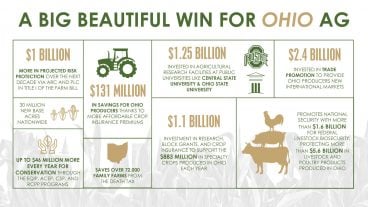
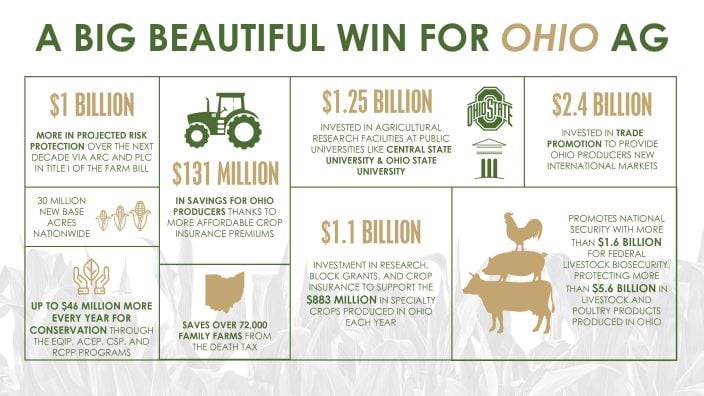
Overall, $65.6 billion from this aid package is projected to increase agriculture-focused spending over the next decade.
Read More
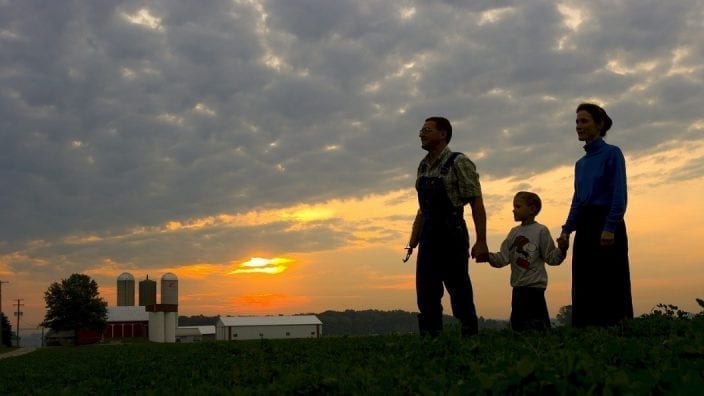
Get an update on recent headlines in agriculture as we sit down with Brad Bales, Ohio Farm Bureau senior director of state and national policy.
Read More

Urge President Trump and Congress to act before the end of 2025 to provide immediate relief and long-term stability for America’s farmers and ranchers.
Read More
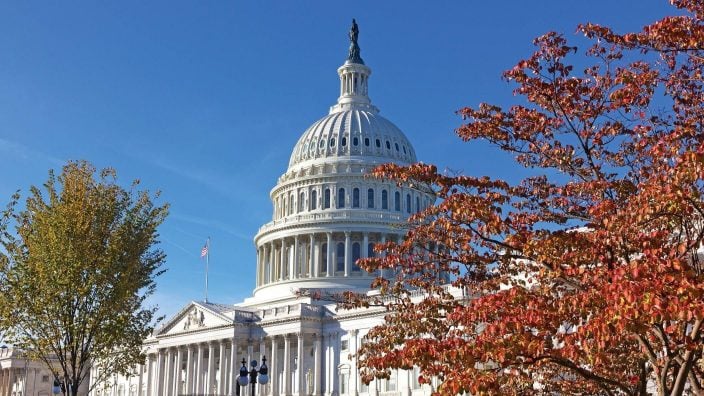
A proposal to import beef from Argentina comes on top of the government shutdown and ongoing economic pressures facing agriculture.
Read More

Ian Sheldon and Brent Sohngen take a look at the causes of inflation and how energy markets will impact agriculture, respectively, in the latest Ohio Farm Bureau Podcast.
Read More
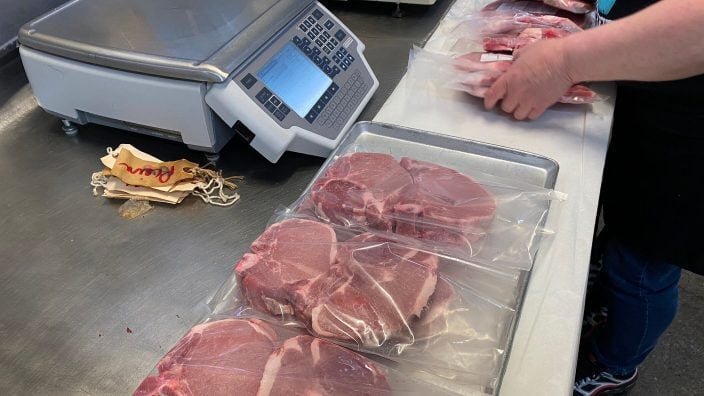
Earlier this week, the Ohio Controlling Board approved $18 million to be allocated to the Ohio Meat Processing Grant Program.
Read More
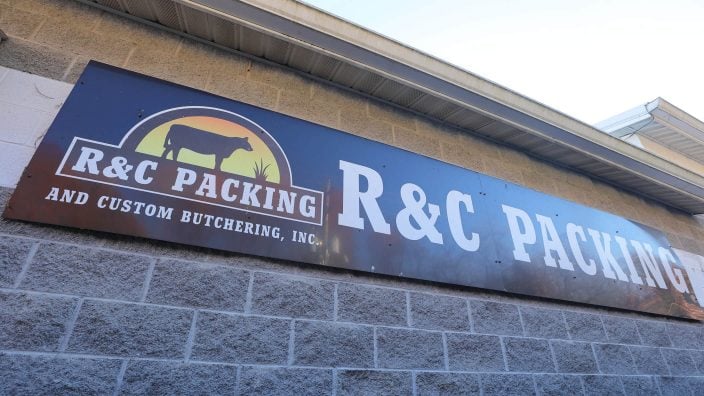
Ohio meat processors like Jamie Graham, owner of R & C Packing, have been hard pressed to keep up with demand for their services. Consumer interest in locally raised meat has been steadily increasing in recent years, and the COVID-19 pandemic boosted demand further.
Read More
The American Farm Bureau Federation sent a letter to the U.S. House of Representatives Tuesday stating its opposition to the Build Back Better Act, also known as the reconciliation package.
Read More
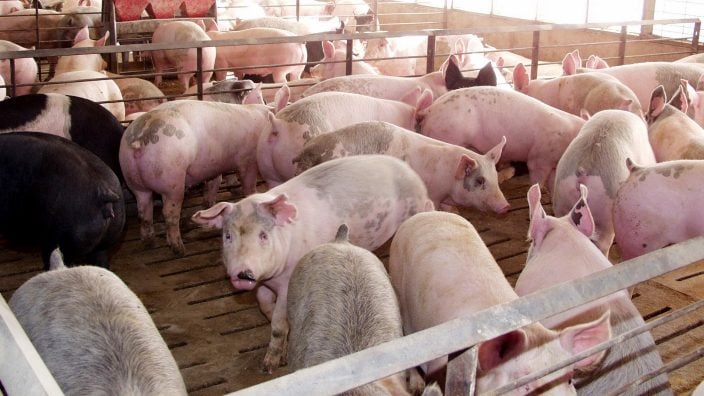
A recent court ruling will reduce pork line speeds through the New Swine Inspection System (NSIS).
Read More
While net cash farm income in 2020 was above the average net cash farm income for the 2013–2019 period, increased…
Read More